




4TU.HTM Workshop on Polyelectrolytes - 12 March 2026
Scope
The 4TU.HTM Workshop on Polyelectrolytes aims to bring together researchers from academia and industry to share and discuss recent advances in the synthesis, characterization, and application of polyelectrolytes. Topics include the design of novel charged polymers, polyelectrolyte complexation, responsive materials, bio-inspired assemblies, and their roles in energy, environmental, and biomedical technologies. Emphasis will be placed on understanding charge-driven interactions, molecular architecture, and structure–property relationships.
4TU.HTM Workshop on Polyelectrolytes - Register now!
 Utrecht, De Witte Vosch, 12 March 2026
10.00 - 17.30 uur (including lunch and drinks afterwards)
Registration form
Full programme
A full (preliminary) programme is now available (Pdf)
For questions, please contact Reina Boerrigter (r.boerrigter@tudelft.nl)
Target audience
The workshop is set to encourage interdisciplinary dialogue between junior and senior polymer chemists, physicists, materials scientists, and engineers, fostering collaborations and innovative approaches to solve global challenges using polyelectrolyte-based materials.
Workshop organizers
Confirmed speakers
Jasper van der Gucht (WUR)
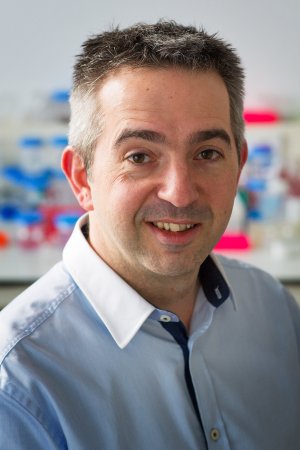 Prof.dr.ir. Jasper van der Gucht is Professor of Physical Chemistry and Soft Matter at Wageningen University
Title: Compleximers: water-free solid polyelectrolyte complexes with moderated ionic interactions
Abstract
While nature extensively uses electrostatic bonding between oppositely charged polymers to assemble and stabilize materials, harnessing these interactions in synthetic systems has been challenging. Synthetic materials cross-linked with a high density of ionic bonds, such as polyelectrolyte complexes, only function properly when their charge interactions are attenuated in the presence of ample amounts of water; dehydrating these materials creates such strong Coulombic bonding that they become brittle, non-thermoplastic, and virtually impossible to process. We present a strategy to intrinsically moderate the electrostatic bond strengths in apolar polymeric solids by the covalent grafting of attenuator spacers to the charge carrying moieties. This produces a class of polyelectrolyte materials that have a very high charge density, are processable and malleable without requiring water, are highly solvent- and water-resistant, and are fully recyclable. These materials, which we coin "compleximers," marry the properties of thermoplastics and thermosets using tailored ionic bonding alone. We then consider the thermomechanical properties of compleximers and find that they have a highly unusual glass transition, characterized by low fragility and very broad relaxation spectrum. This finding suggests a special role of long-ranged ionic interactions in vitrification and opens up a route toward developing new materials that combine the processability of strong glass formers such as silica glass or vitrimers with the mechanical dissipation of polymers.
Short bio
Jasper van der Gucht is professor of physical chemistry and soft matter at Wageningen University. He leads an interdisciplinary group that aims to understand the microscopic mechanisms that underlie mechanical properties and functioning of soft materials, in particular (bio)polymer and colloidal materials. For this, his group combines experimental characterization with theory and computer simulations. Some of his current interests include polymer materials based on electrostatic interactions, structure formation in drying films, and fracture and non-linear mechanics of biopolymer networks.
Sissi de Beer (UTwente)
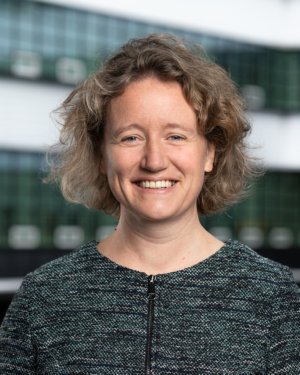 Dr. ir. Sissi de Beer is an Associate Professor in the Department of Molecules and Materials, University of Twente
Title: Polyelectrolyte Brushes in Electric Fields: Fundamentals and Applications
Abstract
Polyelectrolytes are intrinsically responsive to electric fields. When these polymers are end-anchored to electrodes to form so-called polyelectrolyte brushes, their responsiveness can be employed to develop advanced sensing or separation technologies. In this presentation, I will discuss the static and dynamic response to electric fields of these brushes in electrolyte solutions. Moreover, I will show how this can be exploited in applications.
Short bio
Sissi de Beer is an Associate Professor in the Department of Molecules and Materials at the University of Twente. Her research focuses on designing functional polymer surfaces using molecular modeling and experiments, with applications in lubrication, sensing, and molecular separations. She leads the national ReCoVR consortium, which develops materials and processes for recovering valuable resources from waste streams. De Beer earned her PhD in Applied Physics at the University of Twente and completed postdoctoral work at Forschungszentrum Jülich and the University of Toronto
Relevant publications
- L. A. Smook, A. Dahlin, K. Schroën, and S. de Beer, “ Responsive Polyelectrolyte Brushes in Applications: Functions, Stimuli, and Design Considerations.” Adv. Mater. 37, no. 42 (2025): e09580.
- L. A. Smook and S. de Beer, "Electrical Chain Rearrangement: What Happens When Polymers in Brushes Have a Charge Gradient?” Langmuir 40, no 8 (2024): 4142-4151.
Marleen Kamperman (RUG)
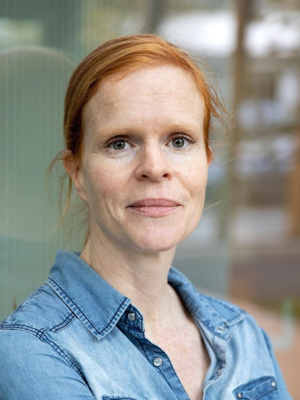 Prof. dr. Marleen Kamperman is Professor of Polymer Science at the University of Groningen
Title: Bio-inspired Processing of Polyelectrolyte Complexes
Abstract
Nature routinely produces fibers and composites with remarkable combinations of strength, toughness, gradients, and multifunctionality, properties that remain difficult to achieve synthetically. This challenge is not only a question of molecular composition, but also of processing. Many biological materials are not formed from dilute solutions or polymer melts, but from dense, liquid-like macromolecular phases known as (complex) coacervates.
This talk shows how coacervation provides a powerful route for aqueous and highly controlled materials processing. Drawing on examples from nature and recent work from our group, it discusses how coacervates function as fluid processing intermediates that allow shaping, alignment, and organization before solidification. Processing strategies based on gradual, stimulus-driven changes in solubility and intermolecular interactions are highlighted, and their use in guiding structure formation and ultimately determining material properties is demonstrated.
Short bio
Marleen Kamperman is a Professor of Polymer Science at the University of Groningen. Her group focuses on bio-inspired polymeric materials, including coacervate-based adhesives and other soft materials with controlled structure and function. She studied Chemistry at the University of Groningen and earned her PhD in Materials Science & Engineering from Cornell University. After postdoctoral work at the Leibniz Institute for New Materials in Germany and a faculty position at Wageningen University, she was appointed full professor in Groningen in 2018. Kamperman also serves in leadership roles such as scientific director of the Health Technology Research & Innovation Cluster (HTRIC).
More information on her research group website: https://kampermanlab.com/
Bas van Ravensteijn (UU)
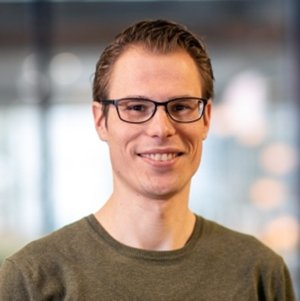 Dr. Bas van Ravensteijn is an Assistant Professor of Pharmaceutics, Utrecht University
Title: Leveraging pathway complexity in polyelectrolyte self-assembly – Routes to more potent gene delivery vehicles (?)
Abstract
Polymerization-induced self-assembly (PISA) has proven to be a versatile route towards high concentrations of micellar nanostructures with tunable chemistries and morphologies. In contrast to conventional self-assembly protocols, where the synthesis and assembly of the block copolymers (BCP) are performed in two separate and consecutive steps, PISA relies on a one-pot procedure where BCP formation and assembly occur simultaneously. Typically, solvophilic polymers are chain-extended with a second, chemically distinct monomer, yielding amphiphilic BCPs. Their amphiphilic character triggers assembly into (higher-order) micellar constructs.
Recently we extended the PISA concept beyond traditional amphiphilic block copolymer systems. BCPs carrying charged segments were synthetized in the presence of oppositely charged cargo macromolecules, e.g., dendrimers or (si)RNA. In these systems, the cargo molecules act as electrostatic templates that guide the polymerization and assembly process. Given that the strength of the electrostatic interactions between the forming BCPs and cargo is tunable by ionic strength and pH, specific time-dependent reaction-assembly pathways could be designed. Preliminary results revealed that, based on a single chemical composition, regulating the assembly pathway dictates the physical-chemical characteristics and morphology of the resulting particles. We envision to leverage this pathway complexity in polyelectrolyte assembly to fundamentally understand how the structure of polymeric gene delivery vehicles impacts their in vitro performance.
Key words
polyplex, nanoparticles, block copolymers, polymerization-induced self-assembly
Short bio
Bas van Ravensteijn is an Assistant Professor of Pharmaceutics, Utrecht University. He obtained his PhD with at the Van 't Hoff Laboratory for Physical & Colloid Chemistry, Utrecht University in 2015. After completing a postdoctoral research project at the University of California – Santa Barbara, he joined Eindhoven University of Technology as a Marie-Skłodowska-Curie research fellow. In 2021, he moved to the Utrecht Institute for Pharmaceutical Sciences (UIPS) where he, with the support of an ERC Starting Grant & Proof-of-Concept Grant, combines fundamental physical & polymer chemistry with pharmaceutical science to rationally design and understand tomorrow's nano-pharmaceutics.
Representative Publications
- E. G. Hochreiner, B. G. P. van Ravensteijn*, Polymerization-induced self-assembly for drug delivery: A critical appraisal, J. Polym. Sci., 2023, 61, 3186.
- C. Li, J. R. Magana, F. Sobotta, J. Wang, M. A. C. Cohen Stuart, B. G. P. van Ravensteijn*, I. K. Voets*, Switchable electrostatically templated polymerization, Angew. Chem. Int. Ed., 2022, 61, e202206780.
- F. Sobotta, B. G. P. van Ravensteijn*, I. K. Voets*, Sequence-controlled neutral-ionic multiblock-like copolymers through switchable PIESA in a one-pot approach. ACS Macro Lett. 2025, 14, 1277.
- L. van den Hoven, S. Goddaer, E. Mirzahossein, T. Vermonden, K. Koynov, K. Remaut, B. G. P. van Ravensteijn*, Unravelling Drug Delivery using Live-Cell Fluorescence Correlation Spectroscopy (FCS). J. Contr. Release 2025, 388, 114311.
Saskia Lindhoud (UT)
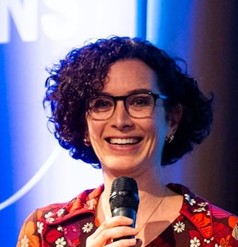 Prof.dr.ir. Saskia Lindhoud is an adjunct professor at the Department of Molecules and Materials at the University of Twente
Title: If it is not part of the solution, it is part of the polyelectrolyte complex
Abstract
When aqueous solutions of oppositely charged polyelectrolytes are mixed, the system phase separates in a dense polyelectrolyte complex phase, rich in polyelectrolytes and, a dilute phase. This process is entropically driven, upon polyelectrolyte complexation the counterions are released. Although polyelectrolyte complexation is extensively studied, so far no methodology has been proposed and used to determine the compositions of the dense and dilute phase, i.e., the concentrations of the polyanions, polycations and their counterions.
In this talk I will show that NMR can be used to determine these concentrations. The focus will be on the weak polyelectrolytes polyacrylic acid (PAA) and polyallylamine (PAH) complexes with Na+ and Cl- as counterions, prepared at pH 6.5. Five different mixing ratios were studied and stoichiometric and off-stoichiometric systems will be compared at different salt concentrations. Our results allow us to make a detailed sketch of PAA/PAH polyelectrolyte complexes.
Using our NMR methodology we can further obtain information about ion binding to these polyelectrolytes. We can use this methodology to measure polymer leakage from saloplastic ion exchange materials and processes. In addition, it can be used to study other colloidal systems for which “if it is not part of the solution, it is part of the complex” applies.
Short bio
Saskia Lindhoud is an adjunct professor at the Department of Molecules and Materials at the University of Twente. She studied Molecular Sciences at Wageningen University and obtained a PhD degree in Physical Chemistry and Colloid Science in 2009. She then did an industrially oriented post-doc at the University of Bath in the UK, where she used cellulose derivatives as renewable thickeners for personal care products. In 2013, she moved to the Nanobiophysics group of the University of Twente and started on a post-doc on motor failure in neurodegenerative diseases. Later that year she started working on her Veni project on complex coacervates as novel macromolecular crowding agents. In 2016 she obtained a permanent position as an assistant professor at the Nanobiophysics group. In 2020 she moved to the Department of Molecules and Materials and started a tenure track. Her research focuses on the production and characterisation of sustainable materials based on polyelectrolyte complexation that can be used for separation processes.
Relevant publications
- L Li, J Li, WM de Vos, S Lindhoud*, Tuning the Enzymatic Activity of Aqueous Phase Separation‐Based PEI‐PSS Membranes, - Macromolecular Chemistry and Physics, 2025
- Hestie Brink, Ricardo Martinho, Wiebe de Vos and Saskia Lindhoud*, Improving the fixed charge density of sustainably produced saloplastic anion exchange membranes, RSC Sustainability, accepted for publication, 2025
- J Li, L Li, H Brink, G Allegri, S Lindhoud*, Polyelectrolyte complex-based materials for separations, progress, challenges and opportunities, Materials Horizon, (invited Review), 2005
- J Li, L Li, S Lindhoud, Achieving lysozyme functionalization in PDADMAC–NaPSS saloplastics through salt annealing, RSC Advances 14 (45), 32863-32875, 2024
- G Allegri, J Huskens, RP Martinho, S Lindhoud*, Distribution of polyelectrolytes and counterions upon polyelectrolyte complexation, Journal of Colloid and Interface Science, 2024
Mark Vis (TU/e)
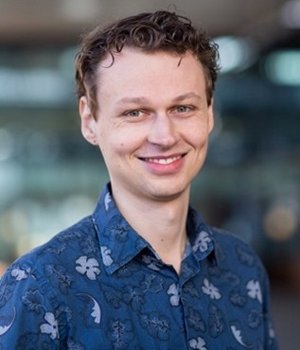 Dr. Mark Vis is an Assistant Professor at the Laboratory of Physical Chemistry, Eindhoven University of Technology
Title: Self-consistent field description of polyelectrolyte-grafted colloidal actuators
Abstract
We present a theoretical description of actuators in prototype artificial muscle tissue by means of a self-consistent (mean field) lattice computational scheme. The actuators are composed of pH-responsive polyelectrolytes grafted at both ends between plate- or rod-like colloidal particles and immersed in an aqueous solution. We build on a model developed for grafted rods*, but specifically include weakly acidic monomers to incorporate the effects of pH variation to trigger the expansion of the material. As a first toy model, we consider strong polyelectrolyte chains: for both plate- and rod-like colloidal particles, we obtain pressure differences of the order of tens of MPa, sufficient to generate volume variation. During actuation, the system expands and contracts by approximately one third of the polymer contour length, and about 100kT of work per polymer chain is performed. Secondly, we show that for weakly charged polyelectrolyte chains, the salt concentration can be used to tune the actuation window by multiple pH units, which is important to obtain a biocompatible range of pH values. In this scenario, we find smaller actuation pressures than for strong polyelectrolytes, but still sufficient expansion and contraction for practical purposes.
* A. Ianiro, J. A. Berrocal, R. Tuinier, M. Mayer and C. Weder, J. Chem. Phys., 2023, 158, 14901
Short bio
Mark Vis studied chemistry at Utrecht University and obtained his PhD in 2015 on the interfacial thermodynamics of coexisting aqueous polymer solutions. He is currently an assistant professor at Eindhoven University of Technology. His main research interests lie in understanding the ultra-soft interfaces of phase-separated complex mixtures and the effects of additional interactions and complexity (e.g., charge, semiflexibility, polydispersity) on the stability of these mixtures.
Relevant references
- Vis et al., "Self-consistent field description of polyelectrolyte-grafted colloidal actuators," Soft Matter 21, 7582–7593 (2025)
- Lekkerkerker, Tuinier, and Vis, Colloids and the Depletion Interaction, Springer Nature (2024)
- Martens, Tuinier, and Vis, "Oscillatory Interactions between Colloidal Particles in Polyelectrolyte Solutions: Linear Response Theory," Macromolecules 57(16), 8003–8011 (2024)
- Martens, Vis, and Tuinier, "Origin of Anomalously Large Depletion Zones in Like-Charged Colloid-Polyelectrolyte Mixtures," Physical Review Letters 132(15), 158103 (2024)
Andrea Giuntoli (RUG)
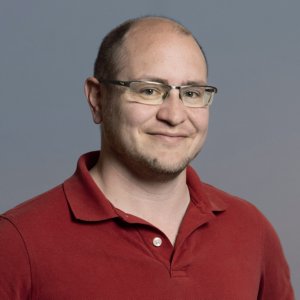 Dr. Andrea Giuntoli is an Assistant Professor at the Zernike Institute for Advanced Materials, University of Groningen
Title: Modeling complex polyelectrolytes for material design
Abstract
The incorporation of highly charged polymers is leading to the development of new soft materials in fields such as the energy transition and biomedicine. Charged interactions in biopolymers are also widely used by nature to guide and control delicate biological processes. Yet, the connection between theoretical modeling and experimental material design is still at its infancy in this area due to the complex phenomena emerging in charged polymer systems from their nanoscale interactions, such as ion transport and complex coacervation.
In this talk I will discuss the opportunities and challenges of molecular dynamics simulations in bridging the gap between simple theoretical models and experimental complexity, informing the rational design of new materials in this area. I will focus on recent work from our group, showcasing complex coacervation in the presence of crowding agents or branched polyelectrolytes.
Short bio
Andrea Giuntoli is an Assistant Professor at the Zernike Institute for Advanced Materials (University of Groningen) since 2021. He obtained his PhD in Physics at the University of Pisa. He did one postdoc at NIST, Maryland, and a second one at Northwestern University, Chicago, within the CHiMaD consortium, part of the Material Genome Initiative sponsored by the US Government. His expertise lies in the multiscale modeling of supramolecular materials, using molecular dynamics simulations to derive structure-property relationships for polymeric materials and composites. His research focuses on connecting the nano- and microscale conformation of polymer materials to their macroscopic structure and mechanical properties. He uses his expertise especially to bridge the gap between molecular models and material design in close collaboration with experimental groups. Since 2026, he is one of the national coordinators of the Dutch Soft Matter Meeting and of the RPK-B (Polymer Physics) graduate school module.
Relevant publications
- Yunus et al., “Glass transition and yielding of ultrasoft charged spherical micelles”, Macromolecules 2025;
- Gurel et al., "Characterizing the structural conformation of highly-charged star-linear polyelectrolyte mixtures in solution”, Macromolecules 2025;
- Es Sayed et al., “Structure-property relationships of granular hybrid hydrogels formed through polyelectrolyte complexation”, Macromolecules 2024;
- Vengallur & Giuntoli, “The role of model crowders in the salt resistance of complex coacervates”, J. Chem. Phys. 2025.
Evan Spruijt (RU)
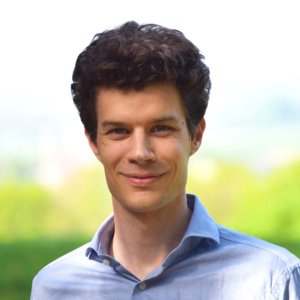 Dr. Evan Spruijt is an Associate Professor at the Institute for Molecules and Materials, Radboud University Nijmegen
Title: Polyelectrolyte complexation: new approaches for life-like coacervate compartments
Abstract
Biomolecular condensates are condensed droplets formed by liquid-liquid phase separation in cells. In health, they function as storage centres and organizational hubs for biomolecules, while their dysfunction has been associated with various neurodegenerative diseases. Polyelectrolyte complexation can be used to create coacervate compartments that mimic the chemical environment and physical properties of condensates, and to study their role as catalysts, preservatives and delivery agents. Here, I will discuss recent advances in coacervate design and engineering to understand the composition, functions and fate of cellular condensates.
Short bio
Evan Spruijt is Associate professor at the Institute for Molecules and Materials, Radboud University Nijmegen, the Netherlands. He is an expert in the physical chemistry of biomolecular condensates and coacervate protocells, and his group investigates the roles of coacervates in the origin of life and in cellular organization and disease. After his PhD at Wageningen University (2012), he worked as a postdoc with David Quéré (ESPCI Paris) and Hagan Bayley (Oxford). In 2017, he started his group in Nijmegen and received funding from the ERC (StG 2019 and CoG 2024), NWO (Vidi 2020, XL 2024) and HFSP. His group currently focusses on understanding the role of condensates in protein aggregation and membrane remodelling.
More information: www.spruijtlab.com
Relevant publications
- Smokers et al. Selective ion binding and uptake shape the microenvironment of biomolecular condensates. JACS 147, 25692-25704 (2025).
- Van Haren et al. Probing the surface charge of condensates using microelectrophoresis. Nature Communications 15, 3564, (2024).
- Liu et al. Peptide-based liquid droplets as emerging delivery vehicles. Nature Reviews Materials 8, 139, (2023).
- Visser et al. Biomolecular condensates can both accelerate and suppress aggregation of α-synuclein. Science Advances 8, abq6495 (2022).
- Abbas et al. A short peptide synthon for liquid-liquid phase separation. Nature Chemistry 13, 1046-1054 (2021).
- Lu et al. Multiphase complex coacervate droplets. JACS 142, 2905-2914 (2020).
Ilja Voets (TU/e)
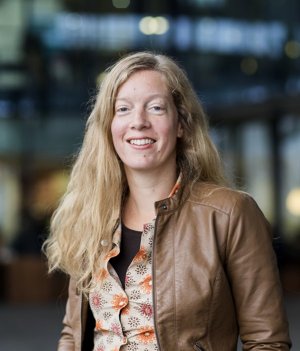 Prof.dr. Ilja Voets is Professor of Self-Organizing Soft Matter at Eindhoven University of Technology
Title: The Power and Peculiarities of Nanoscopic Polyelectrolyte-based Particles
Abstract
Polyelectrolyte complexation offers a versatile route to creating dynamic, adaptive materials. In this lecture, I will discuss the preparation, properties, and (dis)assembly pathways of microphase‑separated systems, with a particular emphasis on complex coacervate core micelles (C3Ms). I will examine the mechanisms that govern the tunable morphology, size, stability, and function of these well‑defined hydrocolloids, highlighting how their characteristics can be controlled through thermodynamic and kinetic means. By systematically elucidating structure–property relationships, we gain the ability to rationally design C3Ms with targeted features. Finally, I will illustrate how these fundamental insights enable the development of innovative material solutions in biomedical and broader application areas.
Short bio
Ilja Voets studied Molecular Sciences at Wageningen University & Research, where she obtained her PhD (cum laude) in 2008 at the Laboratory of Physical Chemistry and Colloid Science under supervision of dr. Arie de Keizer and prof. Martien A. Cohen Stuart. Her PhD thesis focused on micellisation in dilute aqueous solutions of two oppositely charge double hydrophilic block copolymers. From 2008-2011 Voets was a postdoctoral researcher at the AldolpheMerkle Institute of the University of Fribourg (Switzerland). In 2011 she started as assistant professor (tenure track) in Physical Chemistry at Eindhoven University of Technology (TU/e), at the Department of Chemical Engineering and Chemistry and the Institute for Complex Molecular Systems. Since 2018 she is a full professor at TU/e.
More information: Self-Organizing Soft Matter Research Group
Maarten Smulders (WUR)
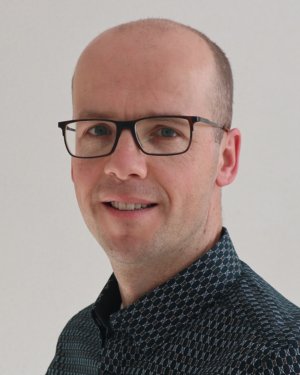 Dr.ir. Maarten Smulders is an Associate Professor in the Laboratory of Organic Chemistry at Wageningen University.
Title: Zwitterionic polymer brushes: Molecular design, synthesis and application
Abstract
Nonspecific protein adsorption, one of the first stages of (bio)fouling, is a recurring problem in various fields, such as in biomedical and bioanalytical applications, because it strongly reduces the sensitivity for the detection of specific targets from complex mixtures. To prevent (bio)fouling, antifouling surface coatings are extensively used to minimize nonspecific interactions between (bio)molecules and the substrate.
The antifouling capability of coated surfaces is mainly determined by the internal architecture and the resulting hydration of the used polymer coating. Because of their electrostatically induced hydration layer, zwitterionic polymeric materials made of carboxy- and sulfobetaine monomers perform extremely well under full-blood and other physiological conditions and have thus been recognized as high-performance antifouling materials.
Progress in polymerization methods, in particular, surface-initiated atom-transfer radical polymerization (SI-ATRP), has provided access to robust and versatile substrate coatings with full control over brush growth. Choosing the appropriate monomers for ATRP enables the tailoring of surface properties including antifouling abilities, (bio)compatibility, and (bio)molecular recognition.
In this lecture, the developments in surface-initiated polymerization of zwitterionic brushes is discussed, focusing on: 1) the molecular design of zwitterionic monomers that unite antifouling performance with functionalizability; 2) development of synthetics methods that allow upscaling and that can be applied under ambient conditions; 3) emerging applications in zwitterionic antifouling polymer brushes.
Short bio
Maarten Smulders is associate professor in the Laboratory of Organic Chemistry at Wageningen University. The main research theme of his research group is on macromolecular design of dynamic materials, focusing on two areas: 1) development of circular polymers by integration of dynamic covalent bonds into polymer networks; and 2) construction of responsive, antifouling polymer brushes by use of controlled polymerization methods.
He studied Chemical Engineering and Chemistry at the Eindhoven University of Technology. At this university he also obtained in 2009 his PhD degree under the guidance of Prof. Bert Meijer. Following postdoctoral stays at Cambridge University and the University of Twente, he moved to Wageningen in 2012 to start his independent career.
More information: Smulders Lab
More information on the programme will follow soon.
For questions, please contact Reina Boerrigter (r.boerrigter@tudelft.nl)