

Resilience has gained traction since the outbreak of covid-19, recent disruptive geopolitics, such as the war in Ukraine, and large-scale natural disasters like floods, droughts, and heatwaves. Leaders, policy-makers, and decision-makers now look to resilience as a means to cope with disruption, from prevention to rebuilding. This moment presents a unique opportunity for academia to contribute to a more resilient society.
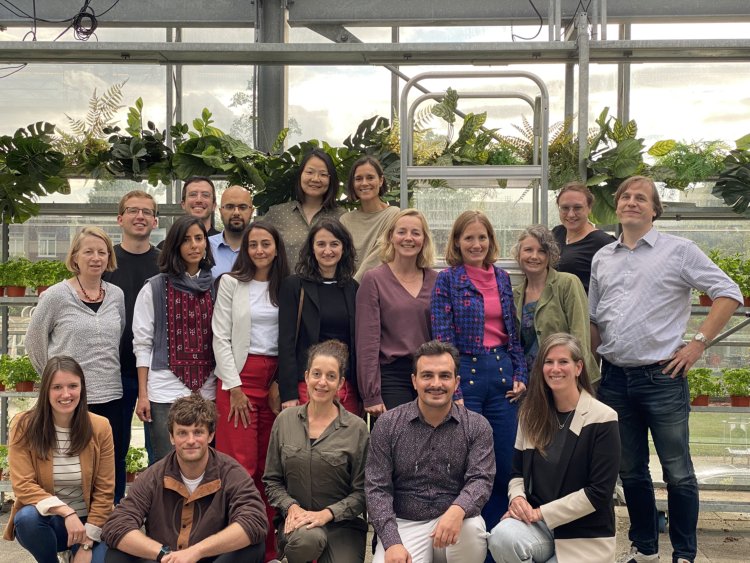
In September 2025, members of the 4TU.Centre for Resilience Engineering (4TU.RE) gathered to reflect on the field’s progress and future direction. A central challenge emerged: resilience means different things to different people. Academics, practitioners, and policymakers often use the term in divergent ways, complicating collaboration and public discourse. To address this, 4TU.RE advocates for a unified definition:
“The ability of a socio-technical-environmental system to sustain, improve, and innovate its key functions – through absorbing, reacting to, recovering from, adapting to, or reorganizing – in response to chronic stresses, abrupt shocks, and disruptions.”
This definition distinguishes resilience from related concepts like sustainability, risk management, or robustness. But how is this definition being explored in practice? The September meeting revealed three interconnected themes, each illustrating how resilience engineering is being shaped by real-world challenges and transdisciplinary collaboration.
1. Clarifying Concepts: Toward a Shared Language
A shared understanding of resilience is essential for effective collaboration. For Joanne Vinke-de Kruijf the Centre marked a shift in the focus of her work. One of her lessons learned is that resilience really extends beyond climate adaptation; it is also about expecting the unexpected. She highlighted the gap between academic research and practical implementation, urging stronger engagement with stakeholders to align values and practices.
Maria Nogal framed this challenge within a “hype-cycle” model: resilience is currently in a noisy, exploratory phase. Without consistent terminology, reaching consensus will be difficult. The 4TU.RE community is addressing this by developing systemic reviews and consensus-building mechanisms, ensuring that resilience remains a domain-nonspecific concept that accommodates multiple domain-specific definitions.
2. Methodological Innovations: Tools for Understanding Resilience
The tools and methods used to study resilience shape our understanding of it. George van Voorn discussed how Agent-Based Modelling sets boundaries for what resilience can mean. He argued that System Resilience and Resilience Engineering are distinct, and that context – such as the value of resilience to a specific system – must guide research.
Carissa Champlin expanded on this, noting that resilience engineering is inherently future-oriented. She stressed the importance of exploring new research methods and engaging with citizens to fill gaps in data and decision-making. Together, their contributions highlight how methodological choices influence both the questions we ask and the solutions we develop.
3. Practical Applications: Resilience in Action
Resilience engineering must address urgent, real-world challenges. Remco Dijkman pointed to the ongoing need for data-driven decision-making in high-tech and food supply chains, where disruptions can have cascading effects. While attention to supply chain resilience has waned since 2020–2023, the urgency remains, especially in food systems.
João Cortesão, a senior climate consultant at Witteveen+Bos, advocated for accelerating urban climate resilience through integrated approaches, long-term visions, stakeholder engagement, and knowledge transfer. His perspective underscores the need for holistic solutions that bridge technical, social, and environmental dimensions.
This urgency is reflected in 4TU.RE’s investment in the Climate-Resilient Agri-Food Transition in the Netherlands (CRAFT-NL) project. By adopting a holistic view of the food supply chain – from farmers to policymakers – CRAFT-NL aims to foster technological innovation and societal impact, embodying the 4TU.RE definition in practice.
Ready for the Future
The September 2025 meeting demonstrated that resilience engineering is not just about defining a concept: it is about applying it. From clarifying terminology to innovating methods and addressing practical challenges, the 4TU.RE community is actively shaping a field as dynamic as the systems it seeks to understand.
Looking ahead, this momentum will be further strengthened by the 4TU.Federation’s commitment to resilience engineering. Over the next four years (2026–2030), the centre will have a dedicated budget to deepen its academic and societal impact.
This investment will enable us to contribute to a resilient society through collaboration with policymakers, industry, and academia. Our ambition is to maintain our position as an international leading knowledge centre in Resilience Engineering, and to continue facilitating a Resilience Engineering movement. To accomplish this, we are working to raise awareness of resilience and establish it as a fundamental principle of system design and an essential starting point for the governance of these systems.