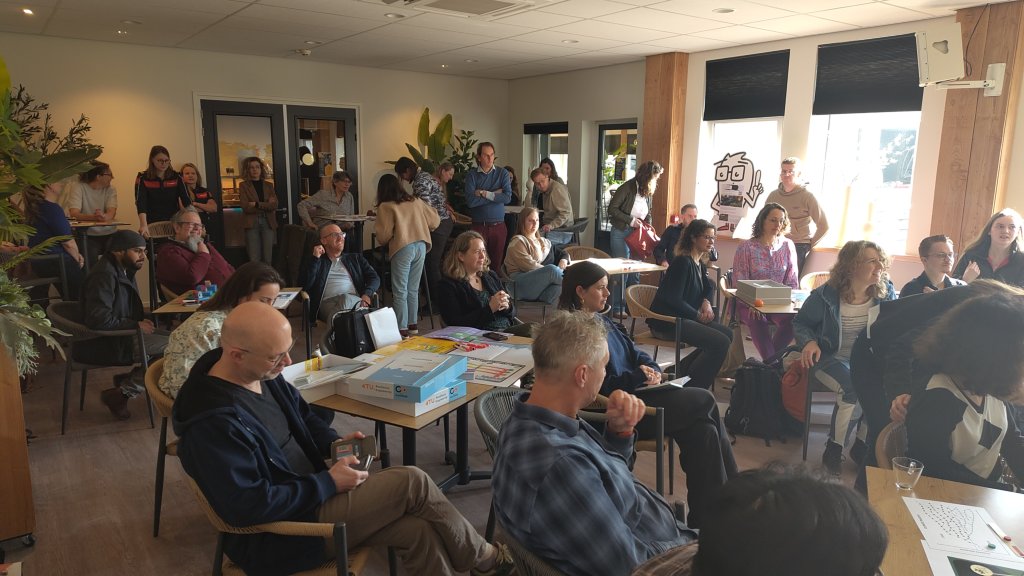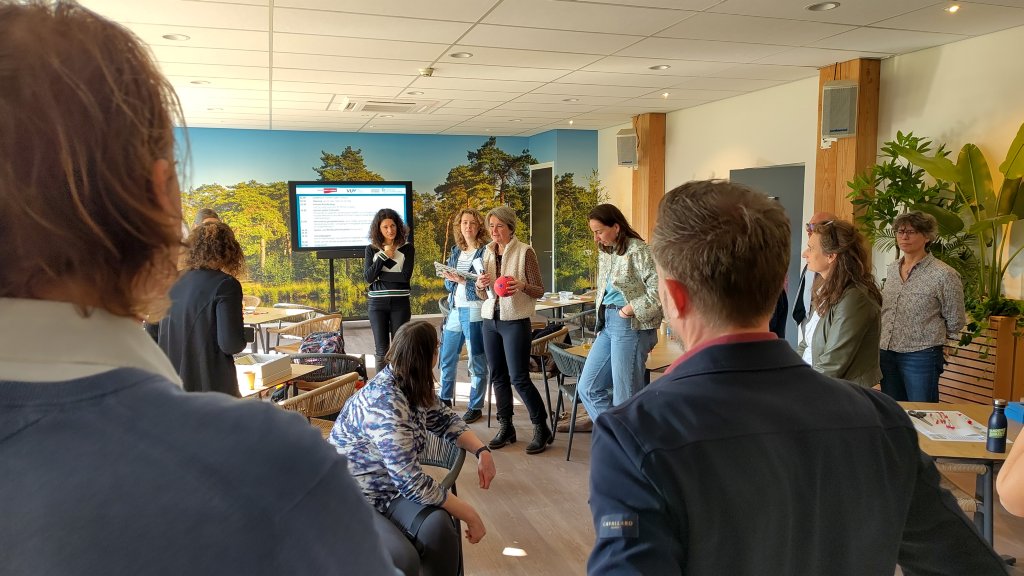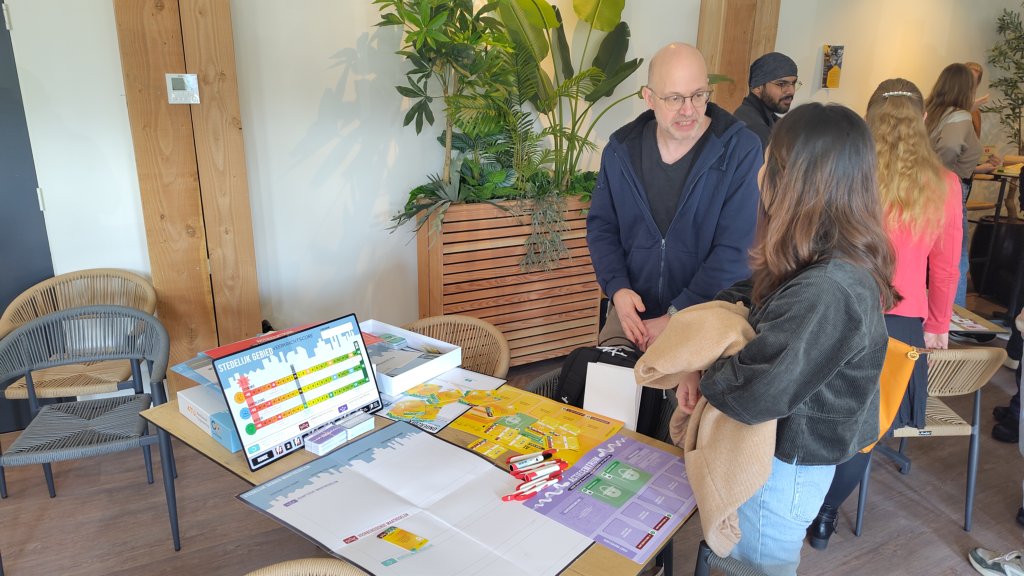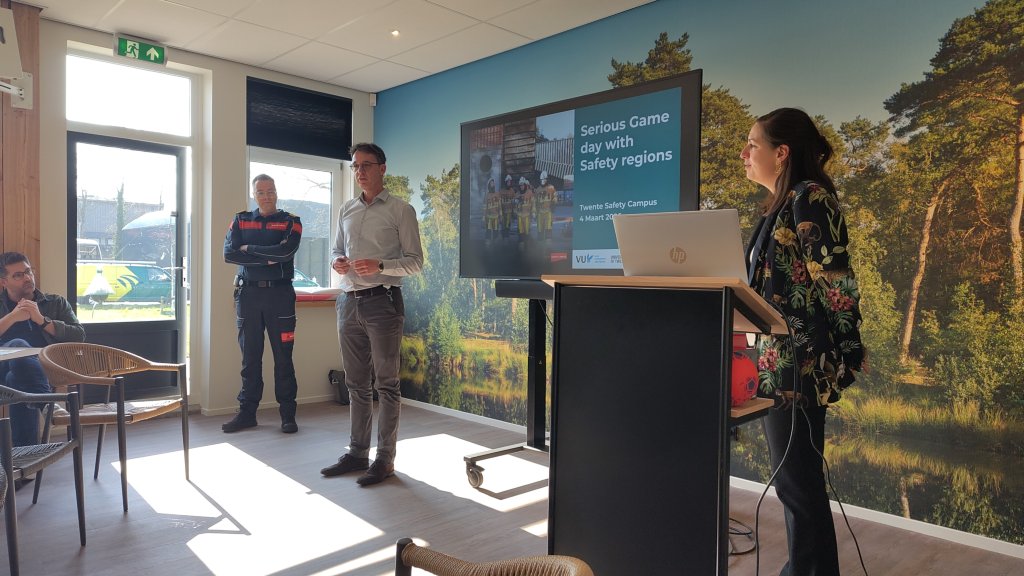


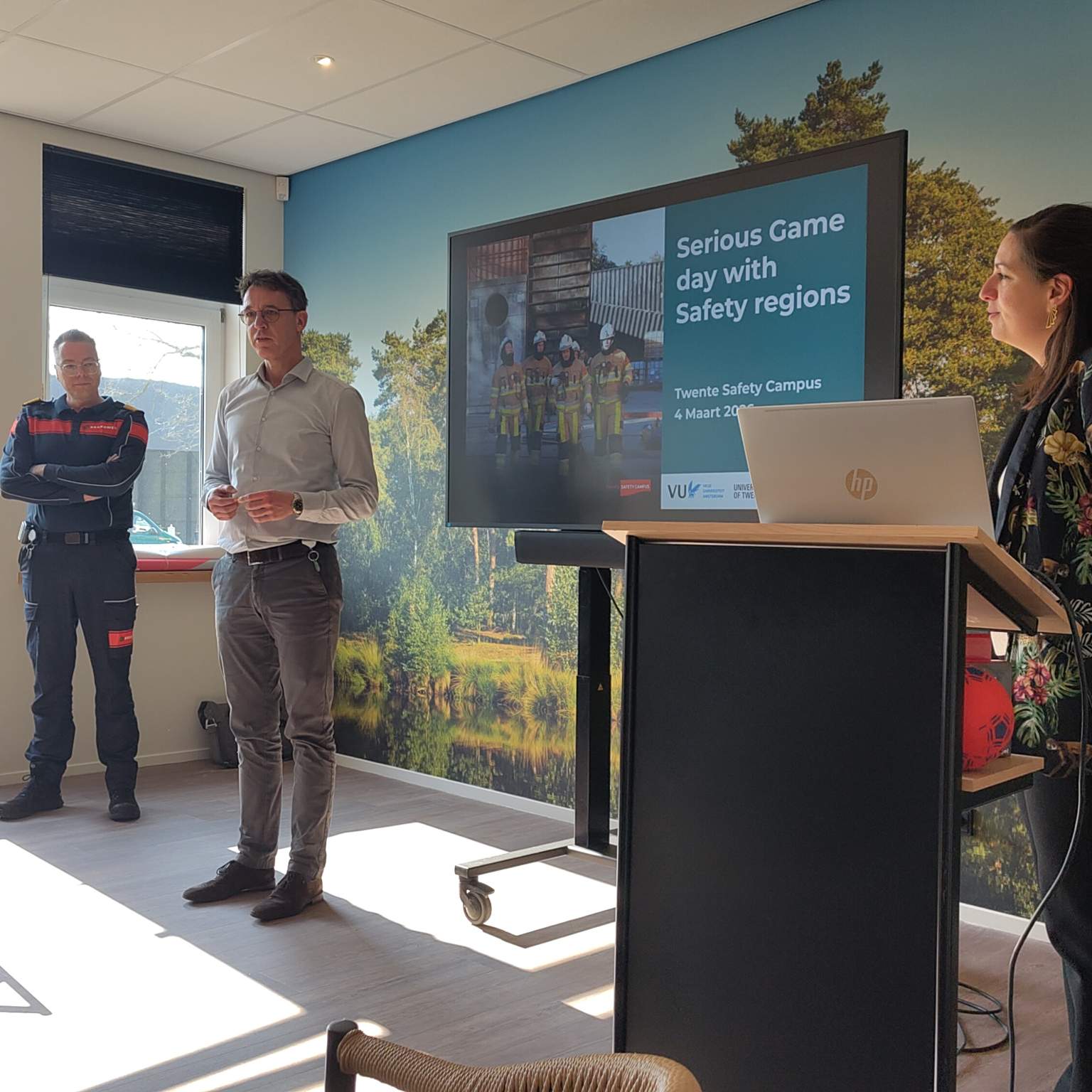
On 4 March 2026, Serious Game Day at the Twente Safety Campus explored how serious games can enhance the work of safety regions by hosting an interactive, collaborative event. The event brought together safety professionals from the Dutch Safety Regions (veiligheidsregio’s), policymakers from municipalities, academics and industry partners. It showcased how serious games can bridge the gap between theory and practice by making abstract risks tangible and actionable.
Participants tested a variety of games, ranging from the Red Cross Climate Centre’s Sinking Island, a low-tech, paper-based simulation, to EquiCity, a digital game that reveals the trade-offs in urban planning. Kidswise showed how children can engage with climate adaptation, and Civil Servants immersed players in high-stakes disaster decision-making. These games simulated crises to expose systemic vulnerabilities, encourage cross-sectoral dialogue, and reveal how play can foster resilience in unexpected ways.
For researchers this raises compelling questions: How can game mechanics be used to study behavioural adaptation in crisis scenarios? Could serious games serve as living labs for testing policy interventions or community responses? What role might digital twins or AI-driven simulations play in scaling up the use of these tools to have a broader impact?
From prototype to paradigm
The event surfaced a critical insight: although serious games have great potential, most of them are still in the prototype phase and have limited in reach and rigour. Participants identified several immediate opportunities, such as scaling up Blackout Battle nationwide, integrating games into education, and creating a shared repository of game designs. However, the deeper challenge lies in measuring impact. How can we quantify changes in player behaviour, decision-making, or community resilience over time? Closing this gap requires interdisciplinary collaboration, drawing on fields such as psychology, data science, and urban planning, to develop robust evaluation frameworks.
In the long term, the vision is ambitious: digital adaptations of analogue games; partnerships formed through the Triple Helix model uniting academia, industry, and government; and games tailored to underserved groups, like the elderly or marginalised communities. Future scenarios could explore multi-hazard interactions, long-term recovery phases, or even geopolitical conflicts, providing researchers with a dynamic environment in which to study resilience in all its complexity.
More to come in 2026
For those inspired to push boundaries, the Winter School on Serious Gaming for Household Disaster Resilience offers a platform to dive deeper. The question isn’t just how to design better games – it’s how to redefine resilience itself through play.
If you would like to stay informed about similar events regarding serious games for crisis management or resilience, please sign up for the mailing list here: serious.gaming.ws@gmail.com.