

Delft is a city of contrasts. On one side, it’s the city where Antonie van Leeuwenhoek looked through his microscope to observe micro-organisms for the first time and where Vermeer found his inspiration for his luminous paintings. On the other, it faces a quieter, more pressing challenge: the reality of poverty, unemployment, and social exclusion in neighbourhoods like Delft West.
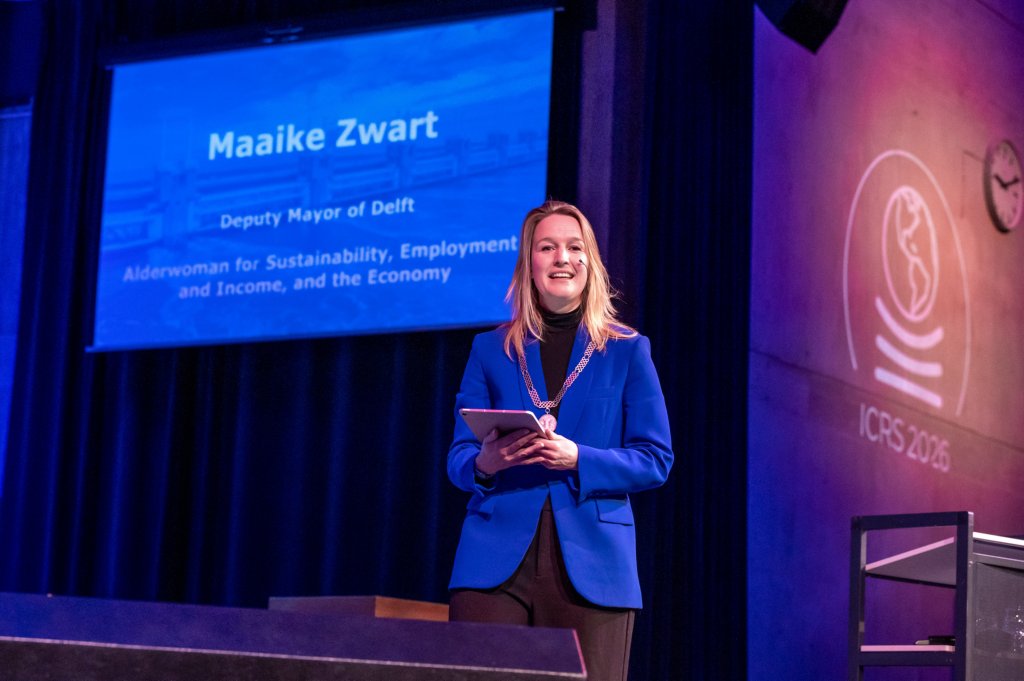
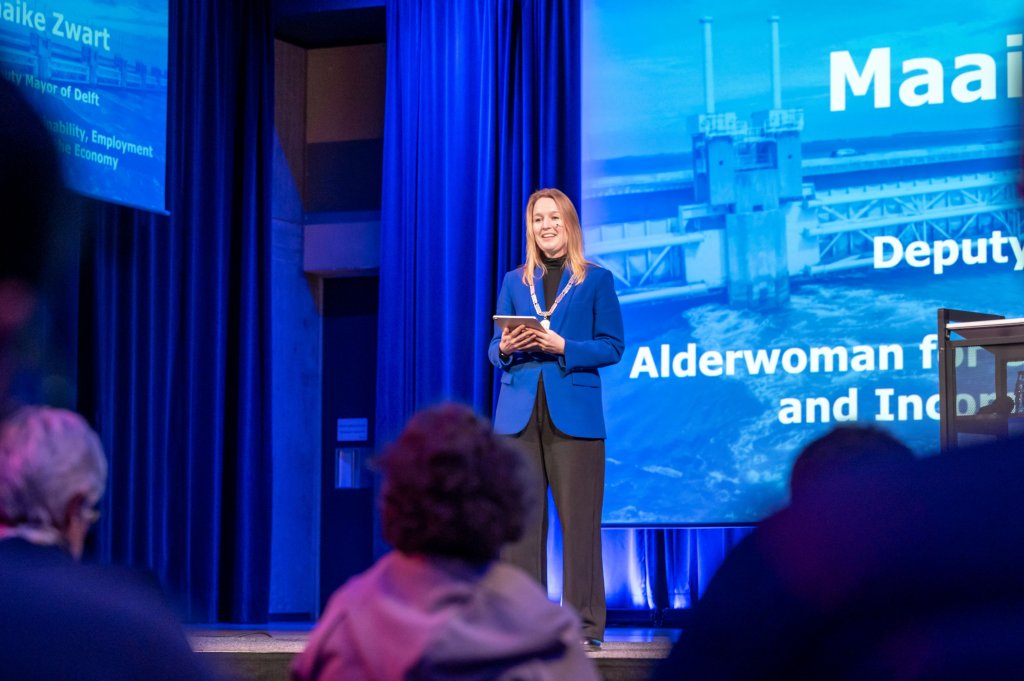
Maaike Zwart, vice mayor of Delft and alderman for Sustainability, Employment, Income, and the Economy, is acutely aware of this duality. In her welcome address, Maaike Zwart explores how Delft is translating resilience and innovation from abstract concepts into real-life solutions for communities facing unemployment, (energy) poverty, and limited access to opportunities. It’s a story of how a city is proving that big ideas can – and must – work for everyone.
Tackling local reality
Delft West is a microcosm of the challenges many Western cities face. In some housing blocks, unemployment reaches 95%. Stress in this context means literally empty fridges, a lack of structured daily routines, and therefore not bringing your children to daycare, not attending a conference. For Maaike, this was a wake-up call when she started in her role as alderwoman.
“Poverty here is not an intangible statistic, it’s about children who might play with my children, but who don’t have the same opportunities.”
Resilience, in Maaike’s view, is ensuring that every resident has the chance to thrive. This requires long-term, structural investments. Maaike advocates an approach where a municipality works with residents and housing corporations over 20-year commitments. She recognises that real change doesn’t happen overnight.
Innovation ecosystems that work for everyone
Delft’s Innovation District is one of the most vibrant in the Netherlands, home to over 450 companies and creating 10,000 jobs. It’s a place where start-ups rub shoulders with researchers, where new technologies are born and where the future of the Dutch industry is being shaped. It is a vivid example of how an ecosystem can be defined, and it is located next to Delft West. Two examples:
Geothermal energy: heat from Delft for Delft
In the energy transition, to move away from natural gas to renewable energy sources, a geothermal facility was built at TU Delft’s campus. The goal is to provide sustainable heating for 15,000 households by tapping into the earth’s warmth. The twist? The pipes run from campus directly to Delft West, ensuring that the benefits of this innovation reach the neighbourhoods that need them most.
Co-designing solutions: when science meets the street
One of Delft’s initiatives is De Wijk Universiteit (The Neighbourhood University). Here, learning doesn’t happen in a classroom, it happens on the streets. Participating youth and residents co-design solutions for their own neighbourhoods, from greener public spaces to renewable energy solutions.
This is a new and inventive approach to traditional research. Rather than prescribing solutions from behind their desks, academics work with the community to identify and implement effective changes. In this context, Maaike also highlights the important role of science in informing us about which interventions are effective and which only look good on paper.
The Power of curiosity: learning from Van Leeuwenhoek
Delft’s history is a reminder that innovation doesn’t always require grand institutions or massive budgets. Antonie van Leeuwenhoek, the father of microbiology, made groundbreaking discoveries with nothing more than curiosity and a microscope. He saw microorganisms without grants, without research labs, but with a drive to understand the world.
Today, Delft is carrying forward that spirit. Maaike Zwart’s call to action is simple: Step outside, test your theories, make your research real!