



PhD course Registration open
LC2 Responsibility and Innovation
Delft University of Technology Wageningen University & Research
Responsibility is a relatively new concept that emerges with increasing complexity in societies. As a normative and organizing concept, responsibility becomes more difficult to ascribe and allocate in the context modernity with technological innovations, socially disruptive technologies, and wicked problems. In this course, we introduce participants to main ideas and literature on responsibility as an individual and collective concept, on innovation as a social construct, and finally we explore how empirical ethics allow expanding the understanding of responsibility in practice with a link to policy.
WhenMon 25 Jan until 2 Feb 2027

PhD course Registration not yet open
LC8 Design for Care
Delft University of Technology
Technology shapes how we live, work, and relate to one another. It can contribute to human care and help humans care for others, the environment and the future. However, technology can also undermine care practices or take over care tasks in undesirable ways.
WhenMon 1 Feb 2027
PhD course Registration open
CC2 Writing retreat
Nunspeet
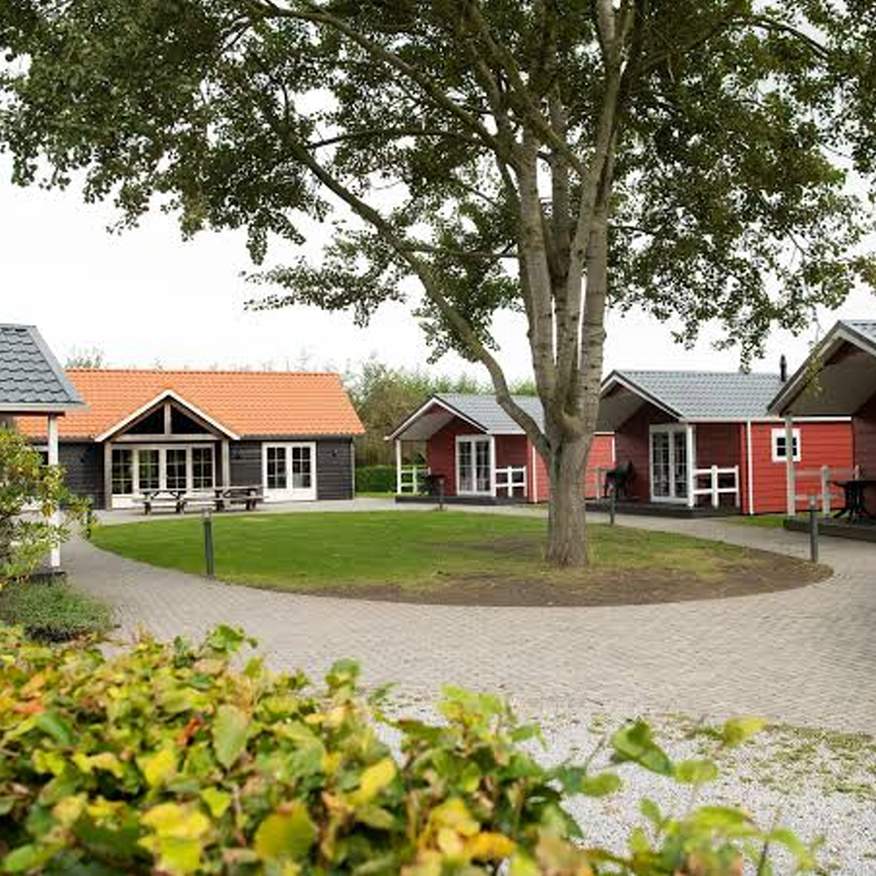
The Fall Writing Retreat is scheduled for 23-27 November 2026 at De Bijsselse Enk, Nunspeet.
WhenMon 23 - 27 Nov 2026
4TU.Ethics event Registration open
Ethics policy event 20 November
Utrecht
On 20 November, as 4TU.Ethics we will organize a policy event in which we explore how we can turn our research into actual policy.
Over the past two decades, 4TU.Ethics has grown into a strong network of scholars across four universities with a well-established Graduate School. While several of our members contribute to policy through advisory boards and other impactful activities, as a centre we have not yet focused extensively on how our collective knowledge can contribute more directly to policymaking.
This event will be the first in a series aimed at exploring both the opportunities and challenges involved in bringing ethical expertise into policy processes. Several experts with extensive experience at the intersection of ethics and policy will be present to answer your questions. We already have confirmed speakers of the Centrum voor Ethiek en Gezondheid (Centre for Ethics and Health) and the Ratenau Institute. Our very enthusiastic colleague Nynke van Uffelen will also join to share her experiences as a member of the 4TU.Ethics who is active in bridging the academia-policy gap. We are reaching out to more interesting speakers.
Rather than featuring long presentations, the event will focus on discussion and Q&A sessions. If there are specific questions about ethics and policy that you would like addressed during the afternoon, please send them to info@ethicsandtechnology.eu
The event is primarily intended for PhDs and Postdocs, but other interested members are welcome to attend. The programme will run from 13:00 to 17:00, followed by drinks and bites for those who would like to stay and continue the conversation.
You can register for the event via https://event.wur.nl/178852/registration
The registration deadline is 13 November 2026.
Over the past two decades, 4TU.Ethics has grown into a strong network of scholars across four universities with a well-established Graduate School. While several of our members contribute to policy through advisory boards and other impactful activities, as a centre we have not yet focused extensively on how our collective knowledge can contribute more directly to policymaking.
This event will be the first in a series aimed at exploring both the opportunities and challenges involved in bringing ethical expertise into policy processes. Several experts with extensive experience at the intersection of ethics and policy will be present to answer your questions. We already have confirmed speakers of the Centrum voor Ethiek en Gezondheid (Centre for Ethics and Health) and the Ratenau Institute. Our very enthusiastic colleague Nynke van Uffelen will also join to share her experiences as a member of the 4TU.Ethics who is active in bridging the academia-policy gap. We are reaching out to more interesting speakers.
Rather than featuring long presentations, the event will focus on discussion and Q&A sessions. If there are specific questions about ethics and policy that you would like addressed during the afternoon, please send them to info@ethicsandtechnology.eu
The event is primarily intended for PhDs and Postdocs, but other interested members are welcome to attend. The programme will run from 13:00 to 17:00, followed by drinks and bites for those who would like to stay and continue the conversation.
You can register for the event via https://event.wur.nl/178852/registration
The registration deadline is 13 November 2026.
WhenFri 20 Nov 2026 / 13.00 - 17.00
PhD course Registration open
LC1 Philosophy of Risk
Eindhoven University of Technology
This seminar will take place over the course of 5 days (2-4 November in Eindhoven and 9-10 November online).
WhenMon 2 - 10 Nov 2026
4TU.Ethics event Registration open
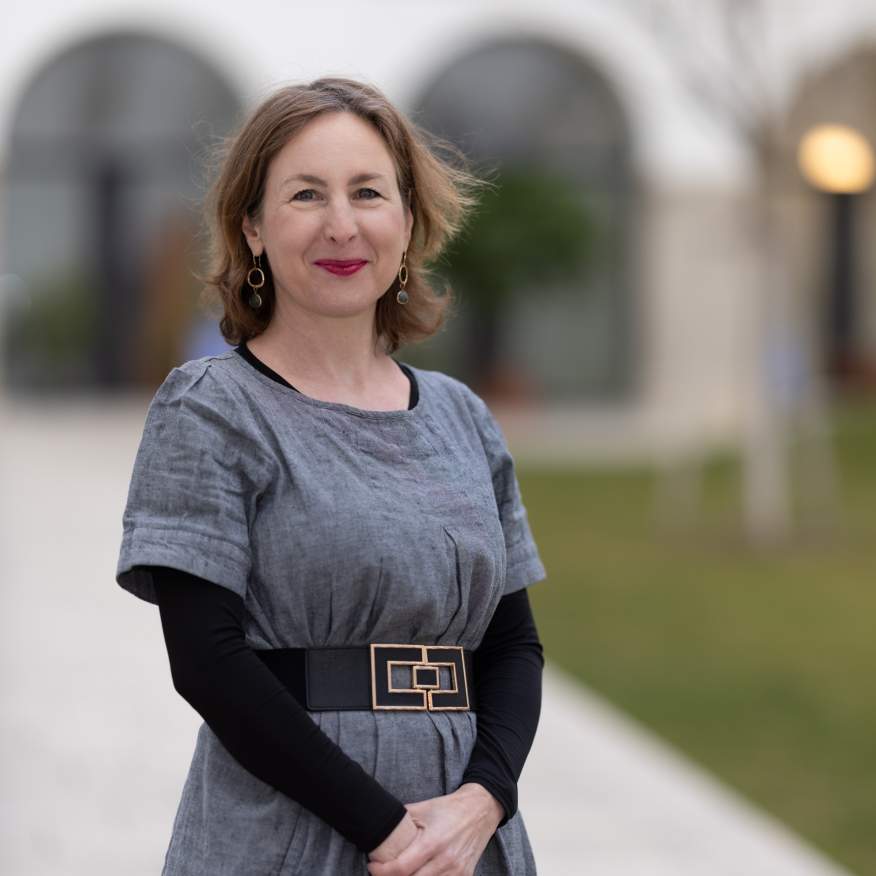
Talk and Q&A with Prof. Barbara Prainsack
Wageningen University & Research
Following the close of the conference, participants are invited to stay for a short but very interesting additional event with prof. Barbara Prainsack of the University of Vienna
WhenFri 6 Nov 2026 / 16.30 - 18.00
4TU.Ethics event Conference Registration open
International conference on Technology Ethics in Turbulent Times
Wageningen University & Research
The joint 4TU.Ethics & ESDiT international conference on "Technology Ethics in Turbulent Times. Expanding the Moral Agenda for Transformation" will take place from November 4th to November 6th 2026 at the Wageningen University in the Netherlands.
WhenWed 4 - 6 Nov 2026

4TU.Ethics event PhD event Registration open
PhD Day 2026
Utrecht
We are happy to announce this year’s 4TU Ethics PhD Day, taking place on 23 October 2026!
This year, we will explore the relation between philosophy and activism. What does it mean for philosophy not only to understand and interpret the world, but also to contribute to changing it? What does this require from philosophers in terms of what they do, both within and beyond academia? Throughout the day, we will approach this theme from different perspectives, ranging from public engagement and activism to the role of philosophers as public intellectuals. We will also reflect on what it means to do philosophy in the context of the current anti-intellectualist climate, and on the possibilities and challenges of bringing philosophical thinking into public and political spaces.
Date: 23 October (Friday) 2026
Location: Quinton House (Utrecht)
Time: 10.00 – 17.30
This year, we will explore the relation between philosophy and activism. What does it mean for philosophy not only to understand and interpret the world, but also to contribute to changing it? What does this require from philosophers in terms of what they do, both within and beyond academia? Throughout the day, we will approach this theme from different perspectives, ranging from public engagement and activism to the role of philosophers as public intellectuals. We will also reflect on what it means to do philosophy in the context of the current anti-intellectualist climate, and on the possibilities and challenges of bringing philosophical thinking into public and political spaces.
Date: 23 October (Friday) 2026
Location: Quinton House (Utrecht)
Time: 10.00 – 17.30
WhenFri 23 Oct 2026

PhD course Registration closed
LC9 Philosophy and Ethics of AI
University of Twente
This course focuses on philosophical and ethical issues pertaining to Artificial Intelligence. The course consists of 12 sessions (±150mins) distributed over six days (3 online / weekend / 3 at UT). The first set of sessions will concern technical aspects and operational principles of AI systems. These sessions will be led by experts in the field of computer science, communication studies, and informatics. The second set of sessions concern the large variety of philosophical and ethical issues related to AI. Topics include epistemological issues related to transparency, explainability, and knowledge production; political issues related to (data) ownership, responsibility, and social implications; ecological issues related to energy use and sustainability; and ethical issues related to bias, privacy and value change. Lecturers are experts in the field of philosophy of technology and ethics of AI.
WhenWed 7 - 14 Oct 2026
PhD defence
Towards a Just Implementation of Carbon Dioxide Removal
University of Twente
Elisa Paiusco will defend her dissertation called Towards a Just Implementation of Carbon Dioxide Removal: A Capabilities Approach at 18 September 2026 12:30-14:00 at Waaier, 4 at the University of Twente.
More details and the link to the livestream can be found here.
Description
Carbon dioxide removal (CDR) comprises an array of techniques that remove carbon dioxide from the atmosphere and durably store it. Despite widespread consensus on the need for CDR to achieve the temperature goals of the Paris Agreement, important questions remain regarding the ethical permissibility of deploying these techniques at scale. How should climate justice be conceptualised in the governance and implementation of CDR? This dissertation examines the potential injustices associated with the prospective deployment of CDR techniques. Particular attention is given to three interconnected concerns: the intergenerational imposition of risk, the displacement of unjust harms onto economically developing nations, and the moral significance of nonhuman nature in CDR governance. This dissertation argues that climate justice must be understood as multi-dimensional, both in terms of the dimensions of well-being it recognises and the dimensions of justice it incorporates–namely, distributive, procedural, and recognitional justice. Conceptualising climate justice in this way allows for a more adequate account of the complex ethical landscape within which CDR is likely to operate. Building on this premise, the dissertation develops a contextual procedural capabilities approach to evaluate the ethical permissibility of CDR deployment. This framework provides a normative basis for assessing the fair implementation of CDR under conditions of value pluralism and uncertainty. The analysis demonstrates that CDR cannot be assessed in isolation from broader questions of justice, including who counts as a subject of justice and how processes of contextual deliberation should be structured. The dissertation argues that legitimate governance of CDR depends on participatory and deliberative processes through which relevant capabilities can be identified contextually and evaluated in relation to broader goals of sustainable development.
More details and the link to the livestream can be found here.
Description
Carbon dioxide removal (CDR) comprises an array of techniques that remove carbon dioxide from the atmosphere and durably store it. Despite widespread consensus on the need for CDR to achieve the temperature goals of the Paris Agreement, important questions remain regarding the ethical permissibility of deploying these techniques at scale. How should climate justice be conceptualised in the governance and implementation of CDR? This dissertation examines the potential injustices associated with the prospective deployment of CDR techniques. Particular attention is given to three interconnected concerns: the intergenerational imposition of risk, the displacement of unjust harms onto economically developing nations, and the moral significance of nonhuman nature in CDR governance. This dissertation argues that climate justice must be understood as multi-dimensional, both in terms of the dimensions of well-being it recognises and the dimensions of justice it incorporates–namely, distributive, procedural, and recognitional justice. Conceptualising climate justice in this way allows for a more adequate account of the complex ethical landscape within which CDR is likely to operate. Building on this premise, the dissertation develops a contextual procedural capabilities approach to evaluate the ethical permissibility of CDR deployment. This framework provides a normative basis for assessing the fair implementation of CDR under conditions of value pluralism and uncertainty. The analysis demonstrates that CDR cannot be assessed in isolation from broader questions of justice, including who counts as a subject of justice and how processes of contextual deliberation should be structured. The dissertation argues that legitimate governance of CDR depends on participatory and deliberative processes through which relevant capabilities can be identified contextually and evaluated in relation to broader goals of sustainable development.
WhenFri 18 Sep 2026 / 12.30 - 14.00

PhD course Registration closed
LC7 Empirical methods for Philosophy of Technology
Delft University of Technology
Empirical philosophy represents an ambition to make conceptual, rationalistic research more “lived,” corresponding with the messy complexity of sociotechnical lives. Through a variety of quantitative and qualitative ways of interpreting reality, empirical philosophy gives the theoretical constructs a reality check, maintaining space for conceptual flexibility and innovation.
WhenMon 13 - 17 Apr 2026

PhD course Registration closed
CC1 Philosophies of Technology
Delft University of Technology Eindhoven University of Technology
The aim of this course is to introduce students to classic themes, concepts and authors in ethics and philosophy of technology via a selection of key academic articles, while also looking at some more recent work from the 4TU.Ethics community. The course runs across five days and covers different dimension of philosophy of technology: metaphysics, (meta)ethics, politics, design, education. The course is designed as a mix of lectures and interactive exercises or workshops run by researchers in the 4TU.Ethics network.
WhenWed 11 - 17 Mar 2026

PhD course Registration not yet open
LC6 Conceptual Engineering, Social Disruption, and Technology
Utrecht
This is the second PhD school organised by the “Ethics of Socially Disruptive Technologies” (ESDiT) consortium, in collaboration with 4TUethics and the OZSW. The course engages with debates about conceptual engineering in the context of socially disruptive technologies, analysing ways in which socio-technical change can disrupt conceptual schemes. We will look at theoretical debates as well as concrete case-studies. Various senior researchers from the ESDiT consortium will participate as instructors.
WhenMon 16 - 20 Feb 2026
PhD course Registration closed
LC5 Continental Philosophy of Technoscience
Erasmus University Rotterdam
This course focuses on present-day and particularly continental philosophical approaches to technology and science. The course consists of 12 sessions (±150mins), with sessions centering around authors (e.g. Heidegger, Simondon, Stiegler), and other sessions being more thematic (e.g. Synthetic Cell, AI, Anthropocene). Confirmed lecturers are:
WhenWed 26 Nov until 3 Dec 2025
HomeCalendar