



Bridging Health and Engineering: 4TU.Health Event Brings Stakeholders Together to Shape the Future of Healthcare Technology
First edition of the 4TU.Health event in Wageningen that brings together researchers, clinicians and policymakers around one shared agenda: technology that genuinely works in healthcare
The 4TU.Health Centre held its first 4TU.Health Event at Omnia Congrescentrum in Wageningen on 28 May 2026, under the theme ‘Bridging Health and Engineering’. The event brought together some 150 researchers, clinicians, entrepreneurs, policy-makers and healthcare professionals from across the Netherlands and beyond, united by a single purpose: accelerating the responsible translation of technological innovation into everyday care practice.
Organised by the 4TU.Health Centre, the collaborative health research platform of TU Delft, TU Eindhoven, the University of Twente and Wageningen University & Research, the event marked both a reflection on six years of progress and a forward-looking exercise in co-creating the network’s strategy for 2026–2030.
Looking Back to Move Forward
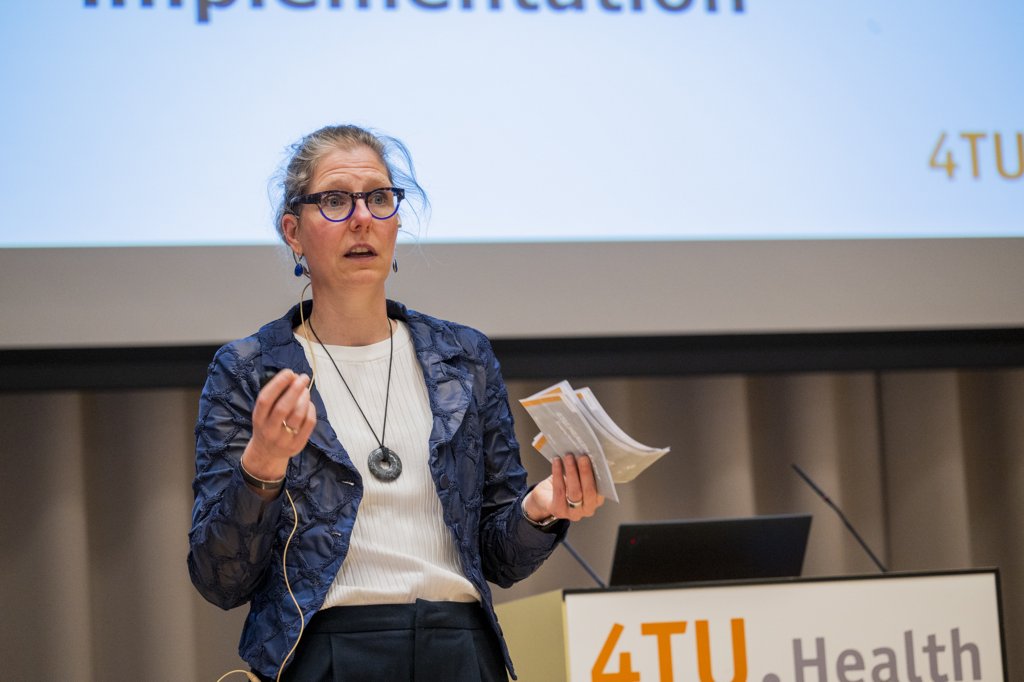
The plenary opening was led by 4TU.Health Chair Noortje Bax, who reflected on the centre’s achievements since its founding and invited participants to actively co-shape its next strategic phase. The session set the tone for a day built not on passive reception but on collective ownership: participants were explicitly asked what directions should define the network’s priorities in the years ahead.
One message ran through both the opening and the parallel sessions: implementing technology in healthcare is not the same as simply installing it. The real world of the hospital is shaped by complex forces, professional routines, funding structures, regulations and human behaviour that require tailored approaches for every innovation.
Morning Sessions: Technology Meets Reality
The morning parallel sessions brought the central tension of the day into sharp focus across five concurrent tracks. The AI session made clear that the technology’s broad promise is both its strength and its risk: meaningful adoption in areas such as intensive care, diabetes management and pain monitoring requires strategic, ethical and practical conditions to be met from the outset, not retrofitted after the fact. The RECENTRE session reinforced this by demonstrating how remote monitoring for cancer and obesity patients demands sustained multidisciplinary collaboration, with patient-centred design as the foundation rather than an afterthought. The care journey session placed participants directly in the shoes of healthcare organisations, practitioners from the Albert Schweitzer Hospital and St Antonius Hospital illustrated how innovations often fail not because the technology is flawed but because adoption is treated as a technical rather than a human challenge. The support structures session surfaced a systemic gap in the pathways from research to market, calling for better alignment with national and regional ecosystems, while the Creathon workshop demonstrated how challenge-based learning, anchored in real health problems, can rapidly convert diffuse ideas into concrete, testable opportunities.
Connecting Over Lunch: A Shared Language and a Richer Landscape
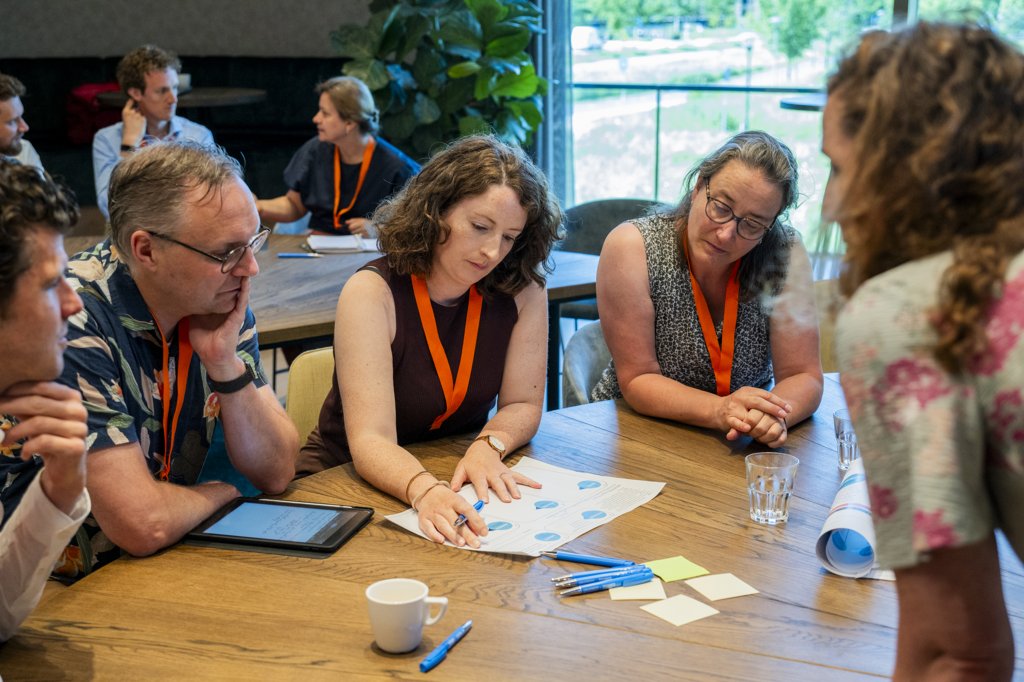
The networking lunch offered far more than a chance to refuel. Informal conversations that had begun in the morning sessions continued across tables, with attendees from different disciplines and institutions discovering unexpected common ground. Two structured activities gave the lunch an additional layer of substance.
The first, ‘Mapping the Landscape: Towards a Shared Language’, tackled a challenge that often goes unspoken in healthcare innovation: the ambiguity around terms such as MedTech, HealthTech, Digital Technology and Tech4Health. These concepts are widely used across research, policy and industry, yet their boundaries are rarely agreed upon, leading to misalignment in conversations about solutions, funding and implementation. Participants were invited to engage with a range of examples and indicate which categories they considered most applicable, contributing to an initial community-wide mapping that will inform further alignment within the 4TU.Health network.
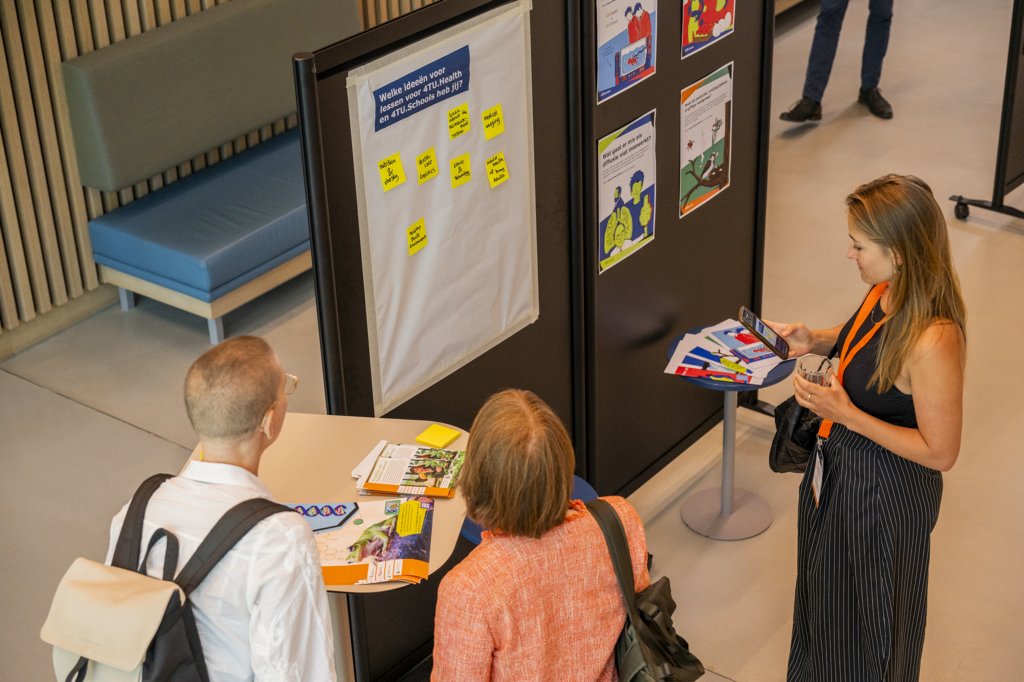
The second activity, ‘Health Across 4TU -Poster Gallery’, placed side by side the diverse health-related activities, projects and approaches from across the four technical universities and their partner networks. The exhibition offered a vivid snapshot of the breadth of work underway: from engineering and data science to education and societal impact. It created space for new conversations and unexpected connections, and invited visitors to imagine how deeper collaboration across these networks could multiply 4TU’s contribution to the health domain.
Afternoon Sessions: From Bench to Bedside and Beyond
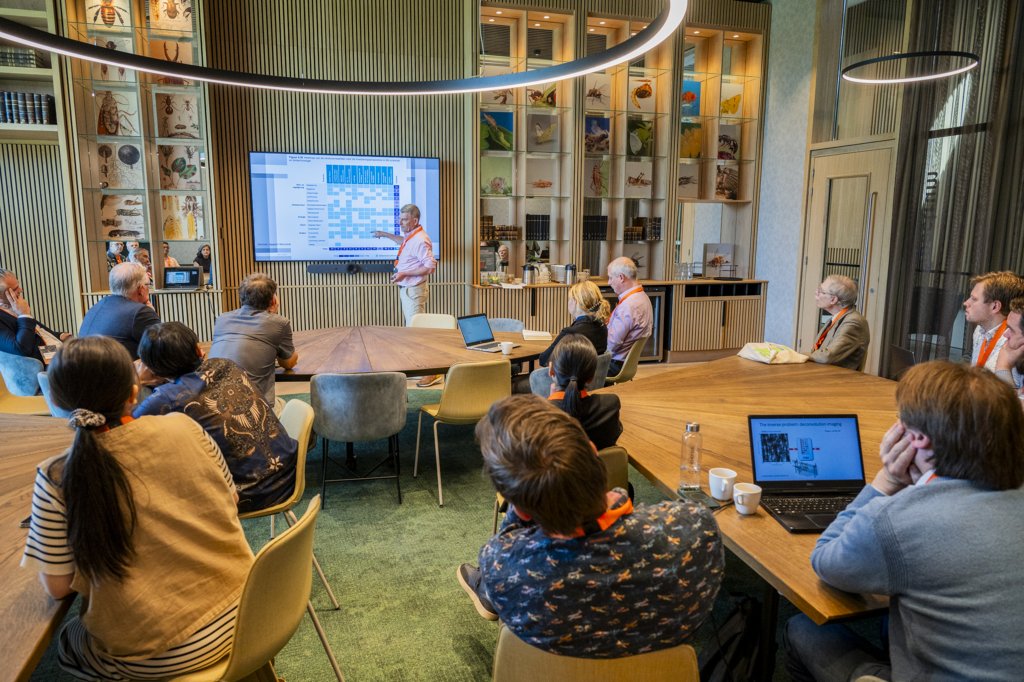
The afternoon sessions took the day’s themes into more specialist territory, yet the same fundamental questions resurfaced in each room. The imaging session revealed the pace of progress in modular, multispectral and hybrid imaging technologies, while pointing to the persistent gap between what is technically achievable and what is actually reimbursed and scaled in clinical practice. The bioengineered systems session explored the frontier of organs-on-chip and advanced cellular bioreactors, where reliable real-time monitoring is as much of an innovation challenge as the biological systems themselves. The implementation and scaling session confronted the challenge MedTech innovators know well: a high Technology Readiness Level is not the finish line — real-world cases including Cue2Walk and smartQare illustrated how the journey from pilot to structural solution is obstructed by fragmented responsibilities, misaligned reimbursement models and regulatory friction, prompting a clear call for shared ownership across the entire stakeholder ecosystem. The final session on how technology transforms the professional looked further ahead, concluding that producing engineers capable of working at the intersection of technology and care requires clinical practice and academic training to be far more tightly interwoven than they currently are.
Panel Discussion: Bridging Health and Technology Together
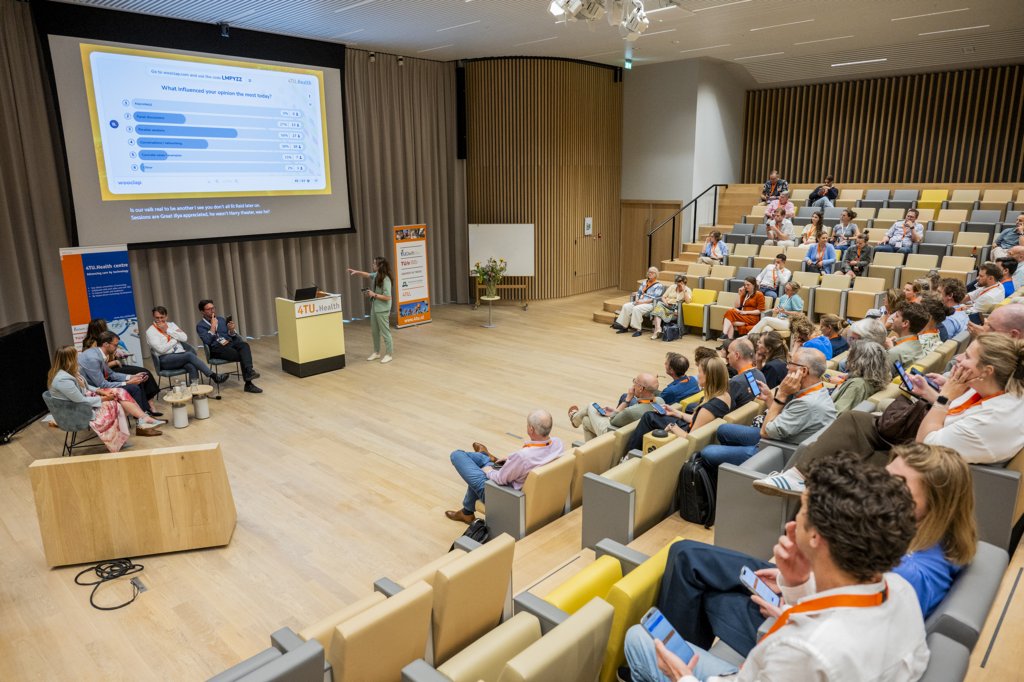
The day closed with a plenary panel discussion bringing together diverse perspectives from across the healthcare innovation ecosystem. Maarten de Ruijter (VWS), Iris van Bemmel (FME), Jan de Becker (NWO), Danique Roodnat (Samenwerkende Topklinische Ziekenhuizen) and John van den Dobbelsteen (Disciplineraad Biomedische Technologie) explored the conditions for responsible and effective implementation of healthcare technology, the role of the 4TU universities in setting future research priorities, and the structural changes needed across funding, regulation and education.
A recurring theme was the importance of scaling what works. As one panellist observed, the Netherlands has relatively few pilots but too few planes: the challenge is not a shortage of innovation but a shortage of the conditions needed to move from proof of concept to structural implementation. The panel called for greater risk appetite among investors, stronger alignment between healthcare providers and technology developers, and a willingness to operate at the boundaries of what current regulation permits.
Key Insights: What the Day Revealed
Across sessions, discussions and corridor conversations, several insights emerged with striking consistency. The event made clear that when healthcare professionals push back on innovation, this rarely signals opposition to change: it more often reflects a legitimate need for the innovation to fit better within existing realities. Equally, the appetite for technological transformation in healthcare is real, but the readiness of systems and organisations to absorb that transformation remains a critical constraint.
Participants repeatedly emphasised that cross-boundary collaboration, across institutions, disciplines and even at the edges of existing regulation, is not optional but essential. The gap between what researchers consider important and what makes a genuine difference in daily care practice is real and must be consciously closed; development must begin by walking the clinical floor, asking questions and verifying that data aligns with everyday reality rather than idealised models. The event also surfaced a broader systemic challenge: healthcare demands integral solutions to integral problems. Piecemeal approaches, however technically sophisticated, are unlikely to drive lasting change. Several voices raised the possibility of revisiting earlier Dutch experiments with ‘experimental reimbursement’ frameworks through the Netherlands Healthcare Authority (NZA) as a potential mechanism to create the financial and regulatory space that meaningful innovation requires.
“Everything is possible, as long as you start with the problem and the question, and resist the urge to jump straight to the solution.”
The Day in One Image
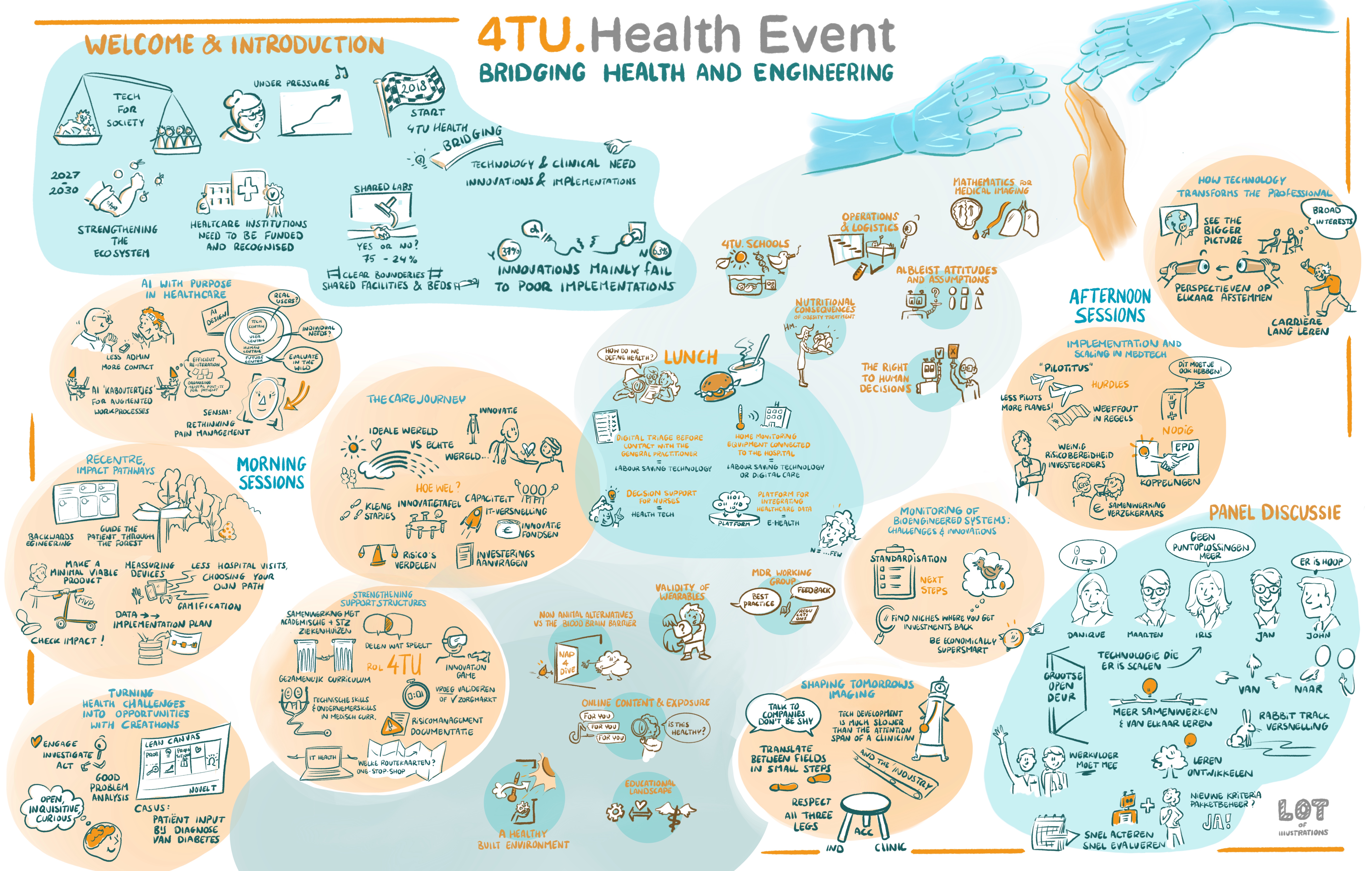
The illustration below, created live during the event, captures the breadth and energy of the day, from the opening plenary through the parallel sessions to the closing panel discussion. It reflects the themes, ideas and connections that surfaced across 4TU.Health’s ‘Bridging Health and Engineering’ event.
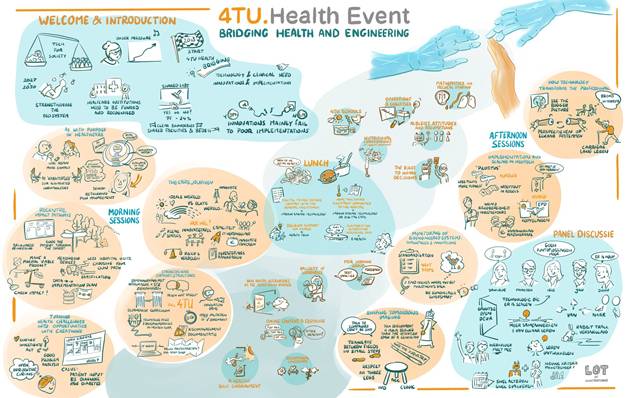
Visual summary of the 4TU.Health Event. Illustration by LOT Illustrations.
About 4TU.Health
The 4TU.Health Centre brings together TU Delft, TU Eindhoven, the University of Twente, Wageningen University & Research and their external partners to develop advanced technology for patient-centred healthcare innovation. By combining technological innovation with insights from social and medical sciences, the four technical universities contribute to structural solutions for the challenges facing healthcare, with the patient voice at the heart of a changing care environment.