





Project introduction and background information
This project aims to develop an interactive virtual reality (VR) training environment for future scientific divers. Scientific diving courses are intensive, costly and limited by logistics, all limiting the amount students that can be trained at a time. VR can complement practical training by allowing students to repeatedly practise scientific methods, safety procedures, and decision-making in realistic, risk-free situations before entering the water. Students can, for example, practise setting up sampling areas, identifying equipment problems and responding to unexpected situations. This can improve preparedness and potentially reduce the number of physical dives needed, while maintaining training quality. The project is particularly relevant for students and instructors of scientific diving, but also for researchers and project managers who work with scientific divers without diving themselves. The digital approach can ultimately support more accessible, scalable, and safer scientific-diving education.
Objective and expected outcomes
Objectives:
- Develop an interactive VR environment to complement scientific-diving training.
- Improve trainee preparedness for scientific methods, decision-making and dangerous situations.
- Reduce the amount of physical underwater training required without compromising educational quality.
- Evaluate the educational, practical and economic value of VR-supported training.
Outcomes:
- A tested and refined VR training tool with realistic scientific-diving scenarios.
- Better-prepared and more confident scientific divers.
- Evidence of the tool's educational effectiveness, usability and potential cost savings, supporting wider adoption in European scientific-diving training.
Results and learnings
As a first step towards the full VR training environment, we developed and tested a 360° virtual experience based on a real scientific diving exercise in Krk, Croatia. During the Scientific Diving Practical Course, a professional filmmaker (Joseph Henrey) recorded students performing a benthic sampling exercise, including a deliberately introduced equipment-handling mistake. An instructor wearing a full-face mask provided live narration, altogether creating an immersive experience that closely reflected an actual scientific dive.
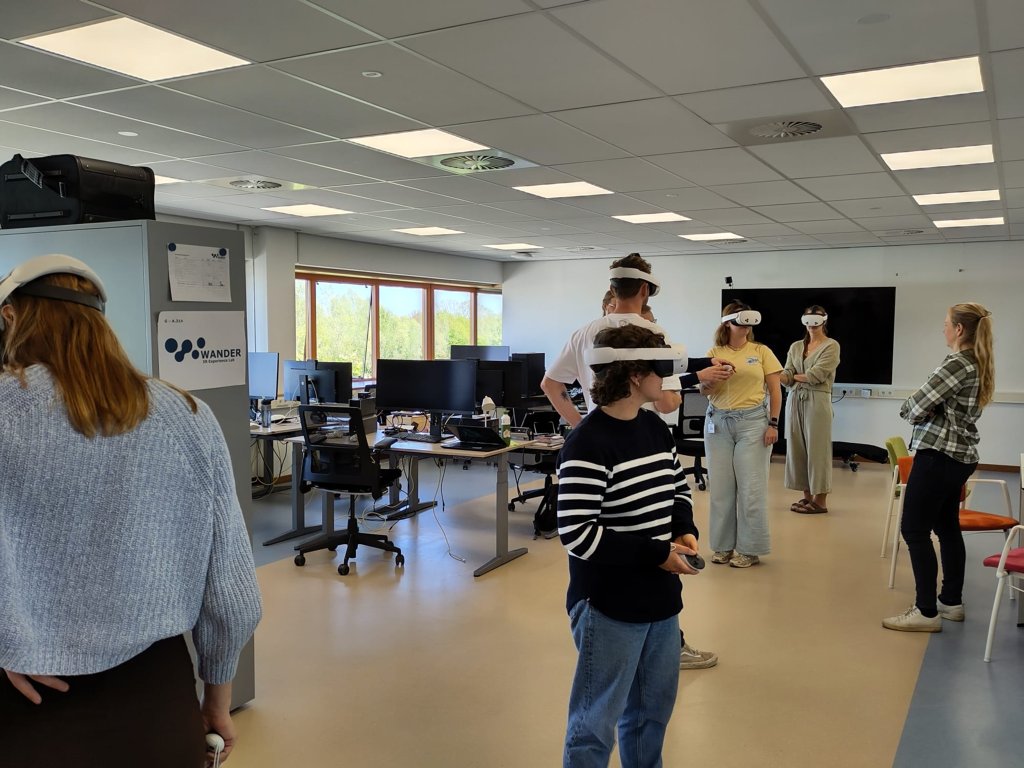
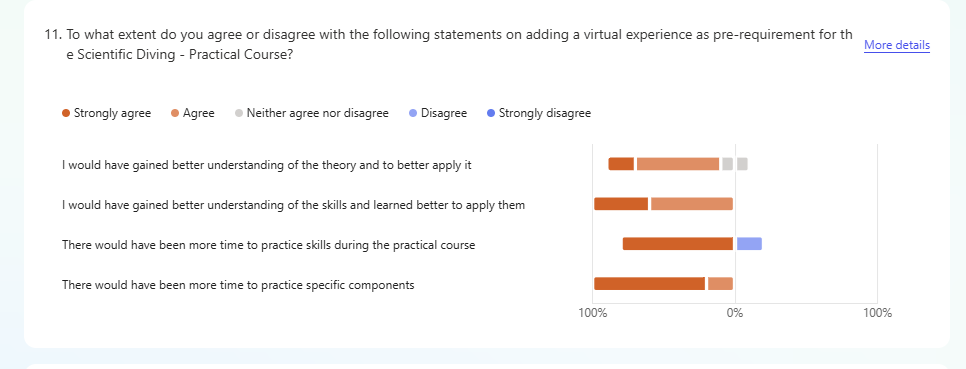
Five students who had completed the course the previous year tested the experience in VR and provided feedback. All participants enjoyed the experience and considered it useful preparation for future students. They particularly valued seeing how a dive is organised, how long different steps take, how team members work together, and what equipment and techniques are involved. Participants felt that seeing these elements beforehand could improve mental preparedness, help students understand practical exercises more quickly, and potentially make better use of limited underwater training time.
The pilot also provided valuable insights into how students learn from immersive experiences. Participants appreciated seeing correct techniques and realistic mistakes, and suggested that future scenarios could support active decision-making. Overall, the pilot demonstrated the potential of VR to bridge theoretical preparation and practical underwater training, while providing a strong basis for further development and evaluation.
Here are some photos/pictures of the experience: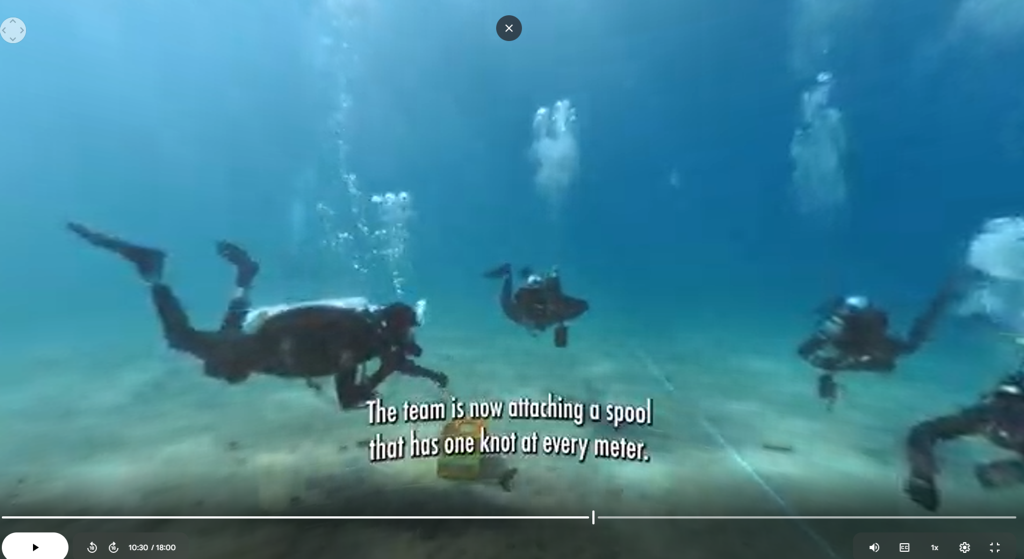
Recommendations
Based on the pilot and student feedback, future VR modules should combine realistic demonstrations with interactive elements that require students to make decisions, identify mistakes or select appropriate equipment. Scenarios should clearly explain team roles, dive organisation and scientific techniques, while ensuring that small equipment details remain visible. The VR experiences should complement rather than replace practical training, preparing students before they enter the water. Further testing with larger student groups should assess whether this preparation improves performance and allows training time or the number of physical dives to be reduced.
Practical outcomes
The experience gained from this pilot provides a strong foundation for developing a broader set of VR training modules. Future videos will focus on key equipment and techniques, the underwater environment and scenery, team organisation, and a wider range of scientific diving scenarios. These modules will build on real training situations and incorporate interactive elements where appropriate. Together, they will form a growing library of immersive learning experiences that can be integrated into the theoretical course and used to better prepare students for practical underwater training.