

Pepijn van Rijthoven, Sven van Leeuwen, Angela Hanna
How can we design with nature rather than against it?
Key marine species have disappeared from the Wadden Sea. The reefs these species used to build gave shelter and food to other marine life, and the ecosystem has become poorer without them. Cities face a similar degradation. Brick and concrete store heat by day and release it at night, and the mosses and plants that could cool a wall find nowhere to grow. Air conditioning keeps people comfortable indoors and pushes the heat out into the street, so public space becomes even more uncomfortable on hot days. In all these cases, our buildings have grown apart from the ecosystems around them. The three projects in this exhibition find an answer in new uses of clay, one of the oldest building materials: clay.
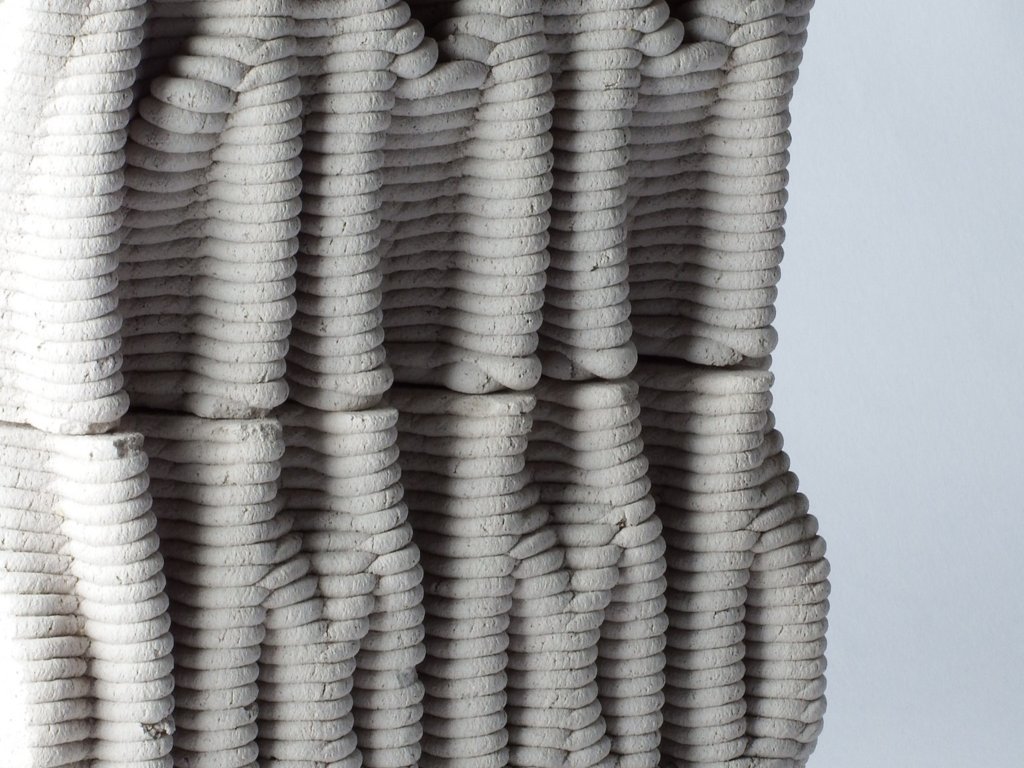
Printing Living Futures brings together three TU Delft graduation projects that work with the same material: clay shaped by 3D printing.
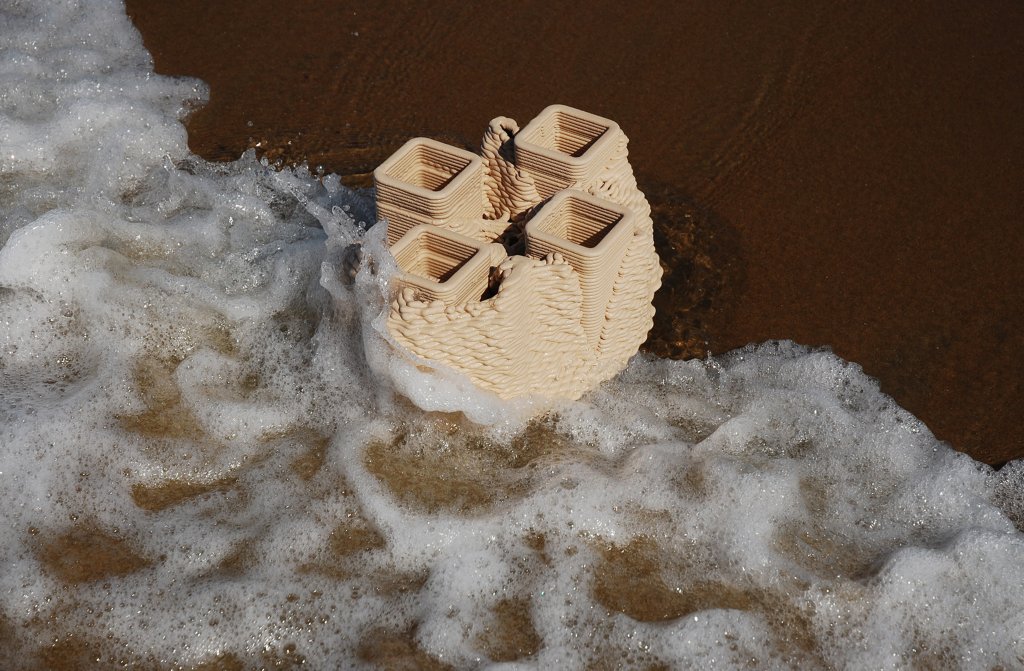
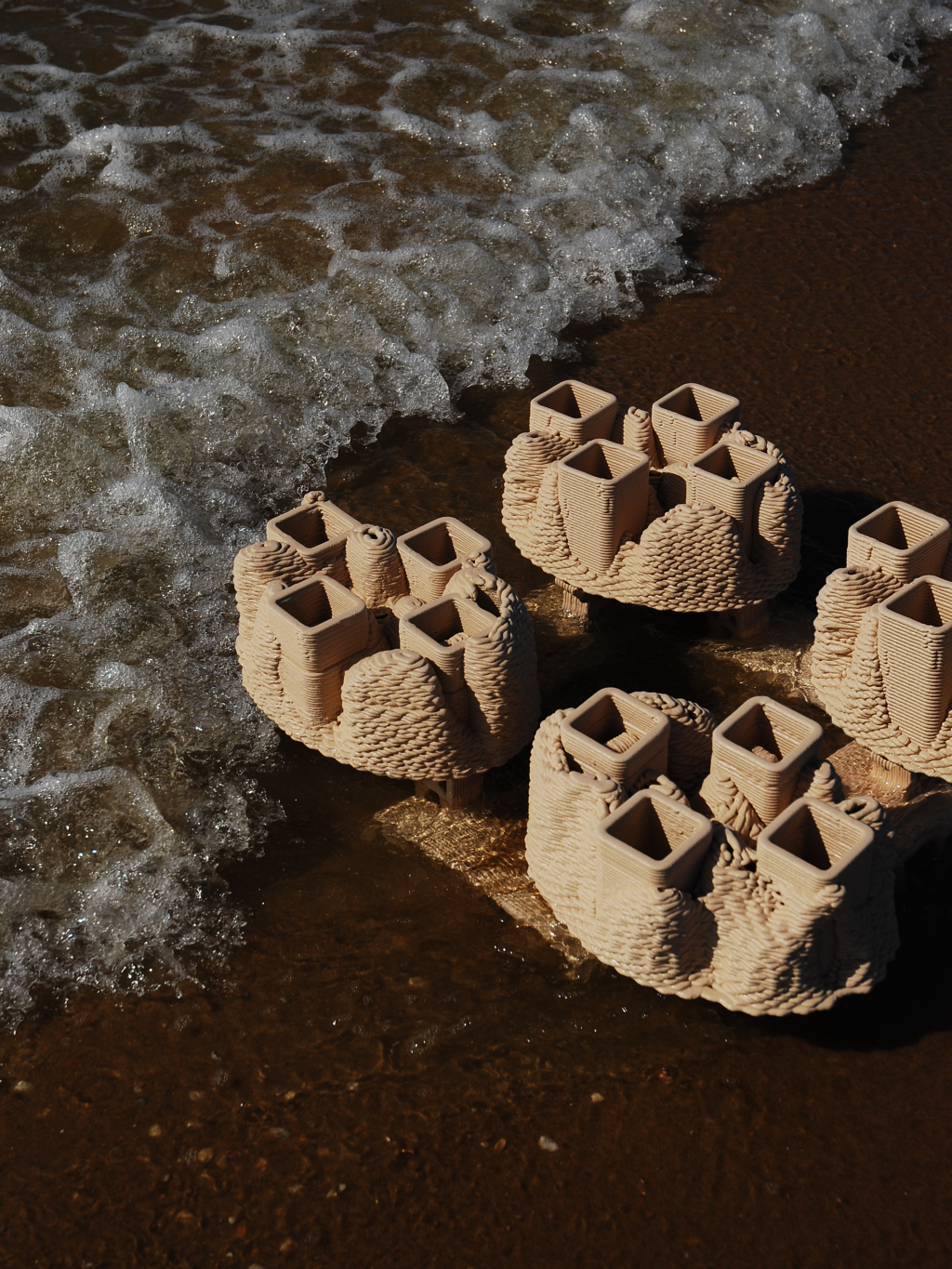
Printing Living Reefs designs reef modules for the Wadden Sea, with a shape derived from natural reefs aiming to develop structures that can support life and resist the intertidal zone.
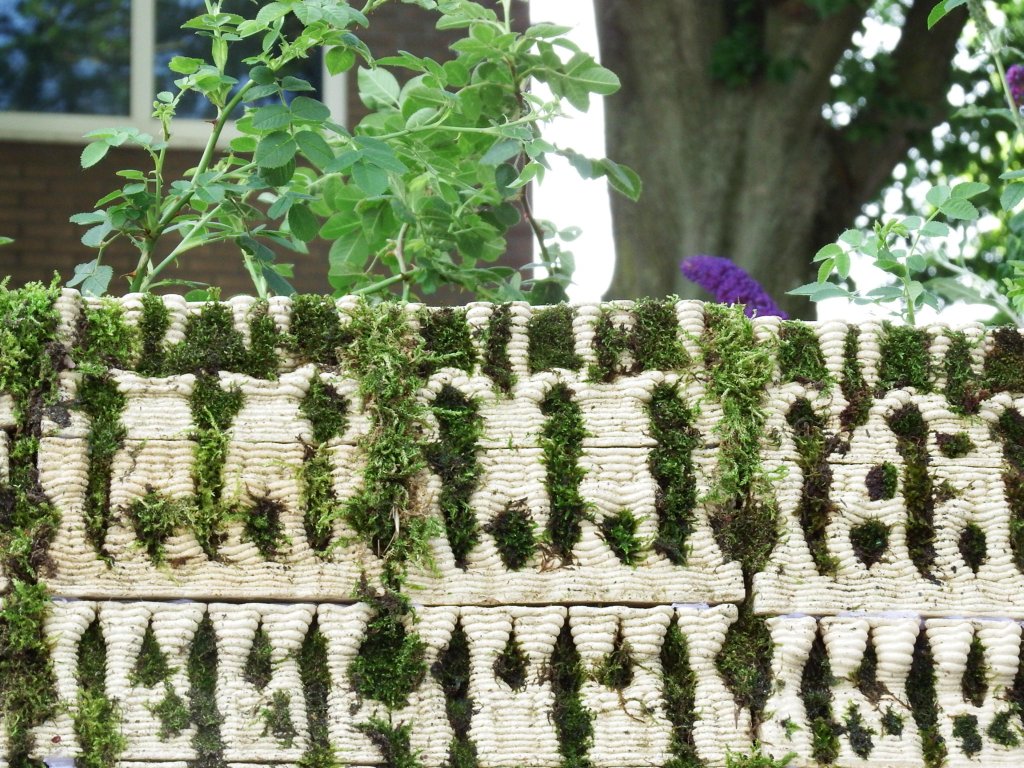
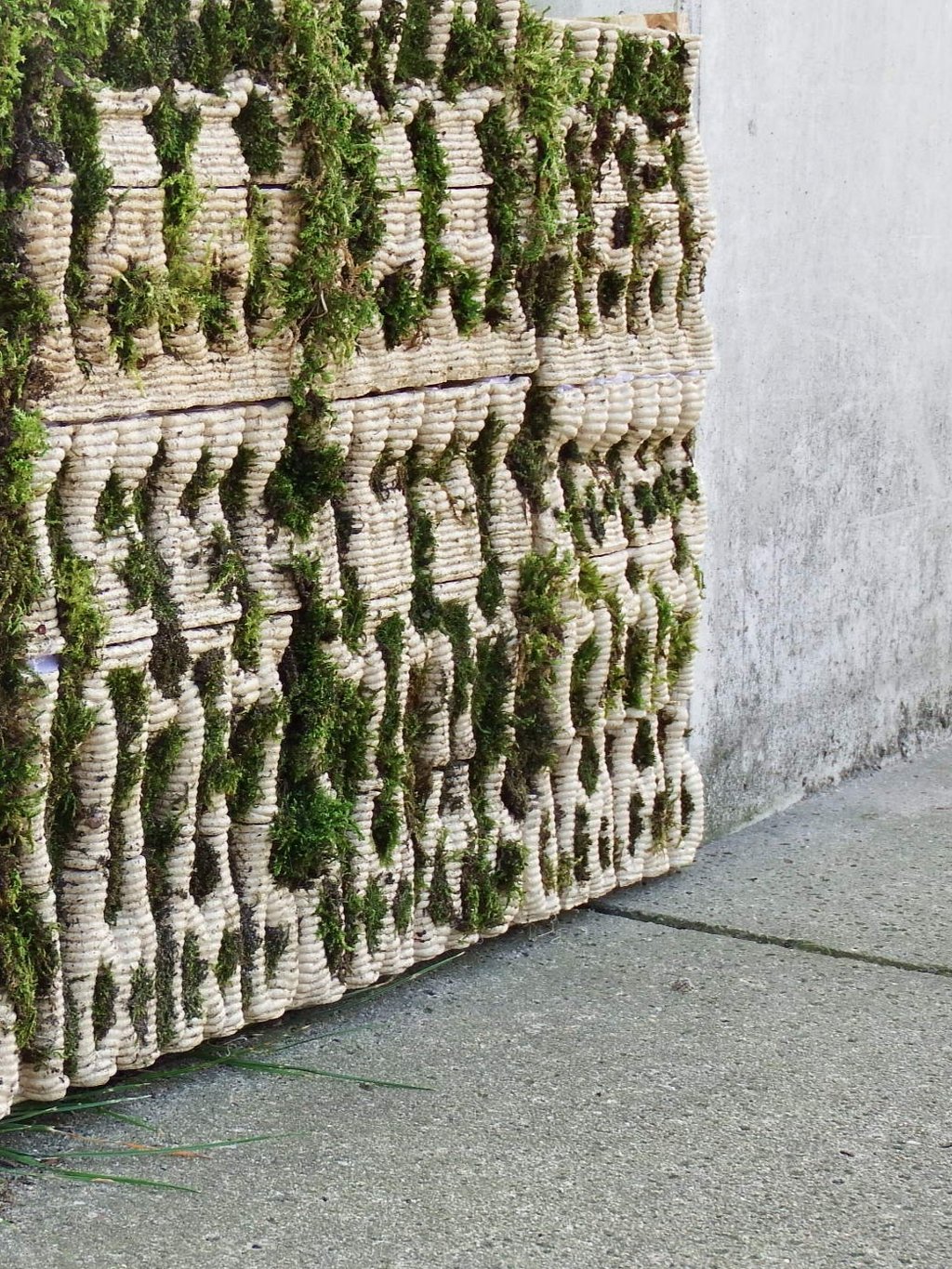
Printing Living Walls makes the façade itself the habitat. Its ceramic tiles are porous, so they collect rainwater and pass it on to mosses and lichens, working like the vascular system of a plant.
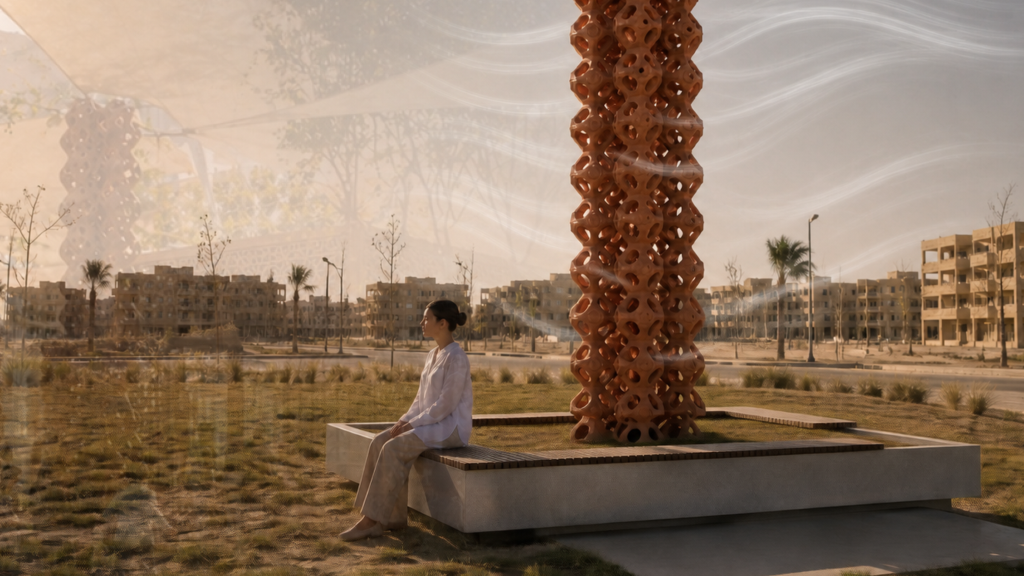
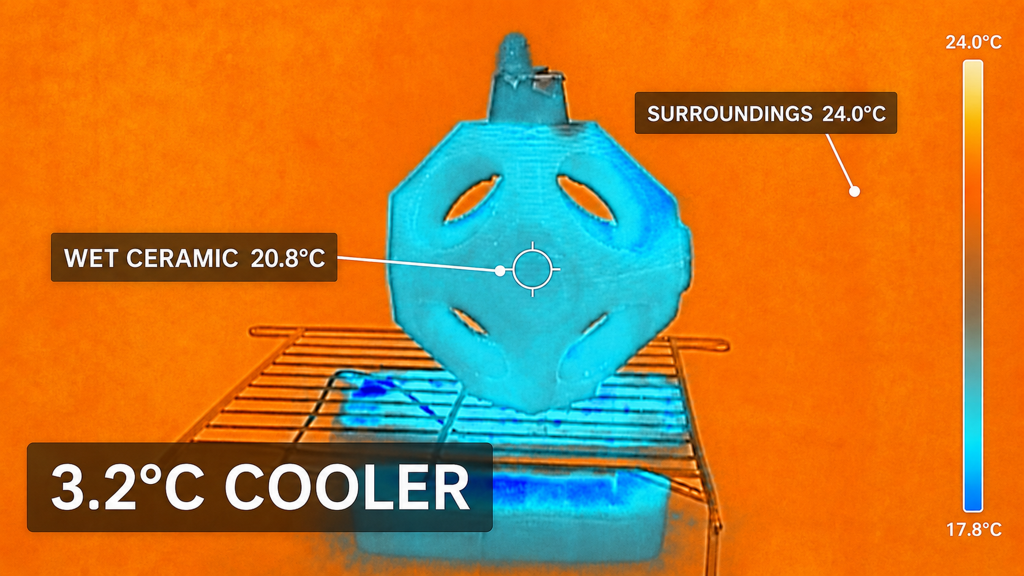
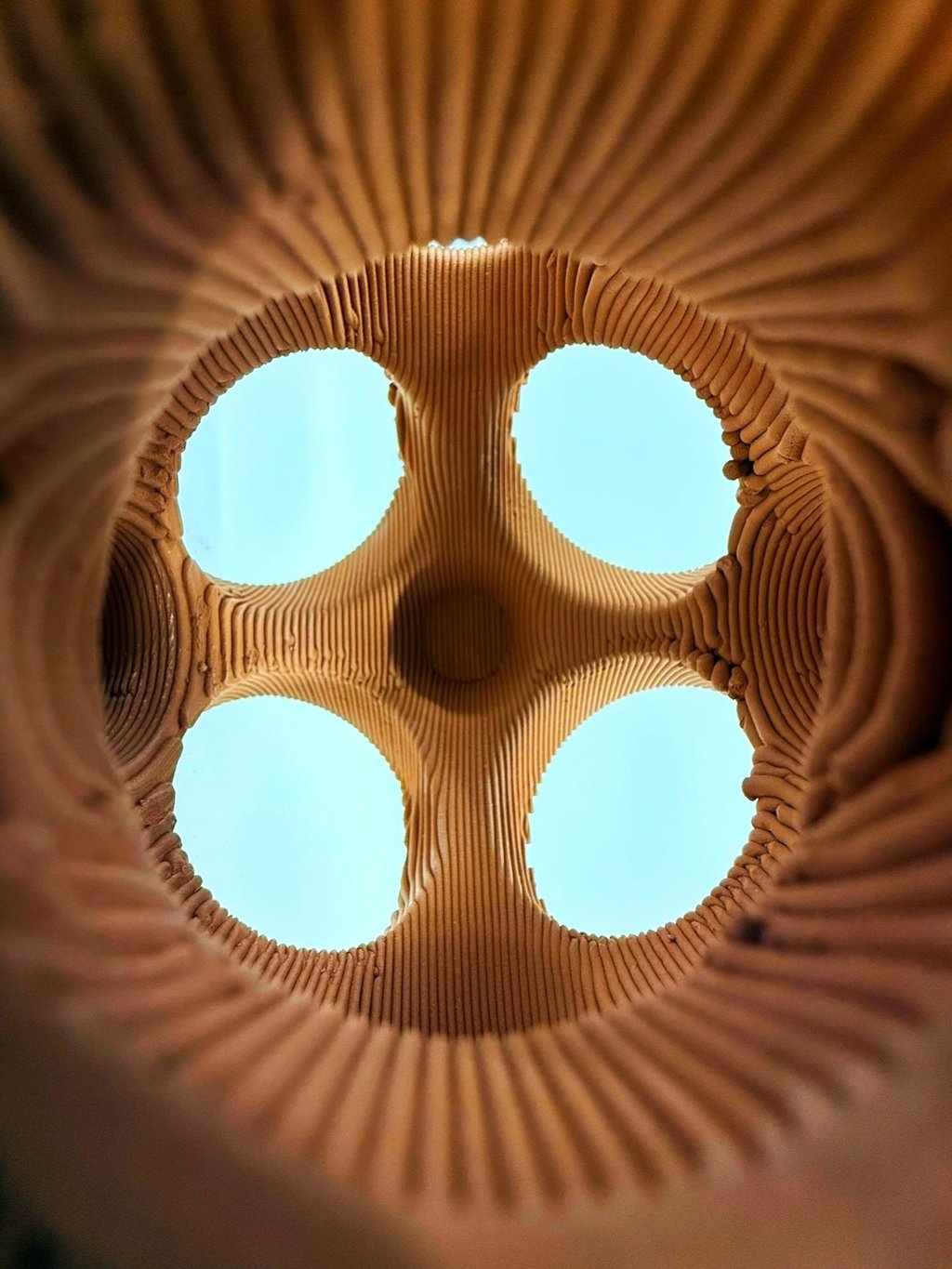
Printing Passive Cooling Tiles translates the Egyptian mashrabiya, a carved screen, into stackable terracotta modules that cool outdoor air in Cairo through shade, airflow, and evaporating water.
All three were developed by making: recipes, geometries, and prototypes were printed, tested, broken, and reprinted, thereby building the design knowledge. Each project is tuned to a different place: the currents of the Wadden Sea, the rain of a Dutch city, or the heat of urban Cairo.
Together they suggest an approach in which local climate, cultural heritage, and the needs of a specific species set the design brief, while clay printing can be used to generate solutions. These projects ask you to imagine what else could be possible.
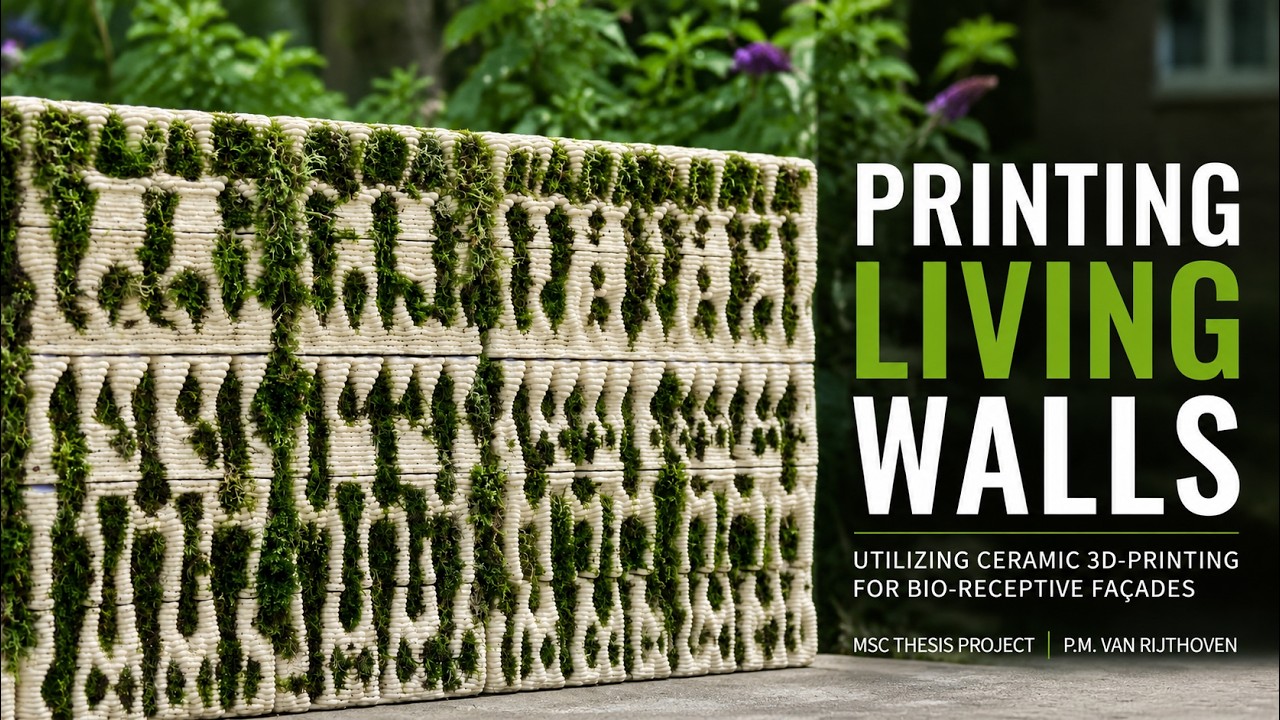
For Printing Living Reefs: settlement is measured in seasons; for Printing Living Walls: moss takes years to cover a wall; and for Printing Passive Cooling Habitats: behaviour in wind, frost, and salt water can only be proven outdoors over long periods.
What they all demonstrate is that using existing technology, a surface can be designed to host other species.