



Yuka Satori
According to the WHO, 2.2 billion people in the world live with a vision impairment, a number expected to grow as populations age. We are all getting older, day by day — so this may not be a problem only for "them," but for all of us. Digital libraries are often expected to remove physical barriers to reading. But when I interviewed blind and low-vision readers about how they browse, I found a different barrier: most digital libraries are built assuming people can see. Sighted readers glance at a cover and sense a book's mood in an instant. Audio-first readers hear only a title and author, and often end up browsing the same familiar genres. It made me wonder: is access to information enough to call a system inclusive? This question led me to explore a way of browsing books through sound and space.
Can you judge a book by its cover — with your ears?
For this project, I interviewed seven blind and low-vision readers about how they browse, and what they wished for. Many told me they wanted to stumble on a good book by chance, and that a spatial, sound-based way of browsing seemed promising. But while the idea of wandering was well received, many also said they needed enough structure to find their way back. Two rounds of user testing followed, shaping the design into what it is now.
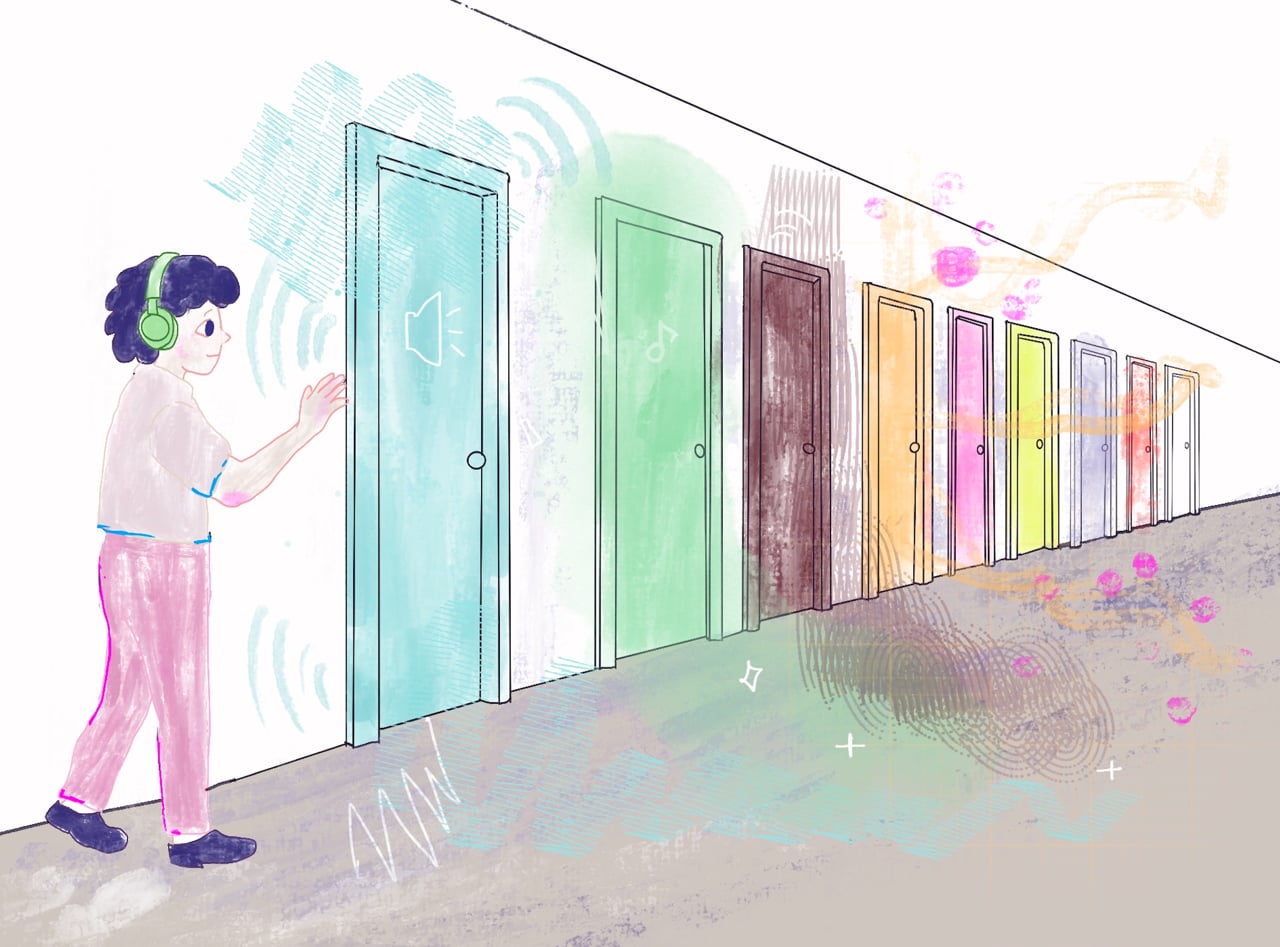
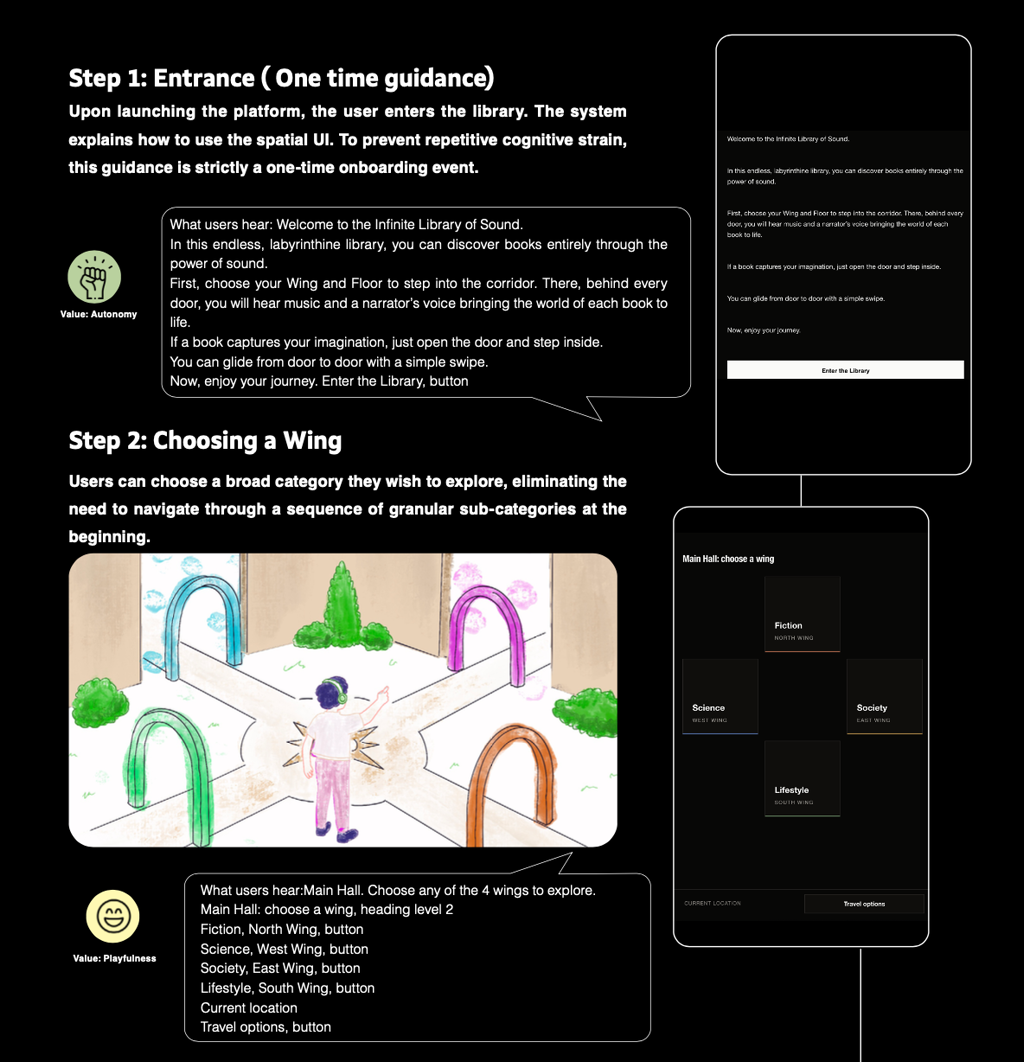
Each book's "vibe" — a short piece of AI-generated music — is built from its cover's colours, the objects in its story, and its pace. A warm, red cover might become gentle guitar; a tense thriller, a fast, uneasy beat. Instead of a summary, readers hear this vibe first, much like a sighted reader glancing at a cover.
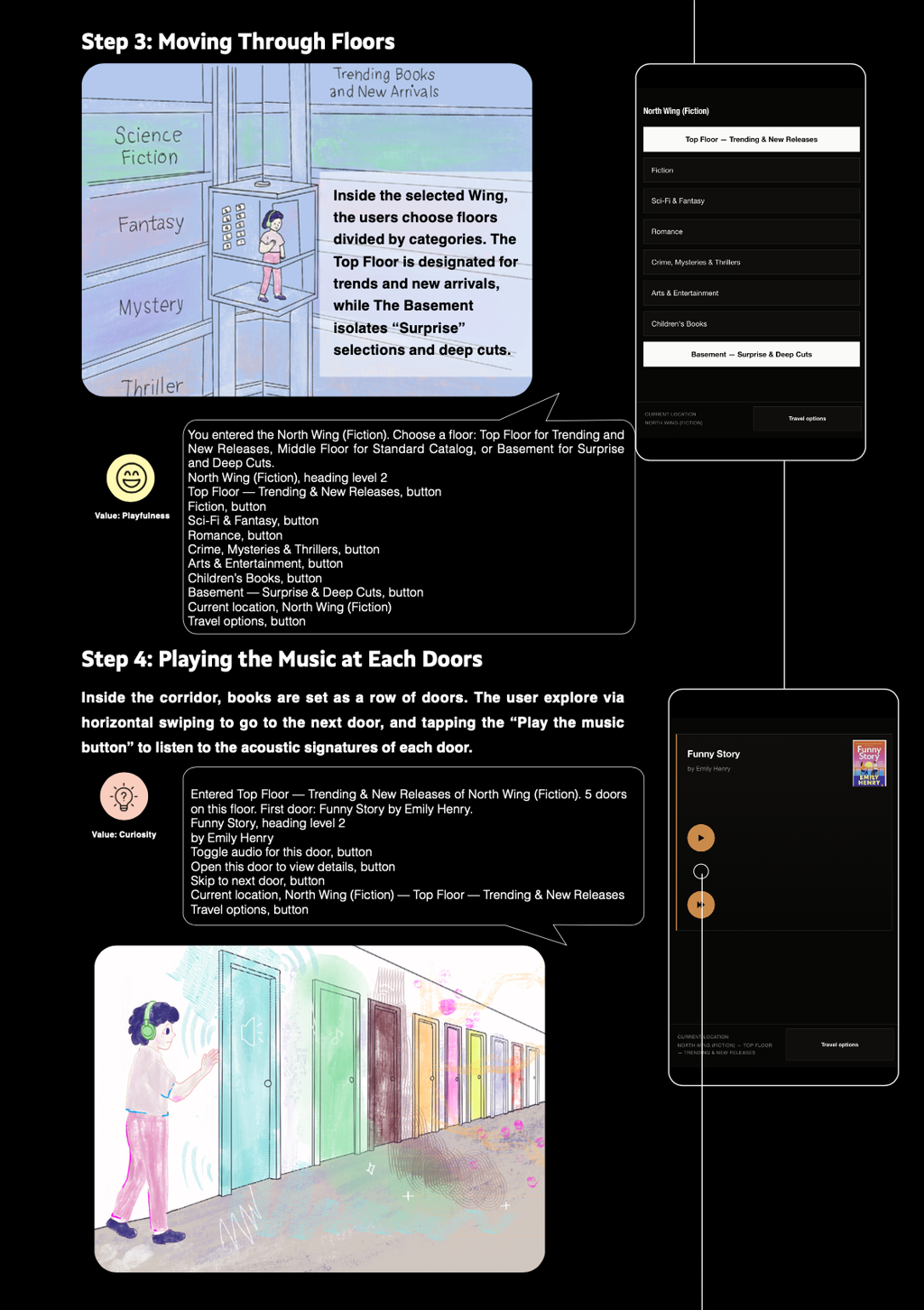
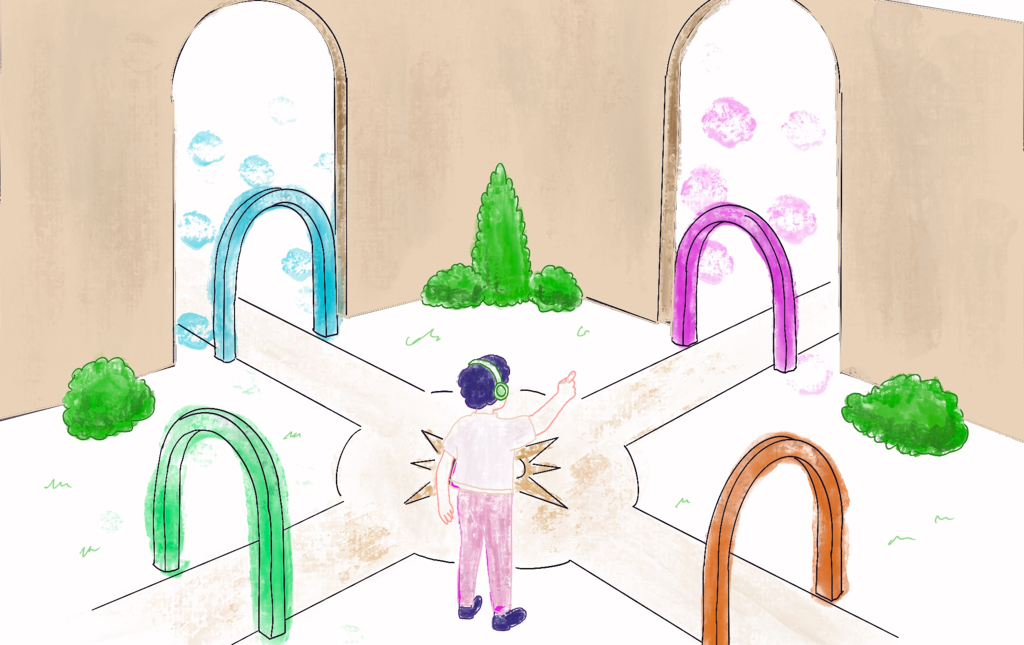
These vibes live inside a library which I reimagined as a building. Readers move through wings, floors, and corridors, hearing each vibe as they pass a door. Curious? They knock, and step inside.
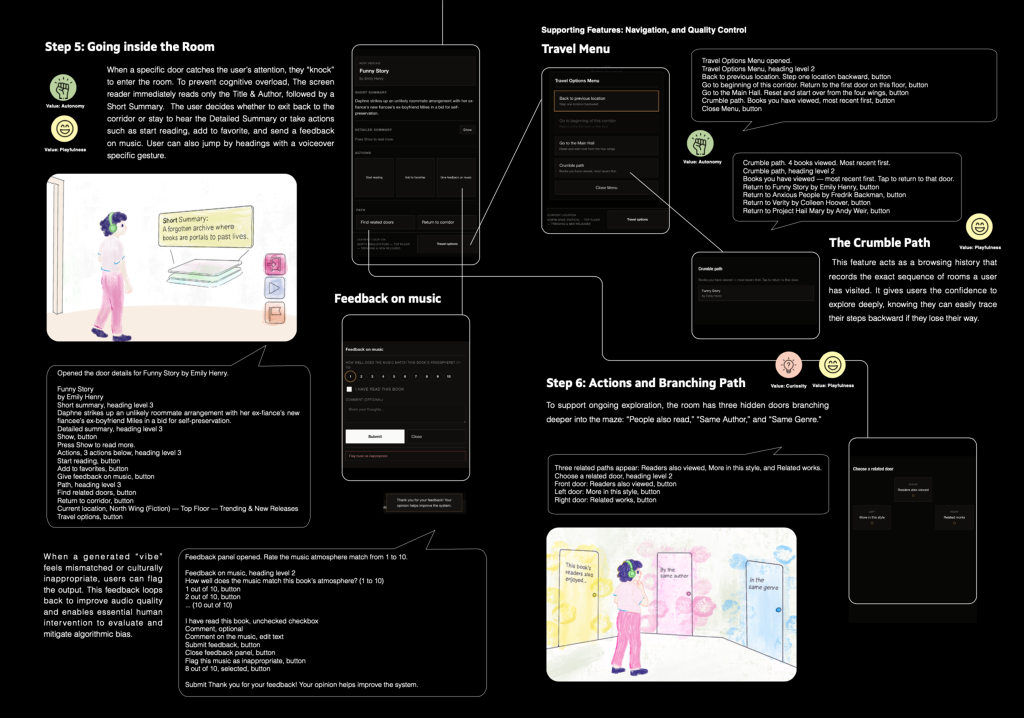
My project began with something personal. While I was intern at the Dutch Royal Library, my grandmother spent months in hospital, largely immobile and increasingly bored. I found myself wondering whether a tool she could explore by ear and by touch might have changed that experience — and realised any of us could face something similar, one day.
Bringing a system like this to life means facing real challenges, from copyright to the environmental cost of AI. Still, several participants in my tests described this way of browsing as something that felt meaningful to them. I hope it points towards a future where everyone has access not just to information, but to the joy of finding it.