



Leanda Wenus
The cities we live in are mainly designed for human needs, but they are also the habitats for a wide range of living beings that are often overlooked, despite their crucial role in the ecosystem. Pill bugs, millipedes and other arthropods are important for the food web and maintaining soil health, but their populations are rapidly declining and there is little understanding of their role in the urban context.
How can we better understand our urban ecosystem?
The first step to understanding them is to observe their presence. Due to their small size, this is challenging, and it doesn’t help that they are pretty unpopular with people. Technology can therefore act as a mitigator between people and animals.
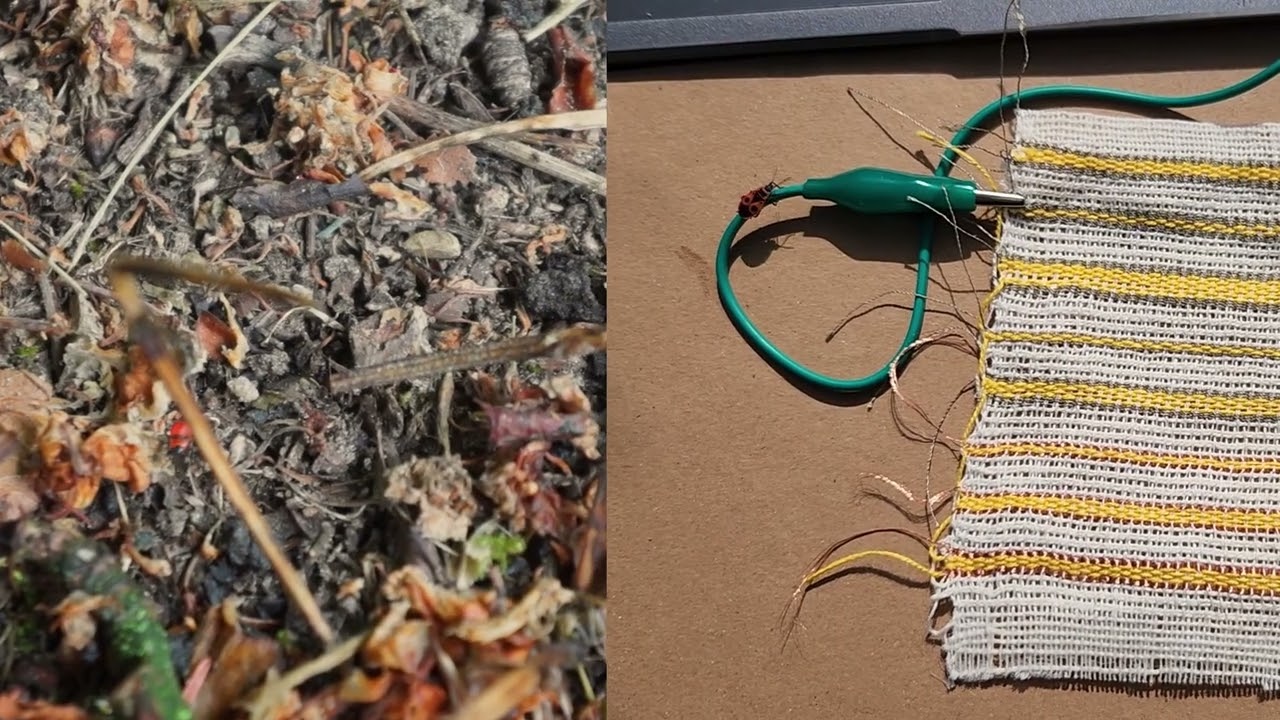
So, can we notice and better understand our urban ecosystem by weaving sensors for arthropods?
For Arthropolis, we chose woven sensors that make use of capacitive sensing, where copper wire acts as electrodes in the textile to detect when an arthropod, such as a pill bug, crawls across.
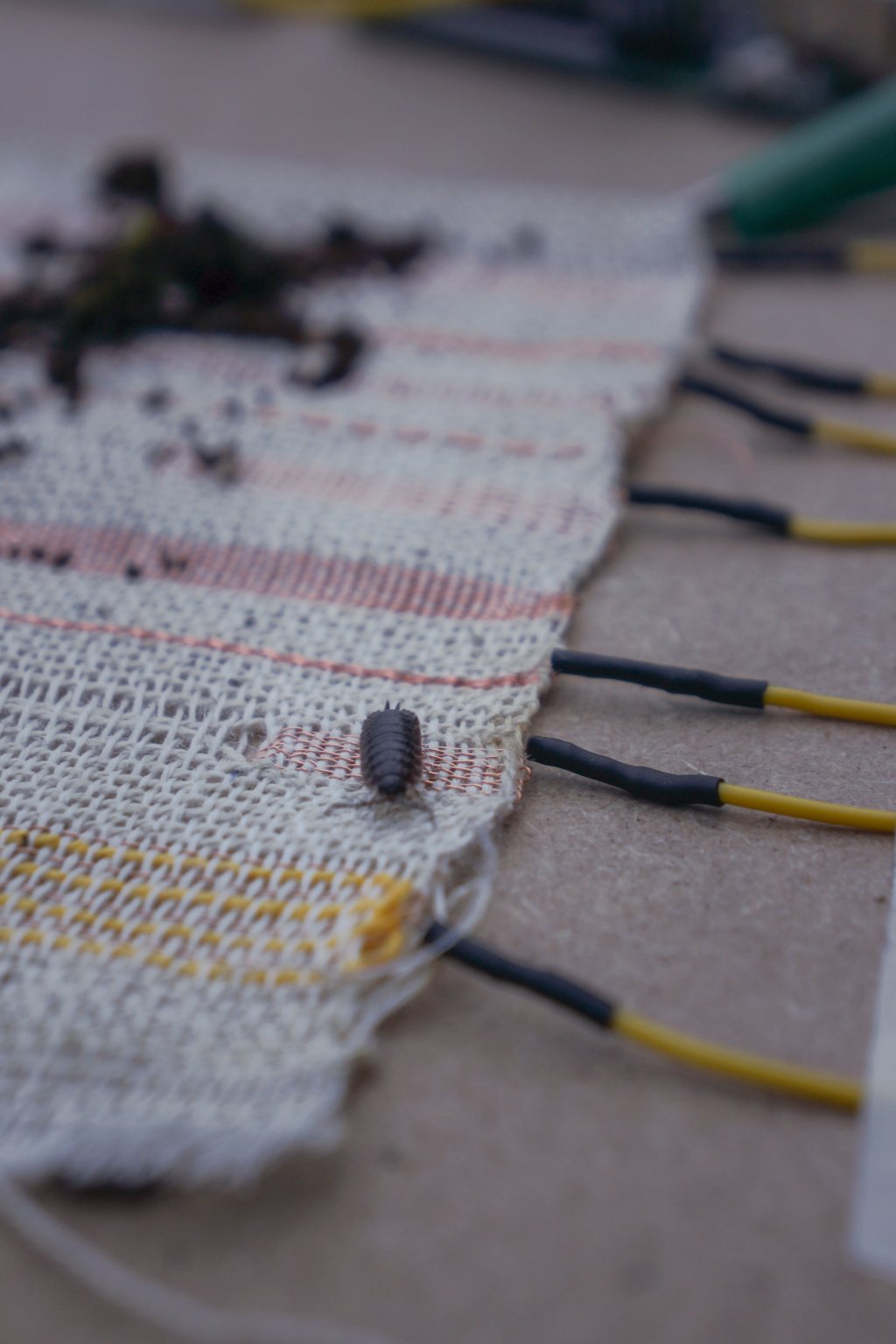
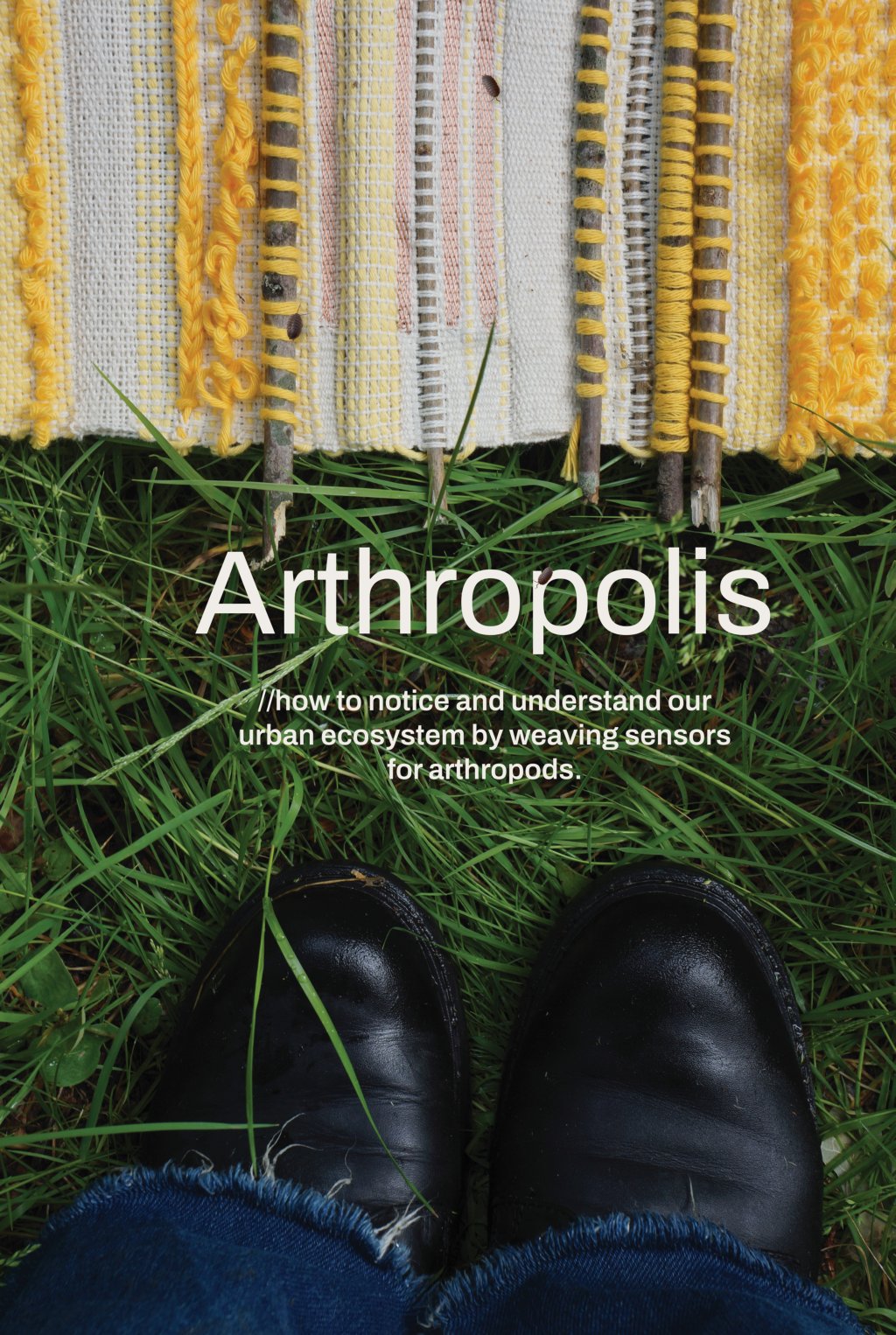
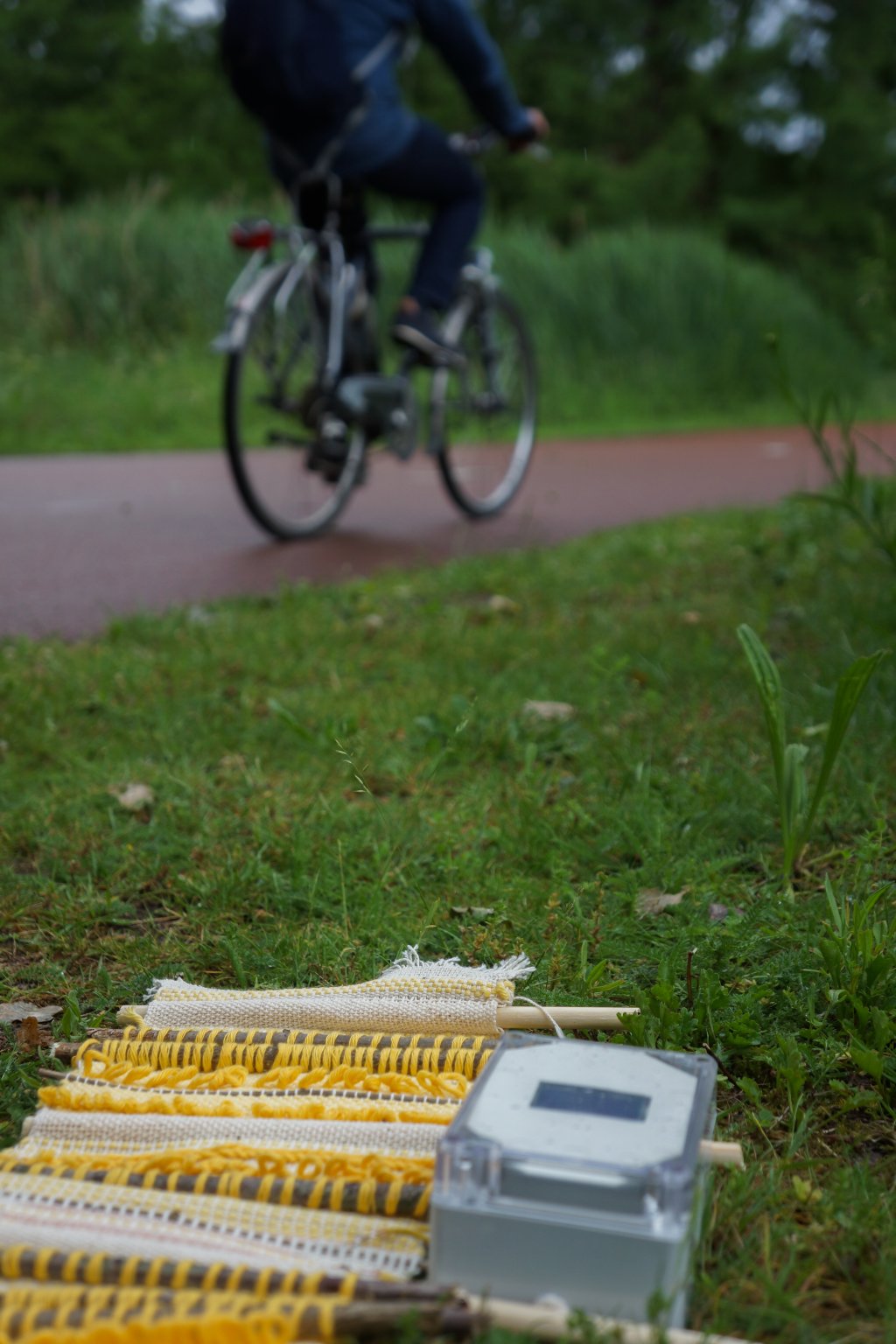
We developed this through a process of making and placing woven textiles in different ‘green’ locations in the city. These were revisited by the designer, who observed how the animals interacted with it and their environment. Design is commonly focused on including human users, but to design for a thriving planet, we also need to include the non-humans. By using weaving as a method, the surface can be manipulated to not only act as a sensor but also as a habitat, making it a welcoming environment for the arthropods. Arthropolis’s final artefact has a display that shows the activity of arthropods.
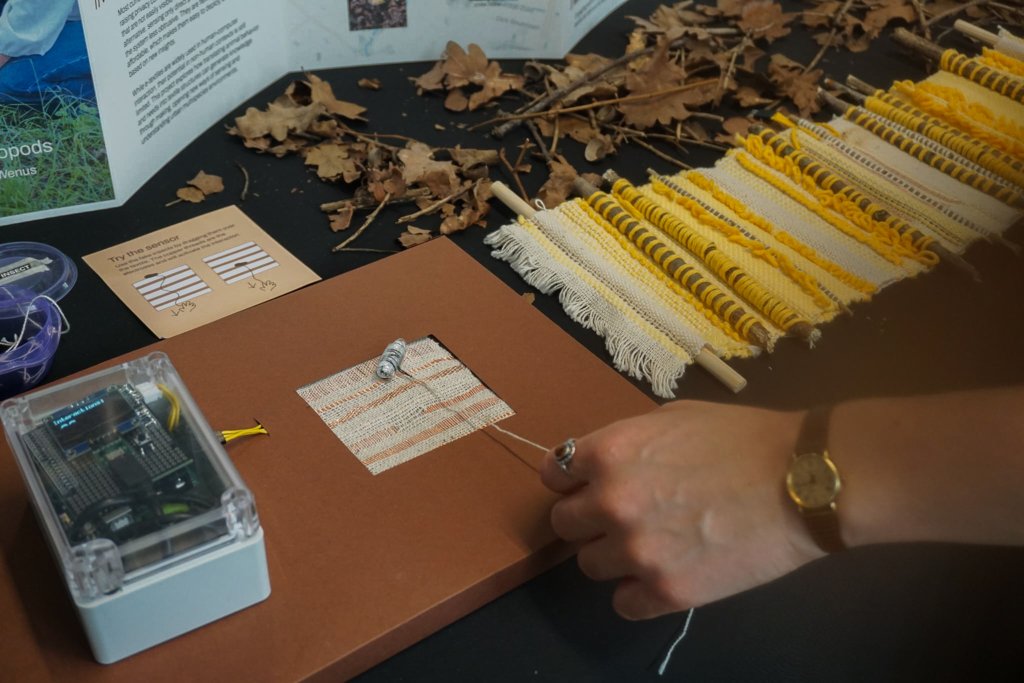
Placed in different locations in the city, people can build a relationship with the underappreciated non-human ‘citizens’ that often go unseen. By gathering data on arthropod activity, our project can help educate and impact how we design our cities The intersection of textiles, arthropods, and sensors is an area of design and innovation that is largely unexplored, but one that can help us care for our planet.