



Huiqi Deng, Stefano Parisi, Elvin Karana, Fanzhe Zeng
Climate change is transforming urban water environments, but many of these changes are difficult to notice in everyday life. Microbial and algal blooms may become more frequent or intense as water temperatures rise and ecological conditions shift. Their effects are usually communicated through measurements, warnings, or images. Microbial Smellscapes explores another possibility: smell. Because smell is bodily, atmospheric, and closely connected to memory, it can make environmental change feel immediate and personal. The project asks how design might help people notice microbial life around urban water, experience the smellscapes, and imagine what it could mean to live with intensified microbial smells in the future.
What if environmental change first arrived through your nose?
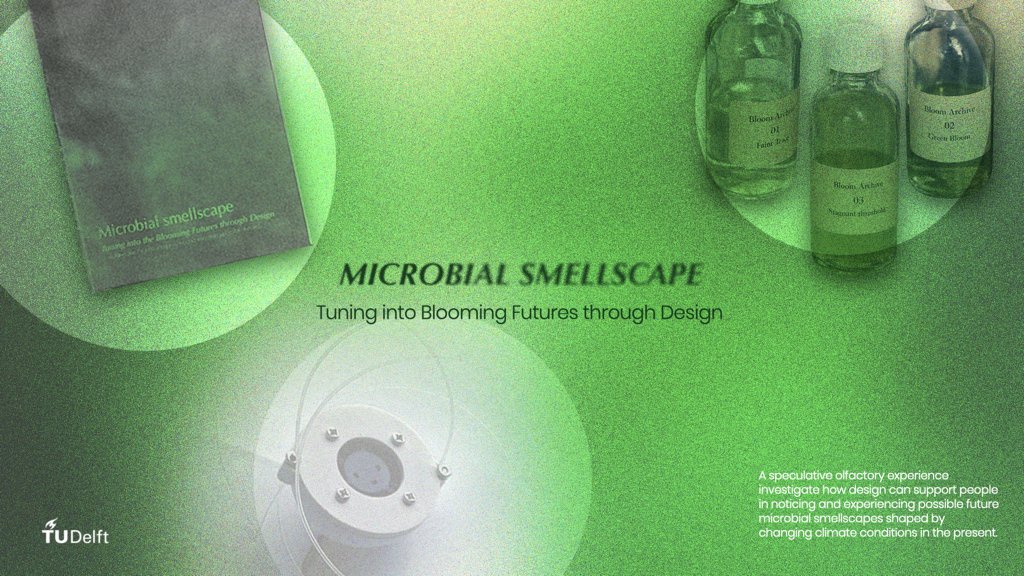
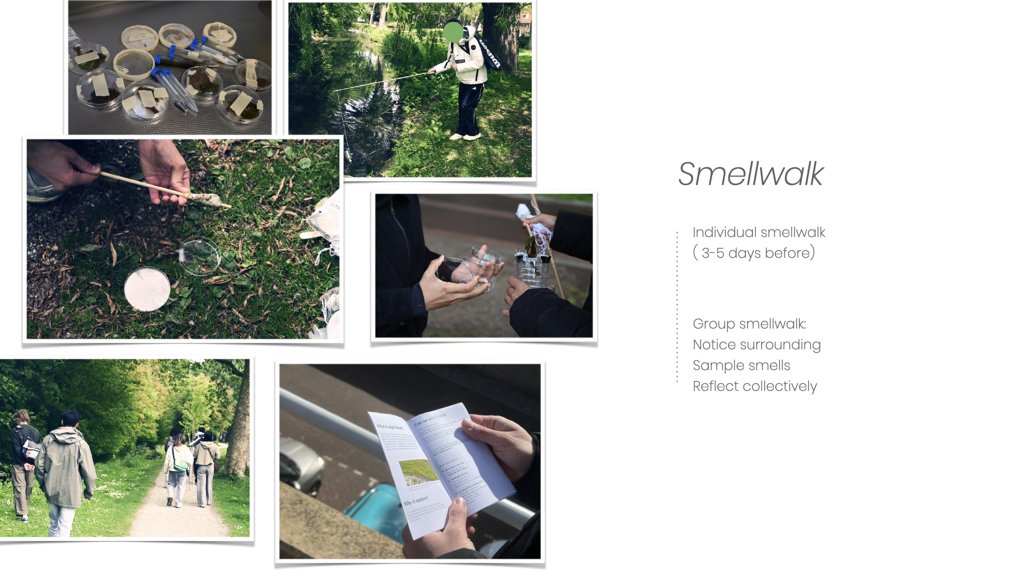
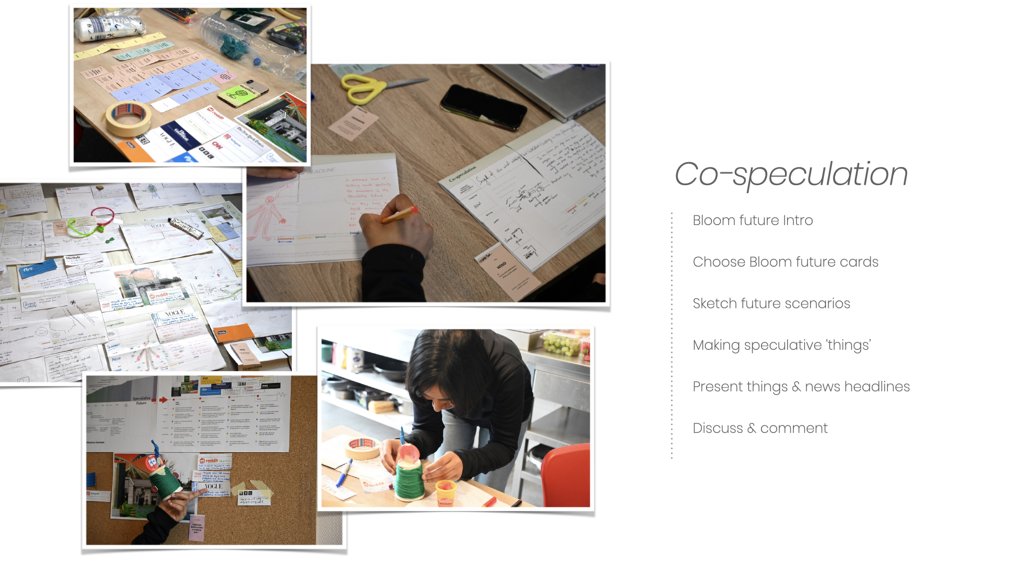
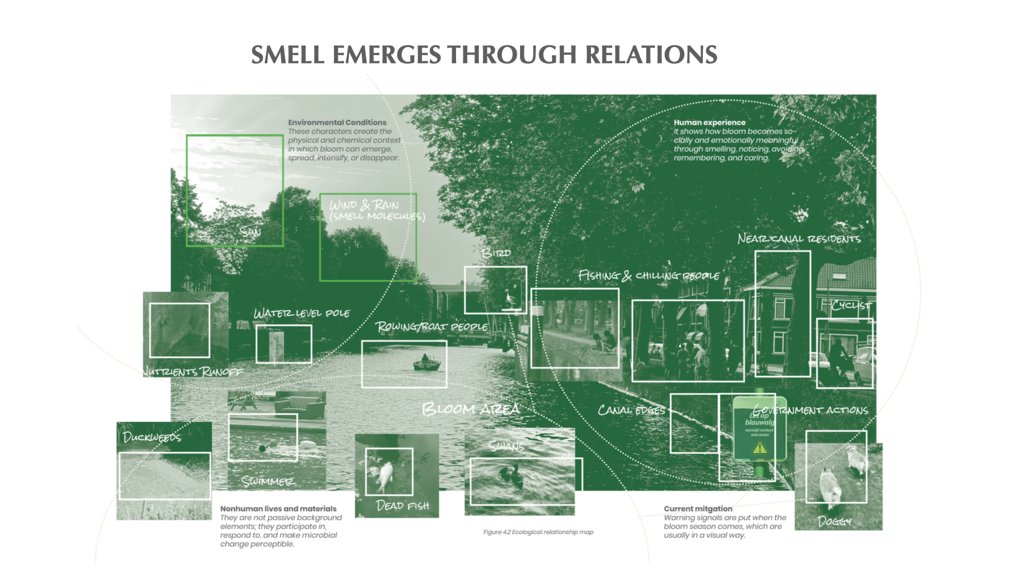
Microbial Smellscapes contributes to Thriving Planet by exploring how people might become more attentive and attuned to environmental changes that are usually difficult to sense. Instead of presenting climate change only through distant data or future predictions, it brings a possible future into an everyday bodily experience. This can open new forms of environmental awareness and public conversation. The project does not, however, claim to predict or scientifically reproduce future microbial smells. Smell changes with weather, place, and individual perception, and the future scents are intentionally speculative. Instead, its value lies in opening questions about how people notice, interpret, and live with ecological change.