



Charlotte van Duuren
Mycelium-based composites are increasingly being explored as sustainable alternatives due to their regenerative potential and engineering properties. Mycelium is a living, root-like network of fungal threads that are grown rather than manufactured. However, wider adoption depends not only on their environmental benefits, but also on how they are experienced and perceived. Mycelium composites often have irregular surfaces and unpredictable visual qualities, which can be seen as limitations in design. FUNKI explores this uncertainty as a design opportunity by investigating how controlled growth can create intentional surface qualities. It focuses on patterns grown on textile–mycelium hybrids and examines how patterned surfaces can influence material perception. In doing so, FUNKI highlights the aesthetic potential of mycelium and its biological character.
Can we grow the aesthetics of everyday objects?
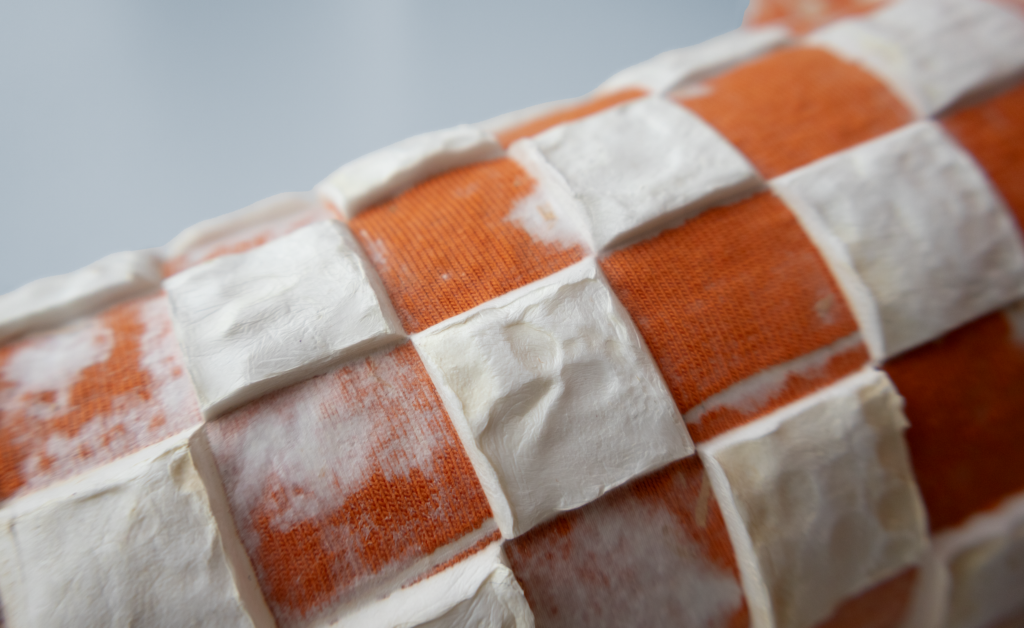
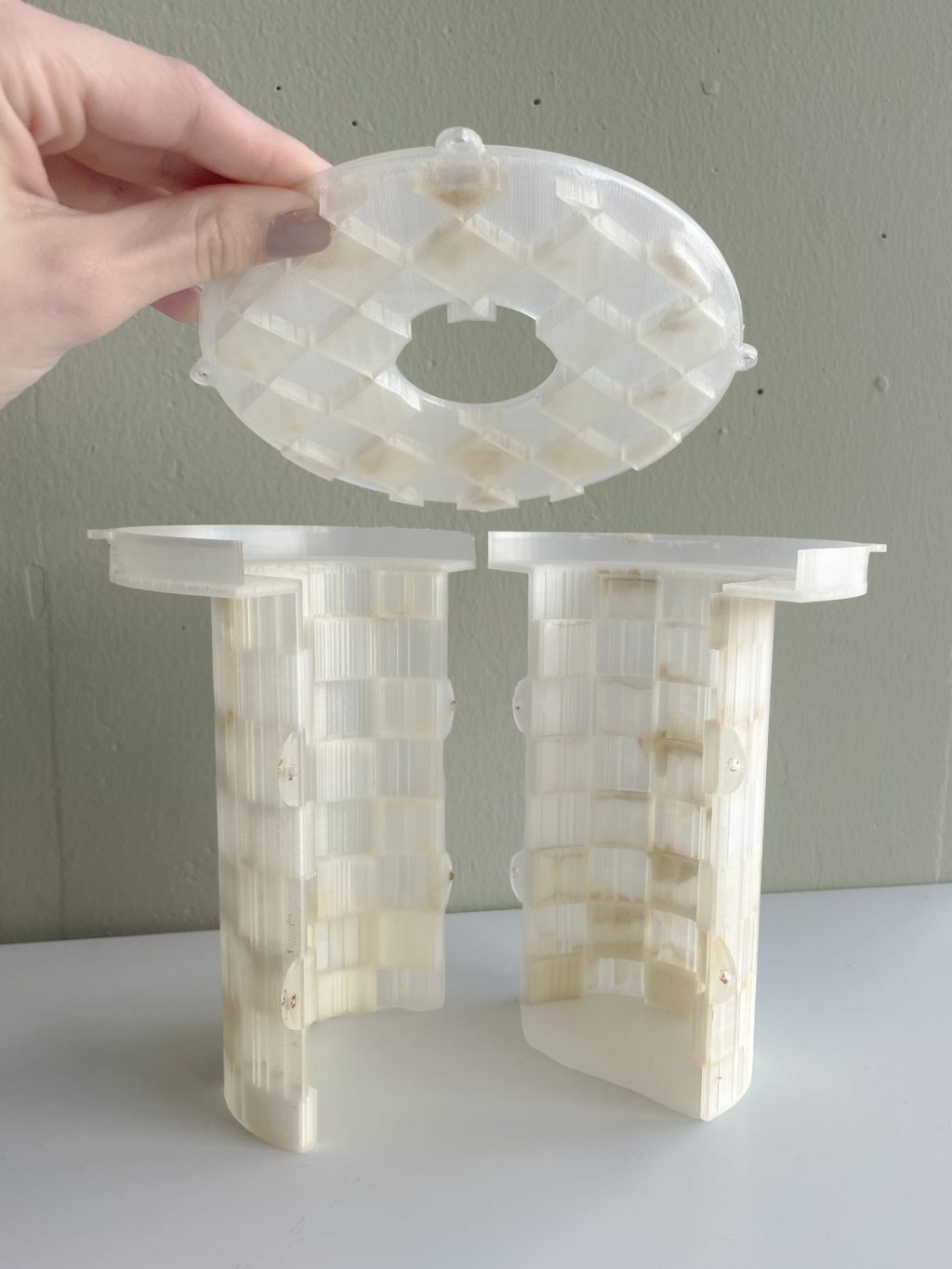
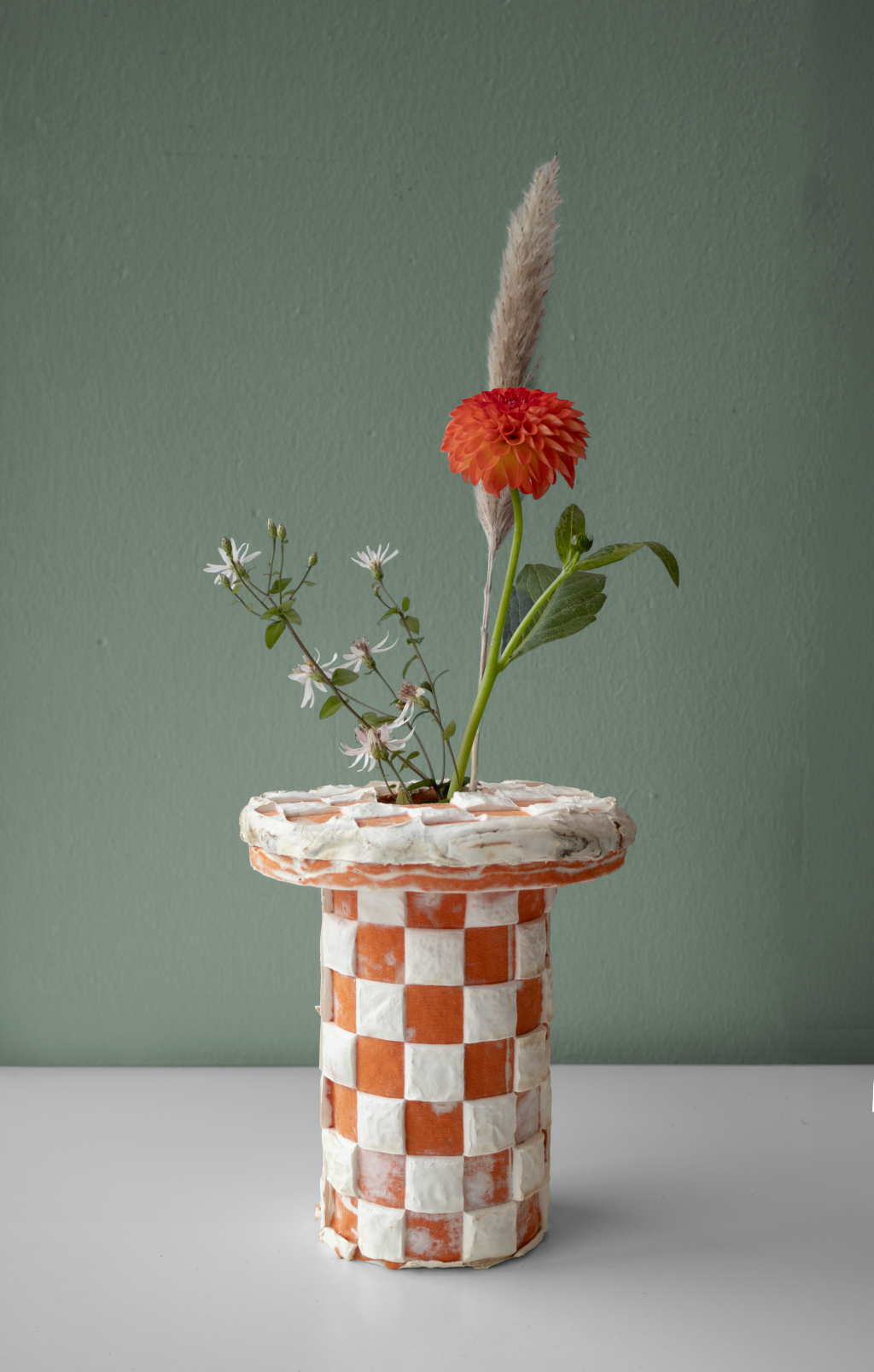
We developed a fabrication setup to guide mycelium into surface patterns on textile formworks. These formworks are sewn from cotton-blend textiles and filled with nutrient-rich GrowMix containing materials such as wood and mycelium. The filled textile formworks are placed between a multi-part mould and compressed, directing mycelial growth into the mould’s geometry. The material is then left to grow for two weeks, allowing the mycelium to grow through and bind with the textile. As it grows, the mycelium forms a surface pattern across the textile. We gave particular attention to textile colour, as some mycelium can produce enzymes that break down organic compounds, including dyes. Cognac, blue, green, and white textiles were tested to explore colour transformation during growth. For the FUNKI vase, the original cognac-coloured textile transformed during the growth process, resulting in a vibrant orange colour. After growth, the material is dried to stop further mycelial growth
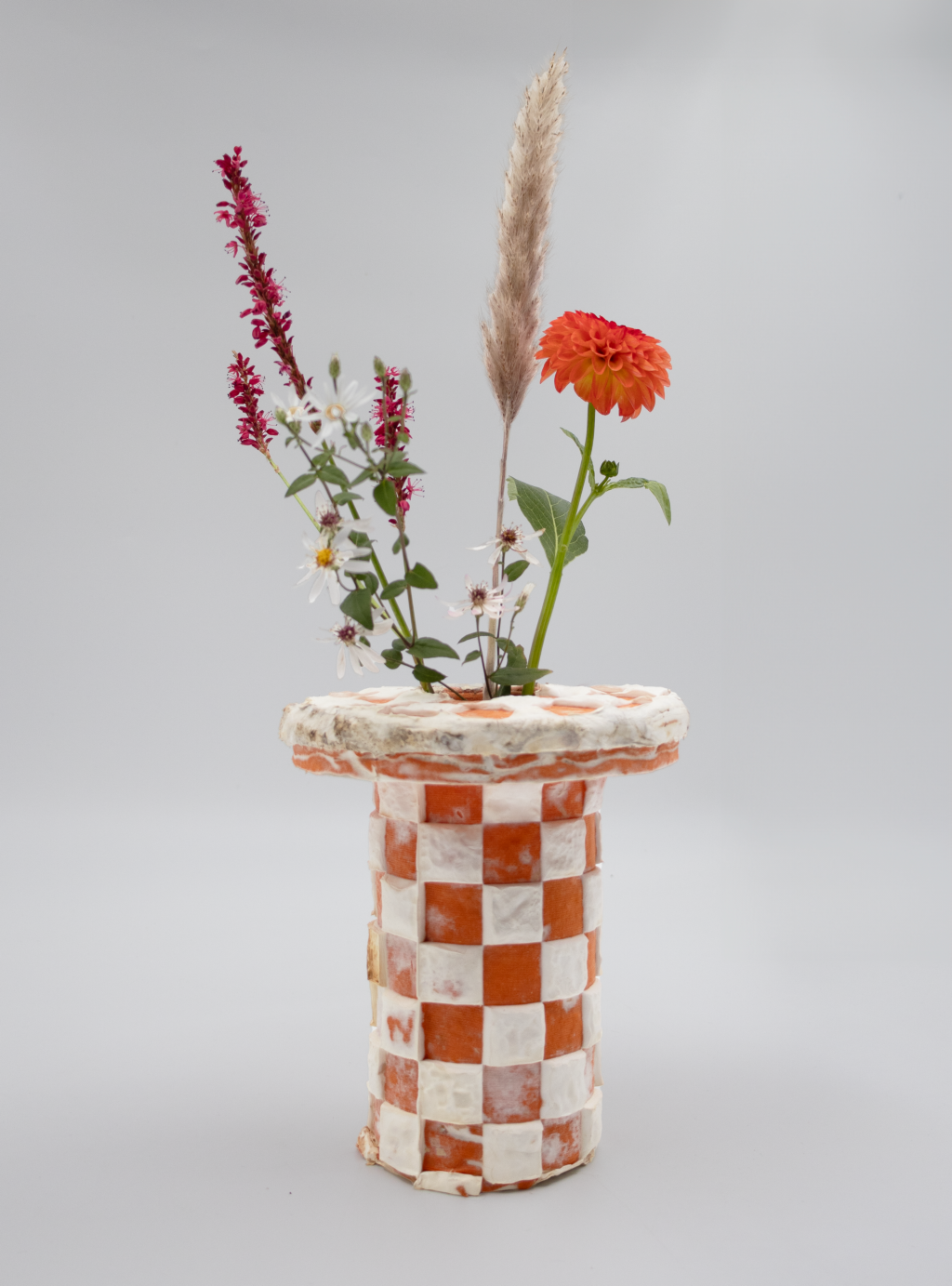
FUNKI contributes to a thriving planet by exploring how regenerative materials can become more desirable for everyday use without removing their biological character. We show that the way mycelium materials look and feel can influence people’s responses to them. The fact that different surface patterns can create different emotional responses suggests that aesthetic and experiential qualities can be actively considered alongside material performance. At the same time, the process depends on biological growth, which limits the level of control compared with conventional manufacturing. Rather than presenting mycelium as a direct replacement for conventional materials, we demonstrate a way of designing with mycelial growth behaviour and explore how this opens new material and aesthetic possibilities.
#Mycelium #Biofabrication #Biodesign #TextileDesign