



Dave Murray-Rust, Roy Bendor, Mahan Mehrvar, Bobo Chau, Thijmen de Ruiter, Tycho Groenescheij, Yuree Kang, Judit Klooster, Olivier Leus, Aicha Orsel, Julia Spies, Quinya Teeuwisse, Merel van Tienen, Sheldon Wijntuin
Across the areas susceptible to flooding in the Netherlands, there are sites that record our below sea-level ways of living, our practices, and celebrations. Part of the work of any cultural heritage organisation is to plan and think about how to protect invaluable cultural knowledge in a worst- case scenario. But – what happens if we go beyond this, to imagine new forms of cultural heritage and its preservation that respond to changes in the world, whether this be an increasingly intransigent climate or changes in society around what we need, want and value? How can we open up a broad yet situated conversation about the future possibilities implicated in living with and managing water and cultural heritage together?
What does cultural heritage have to do with climate change?
Cultural Heritage Climate Futures is the result of a 20-week speculative design studio, part of the Design for Interaction (DfI) master’s programme at TUD in collaboration with Deltares. Instead of solving complex problems, speculative designers ask whether these are the problems we should be solving to begin with.
In "Community after the Waters", Aïcha Orsel, Yuree Kang, Bobo Chau and Merel van Tienen, depict a future where rising waters have swept away not only monument sites, but also communal practices that once brought people together. In the ‘Seagrass Festival’, Thijmen de Ruijter, Judit Klooster, Julia Spies and Sheldon Wijntuin imagine a future in which rising water levels repurpose Molen de Roos in Delft, shifting to seagrass as an alternative to wheat. In “The Reincarnation Booth” Quinya Teeuwisse, Tycho Groenescheij and Olivier Leus explore funeral culture, using 3d scans to turn the shape of your hands into homes for sea life.
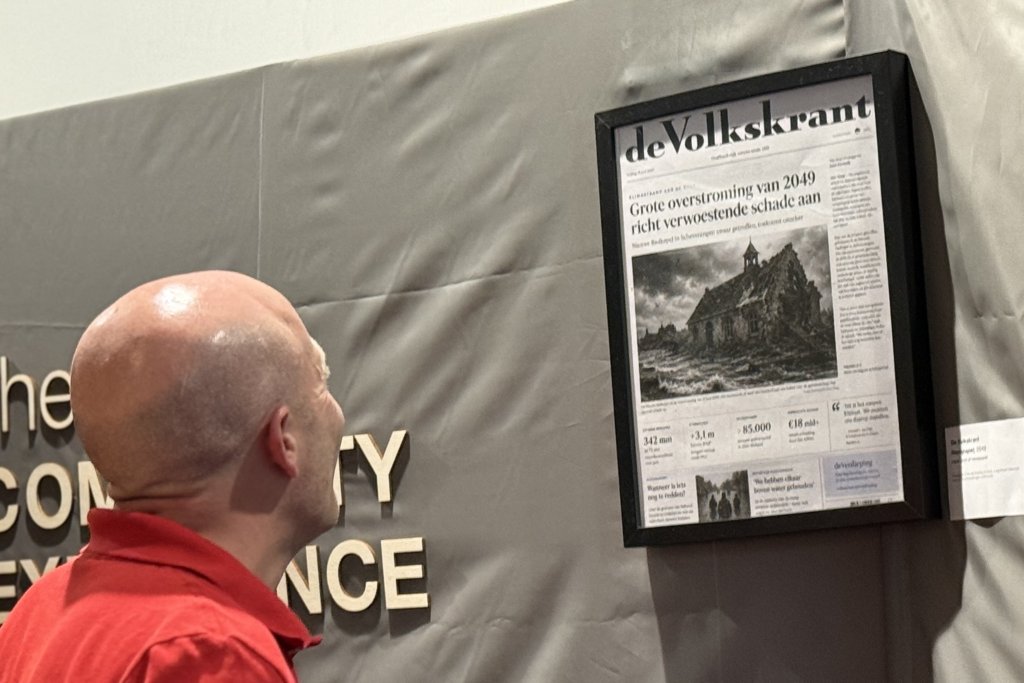
Community after the Waters
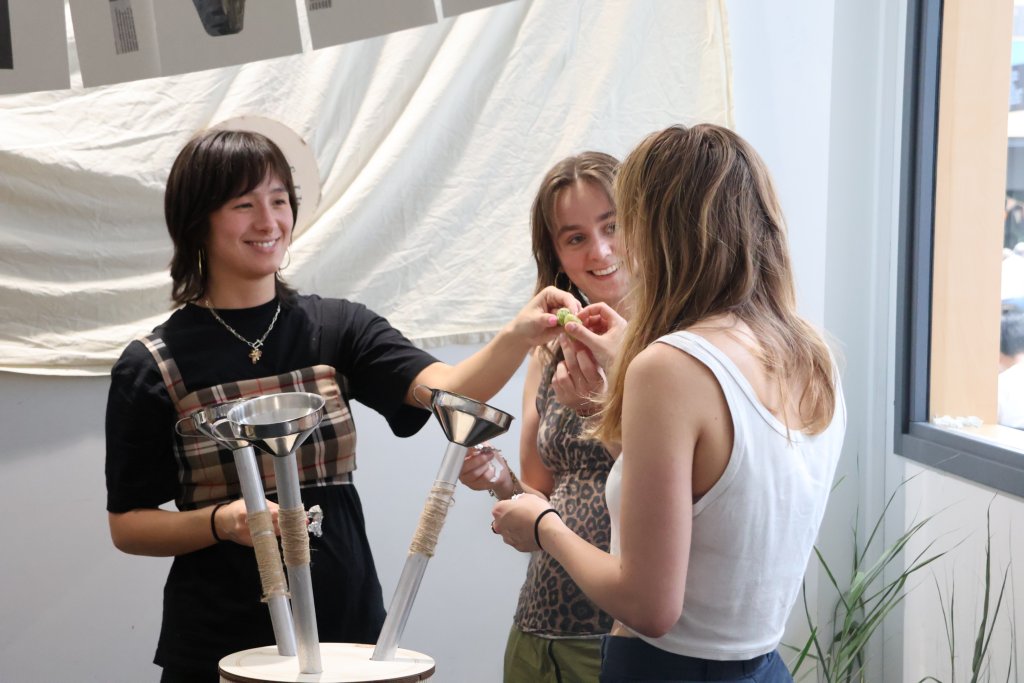
Seagrass Festival
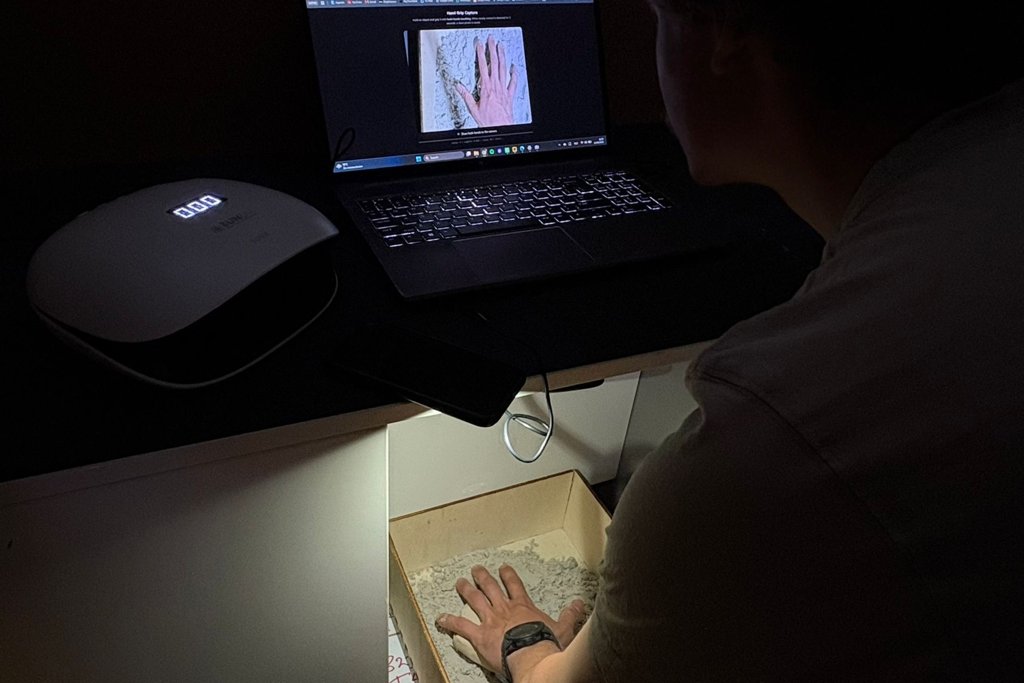
The Reincarnation Booth
Speculative Design evokes the imagination and invites users, audiences or participants to consider the future by asking poignant “what if?” questions. The openness can be a challenge: there are so many possible futures out there! Working with careful futuring methods means that we develop a basis for thinking about futures that are not necessarily likely, but that have a resonant connection to where we are now, so we develop a sense of what is up for grabs, and can push in novel, preferable directions.