



Beatriz Monteiro, Mathieu Gielen, Değer Özkaramanlı
Technology and information are spreading quickly and it’s difficult to address the veracity of information. Ever younger children growing up in this environment encounter "fake news" and poorly sourced content. Despite growing institutional concern, little design research has actually targeted young children directly, and existing interventions, even those grounded in inoculation theory, have almost always been designed and tested with adults rather than with children. In Con/Vince, we address this gap by asking “How can we help children deal with a future in which information is abundant, but not always trustworthy?” We focused on children aged 7–11, the stage when logical reasoning and cause-and-effect thinking begin to develop, a critical window for building lasting critical-thinking habits.
Can design help children question what they consider to be true?
In Con/Vince, we worked around four connected phases with the same group of children, from an exploratory session mapping information they already trusted, to co-creation, where children's own 'villain' concepts shaped the game's core design vision, placing players as persuader, a decision carried through ideation and testing. The resulting card game places children in the role of creating fake news. At its core, the game pairs statements, like 'if it snows, there'll be no school,' with real persuasion techniques, such as impersonation ('my cousin in the year above heard'), and asks children to build them and judge which is most convincing. Building persuasive claims first, before learning to spot them, is designed to develop more durable, transferable resistance than passive instruction ever could.
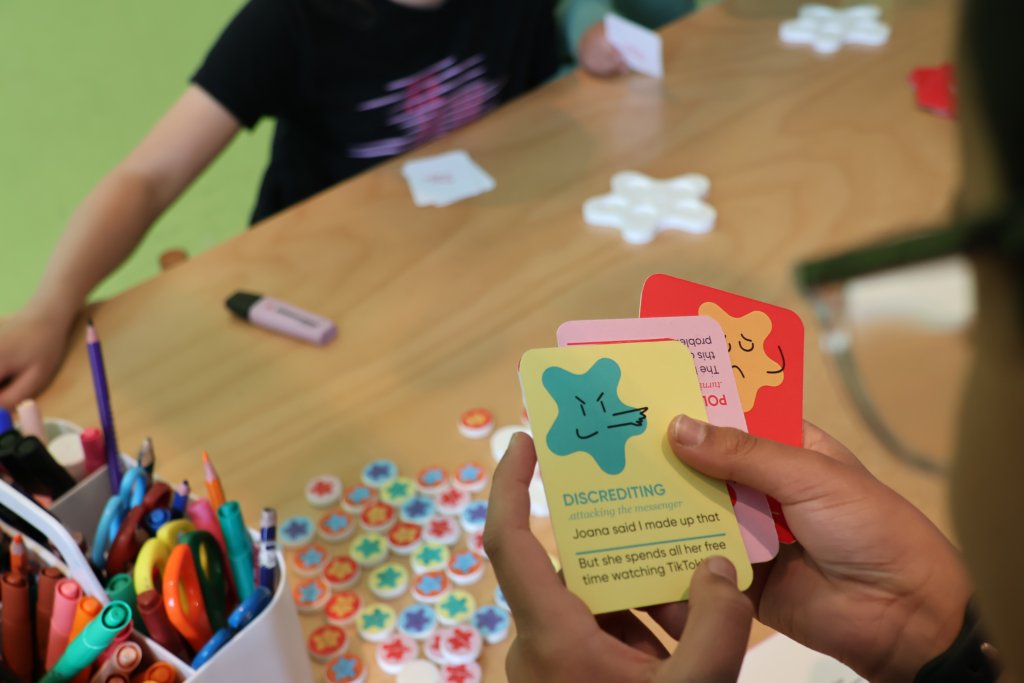
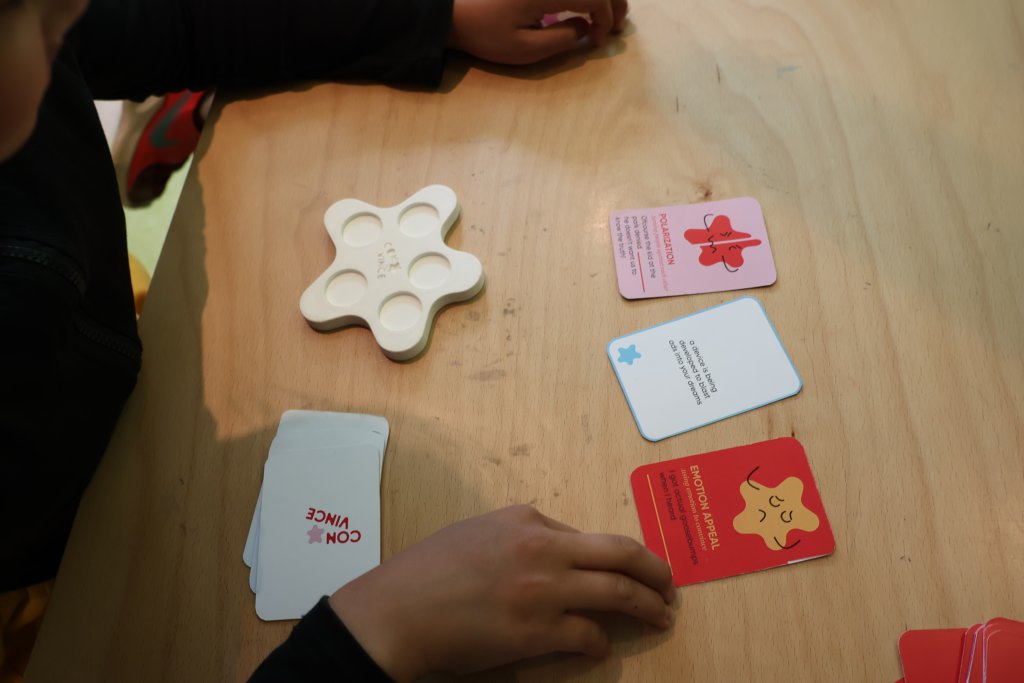
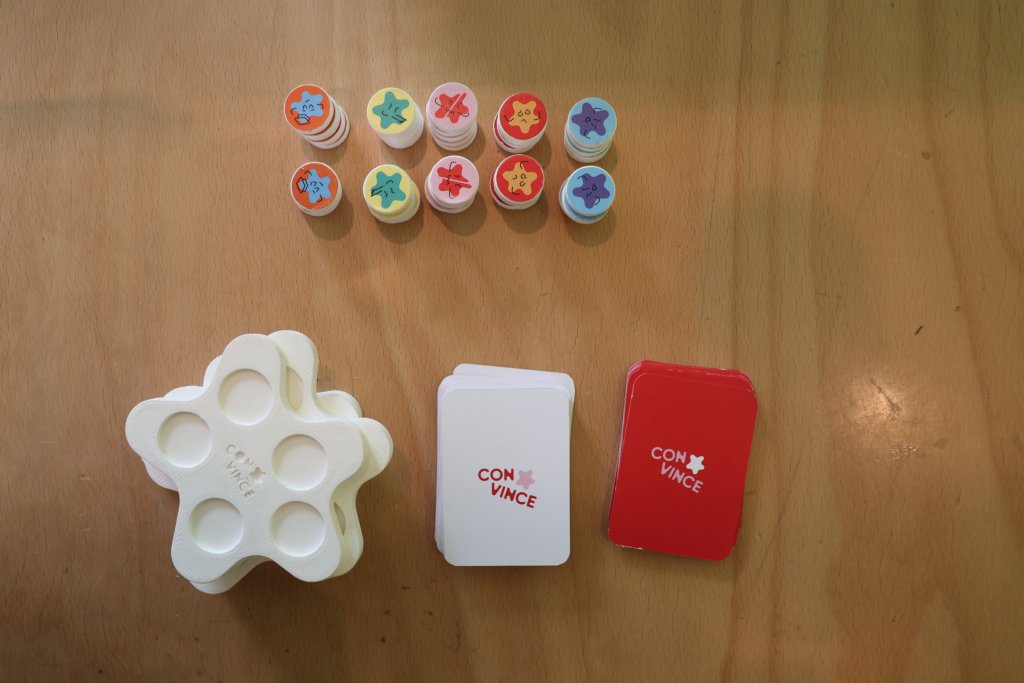
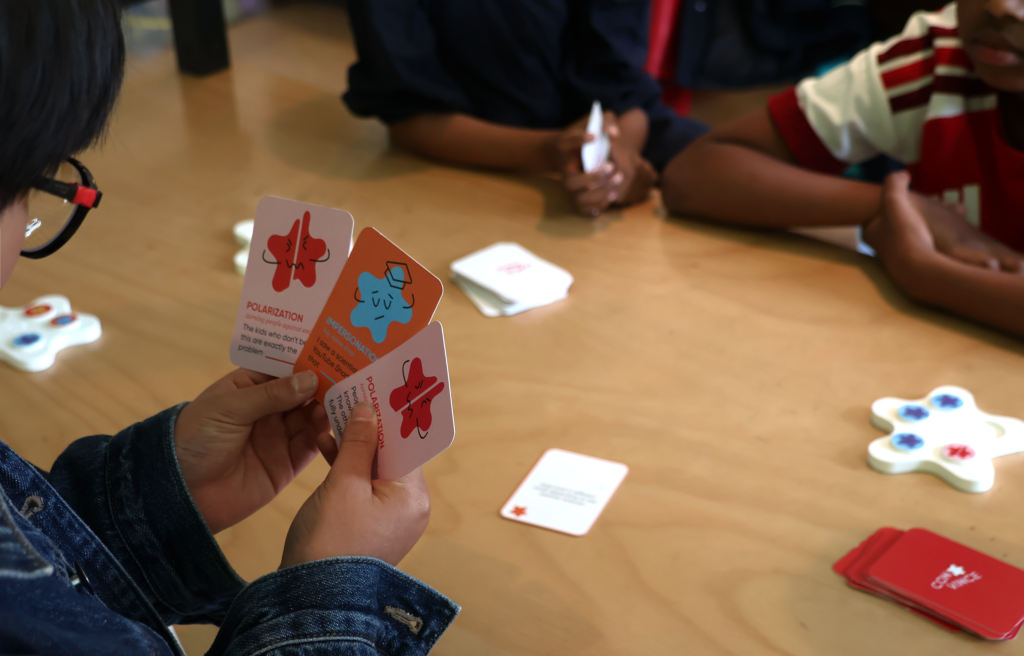
As AI-generated content and global platforms make convincing misinformation easier to produce and harder to verify, the skills children build now will shape how they navigate their digital future as adults. Testing the project with 18 children aged 8–9 offered encouraging evidence: the group used Con/Vince’s vocabulary correctly, checked claims against experience, and showed genuine understanding of how misinformation can be made to sound convincing. This matters because it shows resistance to manipulation can be built through play, and that children can meaningfully co-design the tools designed to protect them. The deeper limitation is conceptual, as the game builds understanding, not immunity, and recognising a technique in play doesn't guarantee resisting it in real life.