

Joe Oliver Grimshaw
Before streaming, discovering new music meant moving through physical space. In a record store, listeners could arrive with only an unformed desire, follow whatever caught their eye, and leave with something they had never heard before. Nothing had to be named first. Streaming has transformed access, but it still asks listeners to name what they want: an artist, title, or genre or leaves the choice to an algorithm trained on what they have played before. But what if the desire is not clear enough to articulate? Curio asks whether a personal object from home can reopen a tactile, playful, space for discovery; one that begins before the listener can say exactly what they are looking for.
Can AI restore what streaming took from music discovery?
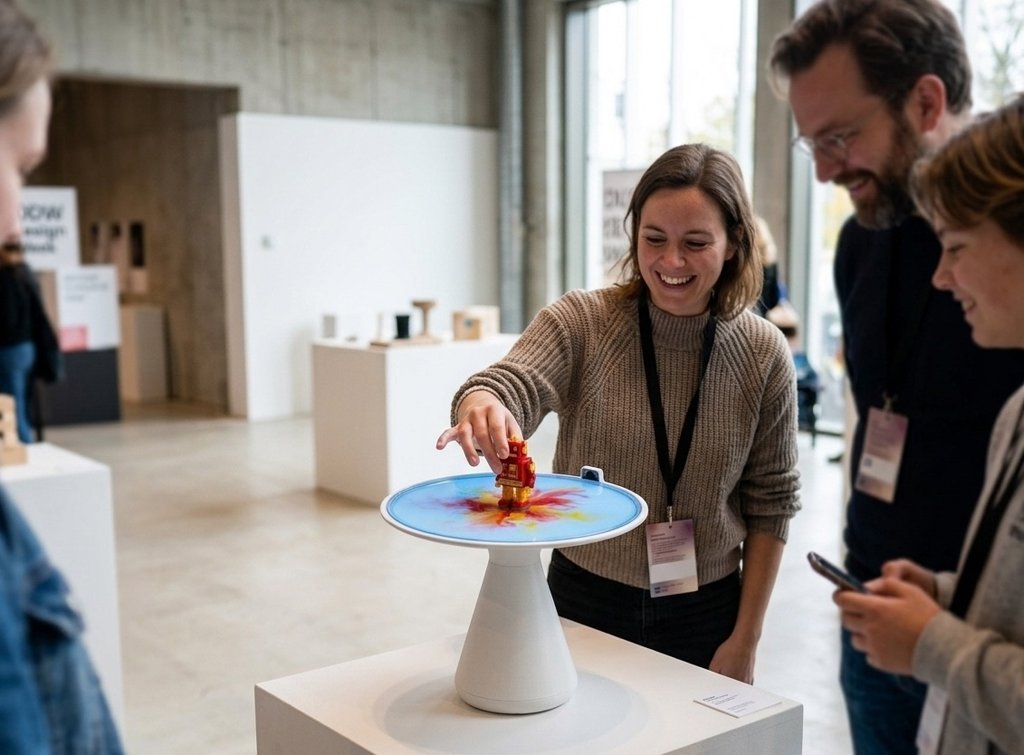
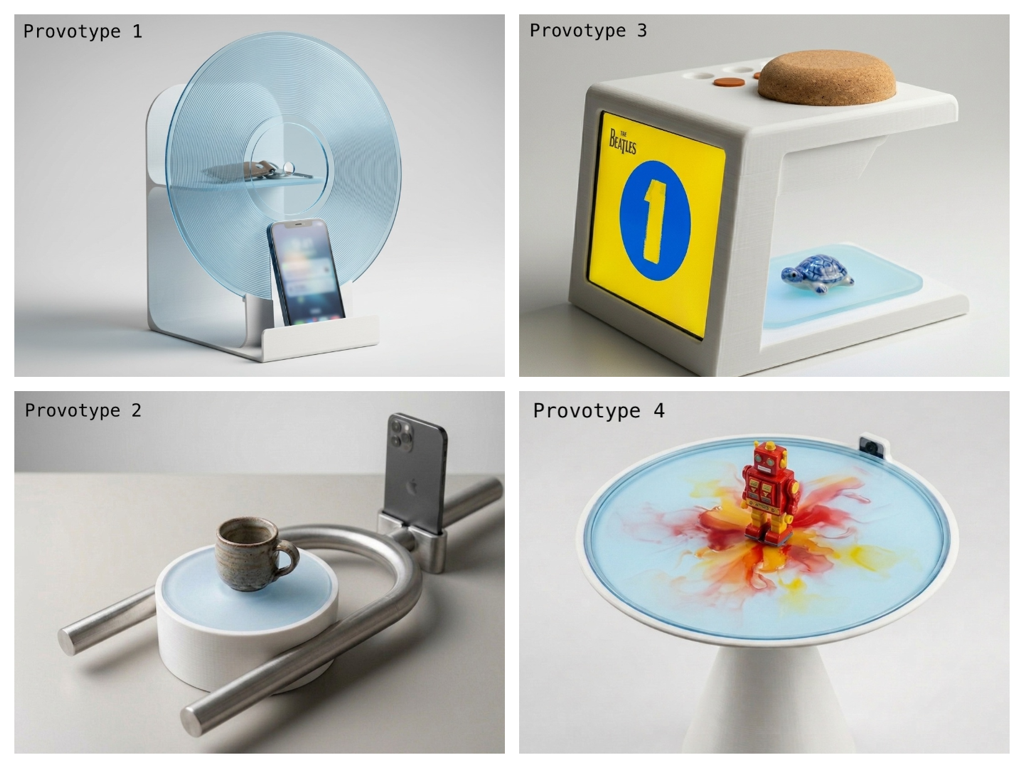
Curio is a domestic music-discovery system that treats AI as a fallible collaborator rather than an all-knowing oracle. A listener places a personally meaningful household object on the system’s surface, and Curio proposes a track in response. A camera analyses the object’s texture, colour, wear, and form. An associative AI translates these qualities into a provisional interpretation, but is deliberately prevented from identifying or naming the object. This creates a generative gap: the relationship between object and music remains open to the listener’s interpretation. This deliberately slow, interpretive experience asks listeners to attend to how meaning emerges, not just what plays. Developed through iterative design explorations, Curio culminated in four physical prototypes, speculative devices designed to provoke reflection rather than function as commercial products. Together, they explore how control, interpretation, and attention shift between listener and machine, reframing music discovery as an active, attentive domestic ritual.
At its heart, Curio is a critical challenge to the modern design obsession with absolute frictionlessness. By showing how seamless convenience can quietly breed passivity, the project uses “productive ambiguity” to restore active agency, attention, and play to everyday encounters with automated systems. This collaborative approach to AI could extend to other everyday rituals displaced by digital efficiency such as wayfinding or film discovery. However, this deliberate slowness has clear boundaries: tasks with a single, objectively correct outcome should remain frictionless. Ultimately, Curio is not a commercial product, but a materialised design argument: that leaving space for uncertainty allows people to bring their own interpretations, memories, and desires to a digital experience, leaving a distinctly human imprint on it.