

Mert Akay, Dr. Abhigyan Singh, Prof. Dr. David Keyson
Every summer, cities grow hotter, and some streets turn into ovens while others remain pleasant. Yet the maps that guide climate decisions are built almost entirely from sensors and satellites. They capture temperature, but not lived experience. A reading of 34°C says nothing about the relief of standing under a tree or the strain of walking across an exposed square. This means the places that feel worst, and the residents who suffer most, often stay invisible in the data. cliMATE, a TU Delft research project, began with a simple observation: to understand urban heat, we need not just more data, but a different kind of data, one that includes how the city actually feels.
Satellites measure heat; who measures your discomfort?
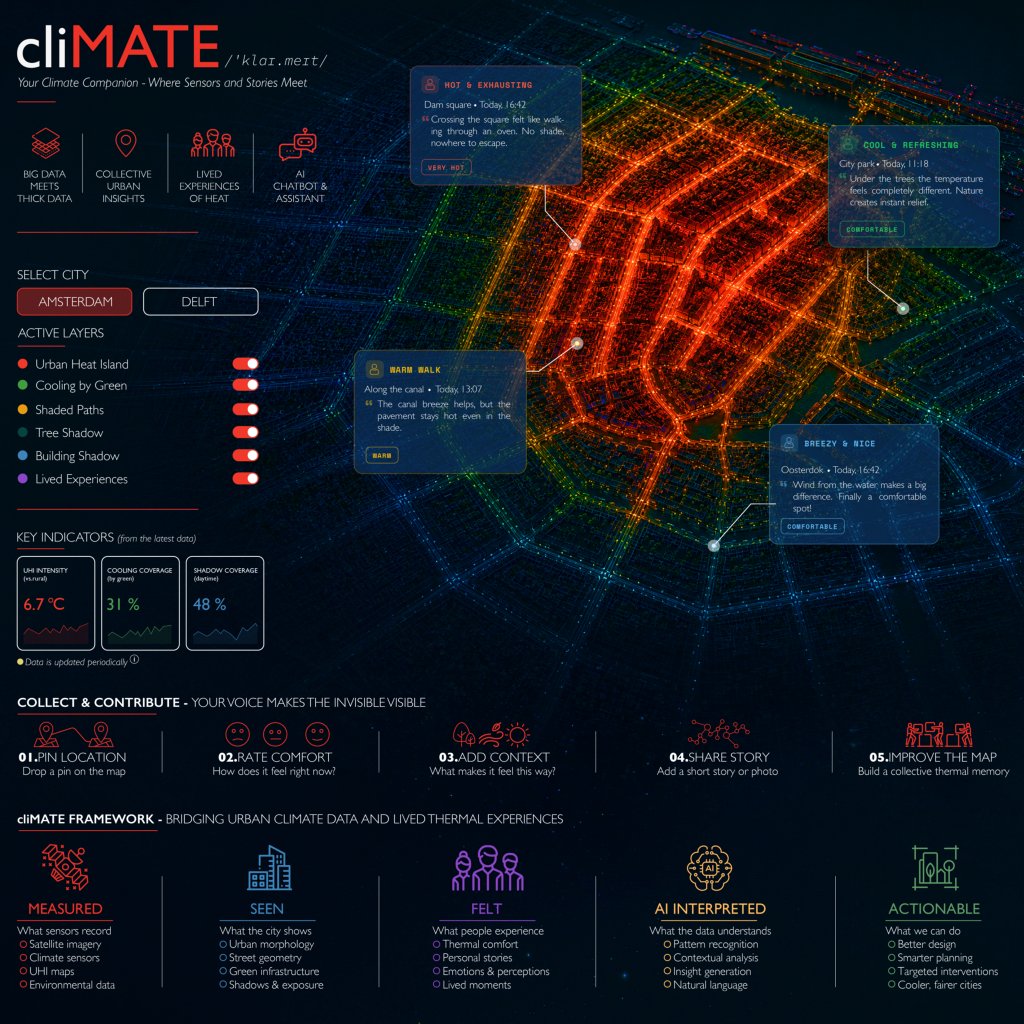
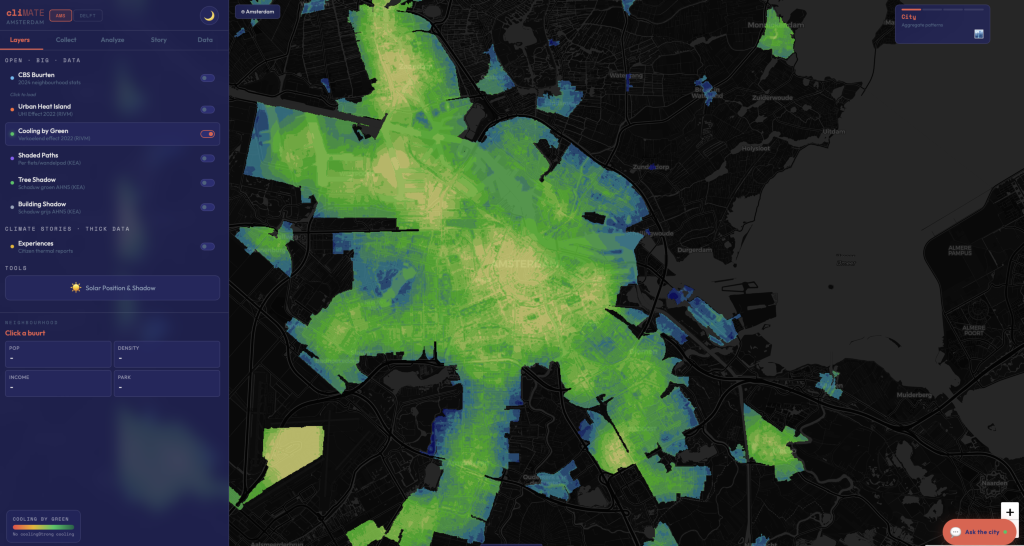
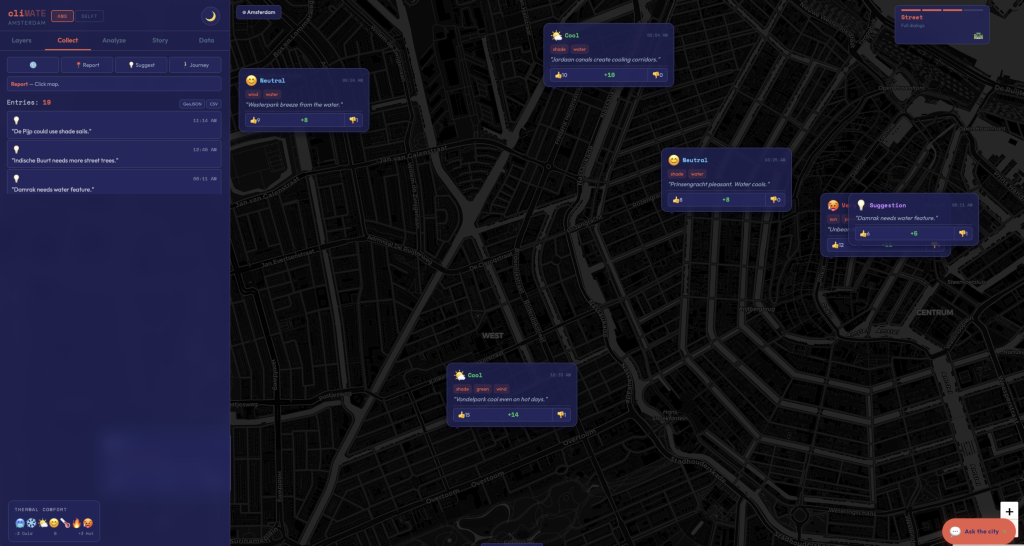
cliMATE is an interactive interface that brings two worlds together. On one side sits "big data": heat maps, tree cover, building shade, and other measurements drawn from open sources. On the other sits "thick data": short stories from residents about how a place feels, pinned directly onto the map. Think of it as adding a layer of lived memory on top of the technical picture. Anyone can drop a pin, rate how hot or comfortable a spot feels, and leave a few words. Over time, these voices build into a collective portrait of the city's thermal landscape. A built-in assistant even lets visitors "ask the city" questions in plain language and explore where measurements and experiences agree, or tellingly disagree. The result is not a dashboard to be read, but a space to be co-explored and contributed to.
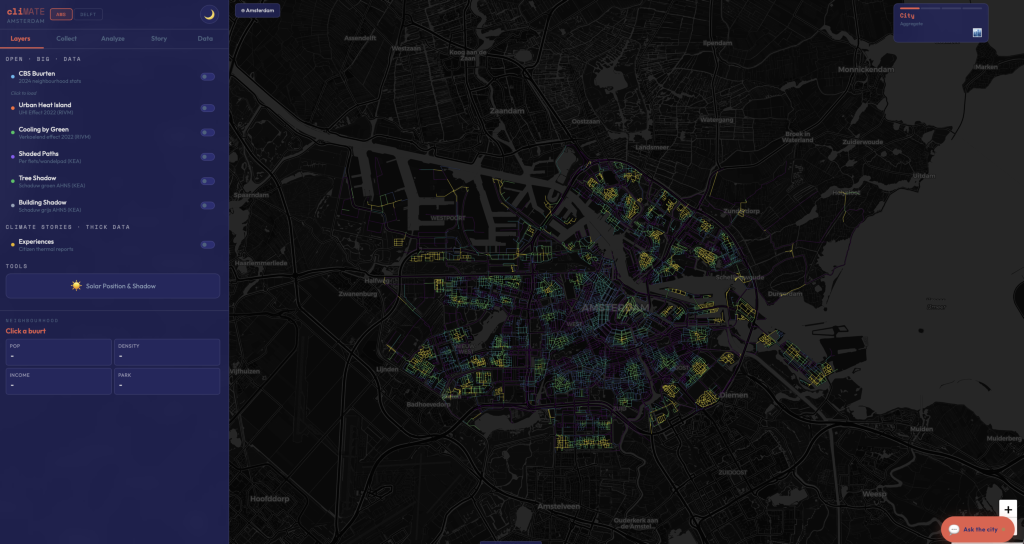
By giving residents a way to record how heat feels, cliMATE turns individual discomfort into shared, visible evidence, the kind that can guide where a city plants trees or adds shade. It points towards a future where climate adaptation is designed together with communities, not just for them, and where the people most affected by heat finally have a say. Challenges remain. Gathering enough voices takes time and trust, and lived experience is harder to standardise than a sensor reading. But that difficulty is also the point: some of the most important things about a city cannot be measured by machines alone. They have to be told, by the people who live them.