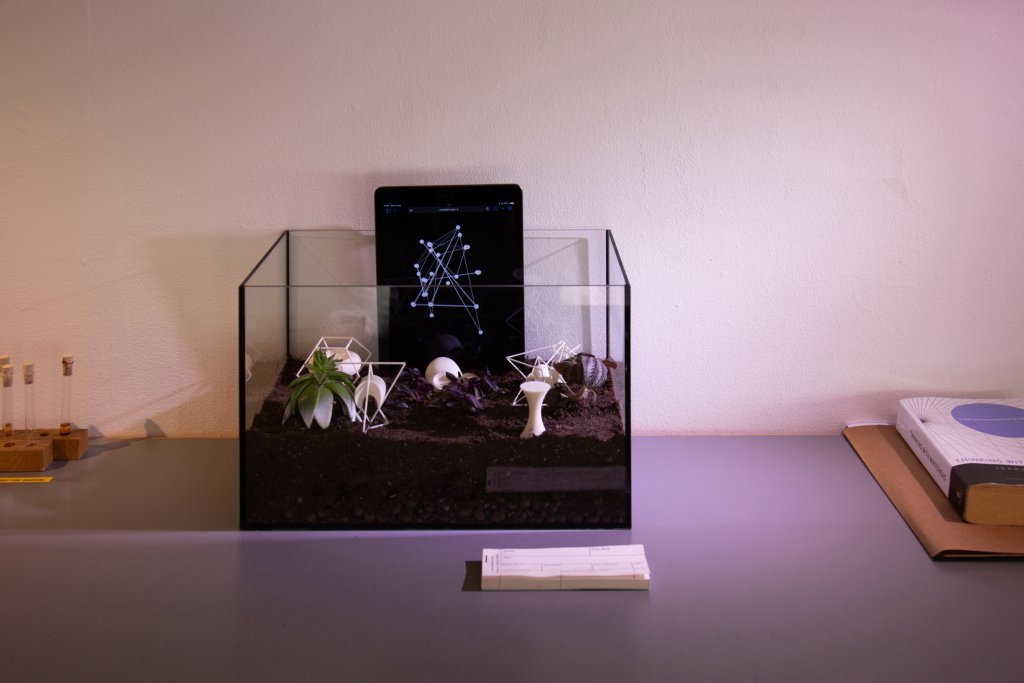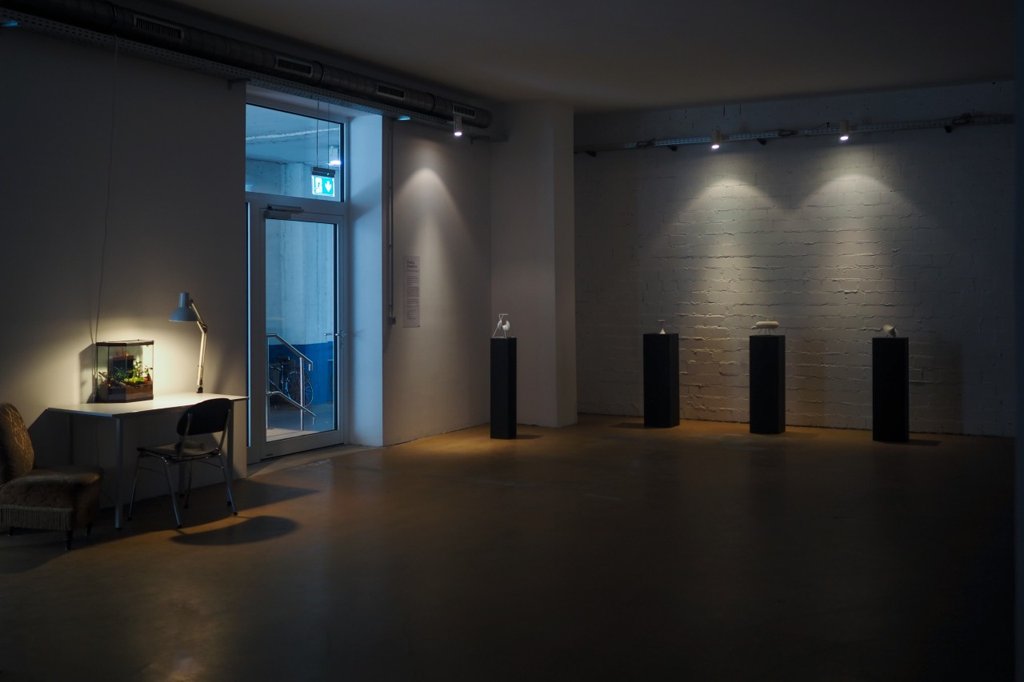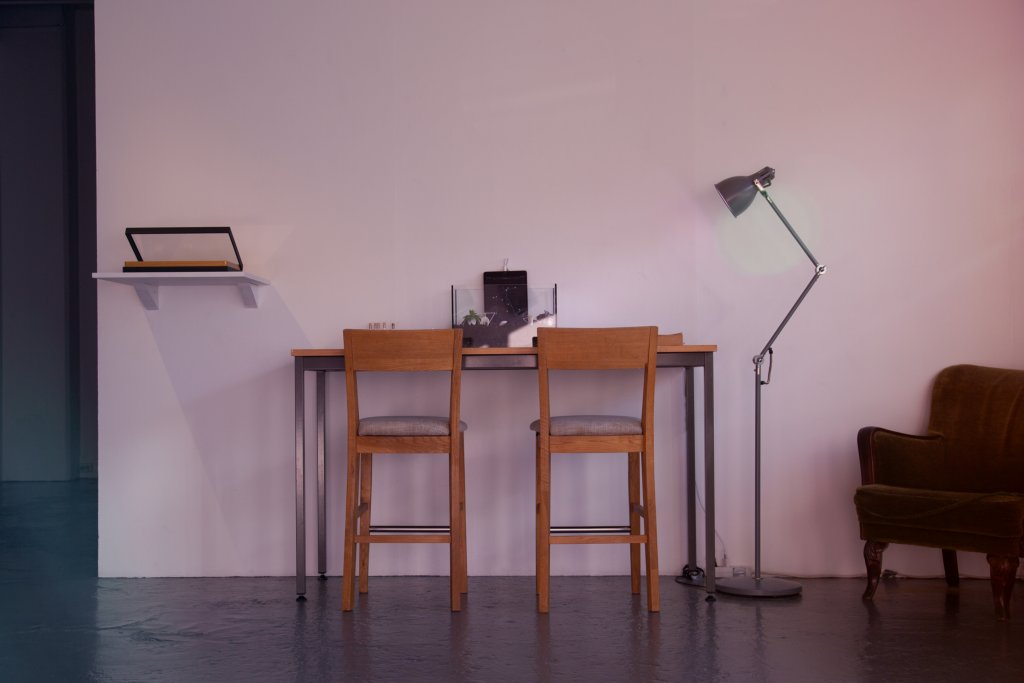


Mari Bastashevski, Sam Lavigne
Unwhorl is not to be thought of as a work about all or any snails in general, but rather something created with ten specific garden snails that we began to notice when we were pushed to spend hours in the fresh air working in the garden during the waves of pandemic lockdowns. Looking at snails as they felt their way through Twitter and Instagram posts, pausing, accelerating, getting bored, lingering, and falling asleep, represented such a different temporal plane of engagement it felt as if we had never seen snails, or for that matter, social media before. Instagram itself confirmed the engagement as unusual by temporarily suspending our accounts for unspecified, suspicious behaviour.
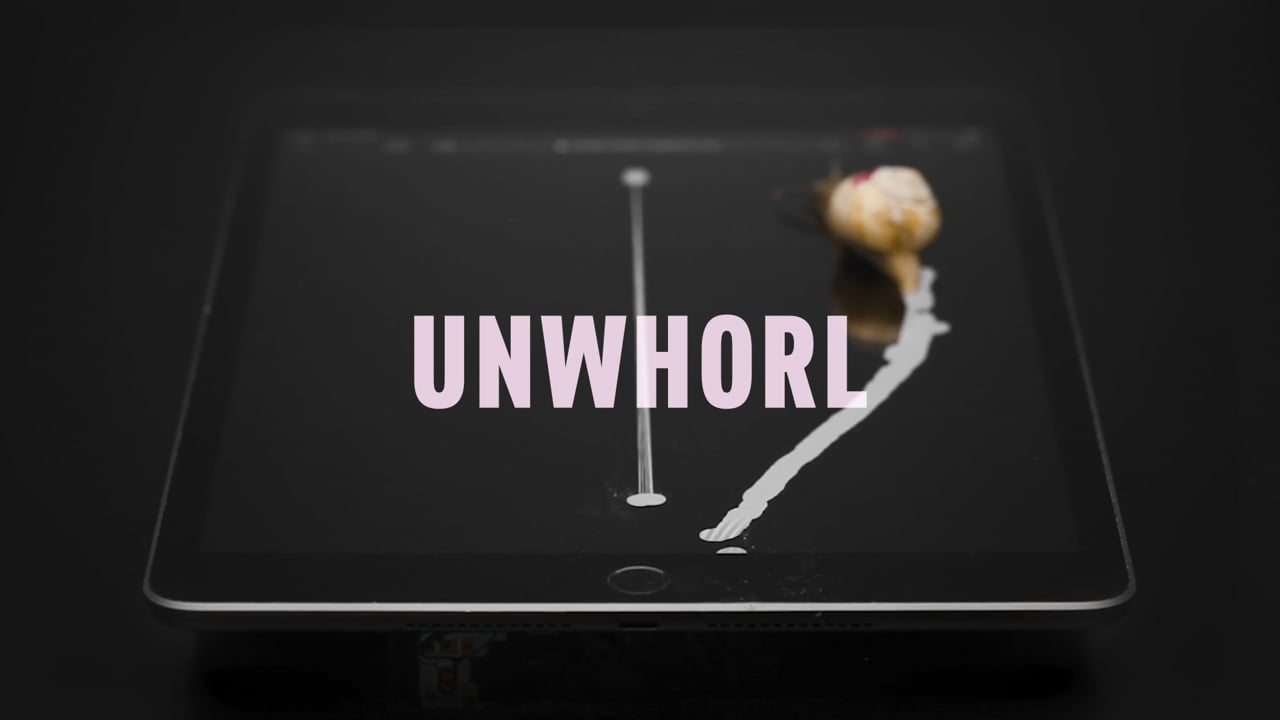
How can snail gestures derail the attention economy?
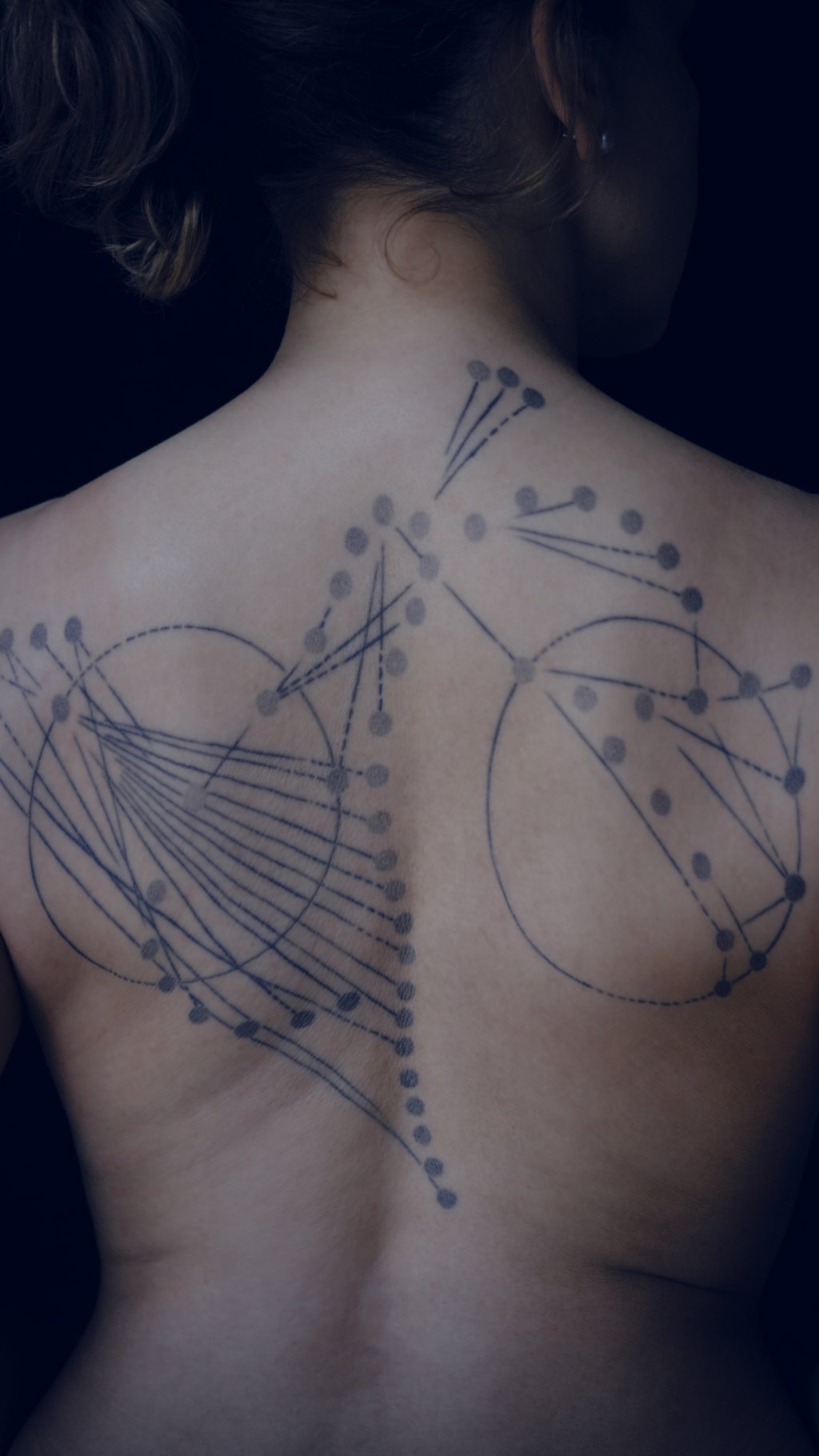
Corresponding to the gestures of the snail, the app creates and records durational artworks: dot line drawings, dot-line drawing films, and music in live and recorded formats. It appears that snails are capable of six simultaneous inputs: two with their "upper tentacles" (their eyes), three with their main body (comprising their lower tentacles and foot), and one on the trail that registered as a prolonged duration long after the input from other touches disappeared and the snail itself had left the interface. Unlike the first five touches, the touch produced by snail fluid lingers on the interface long after the snail is gone, creating organically the kind of extended reverb for which musicians, for example, would ordinarily require technology. This model allows us to interpret the snails as masters of durational media performance, who can generate latency and, in doing so, a unique temporal digital ecology.
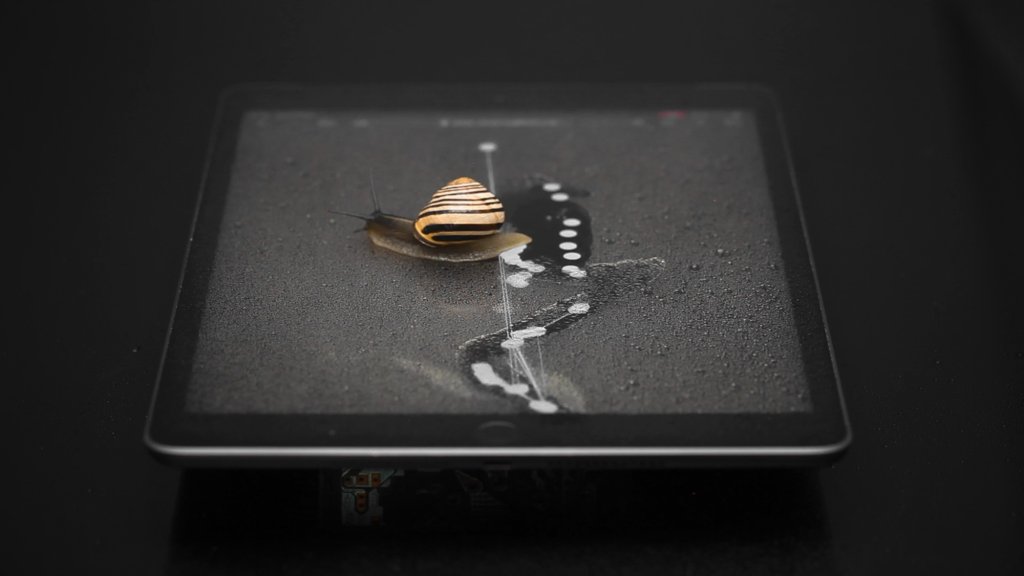
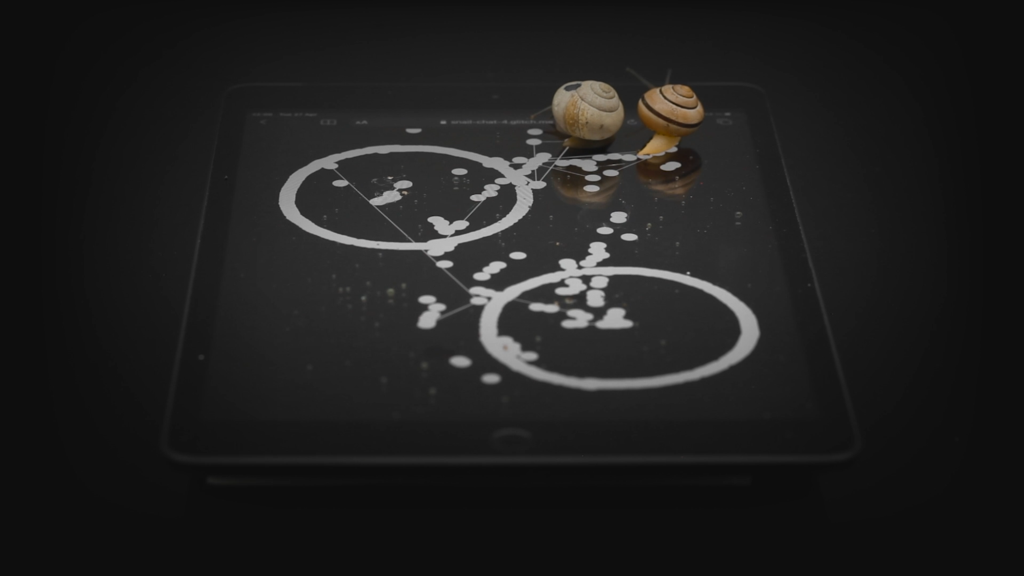
Grey enters Fuchsia's circle instantly and the two attempt a mating dance before falling into that deep, an- cient sleep; a sleep that lasts a thou- sand snail years. They are next to each other, but their antennas barely touching. If there was ever a death- cute, this is it.
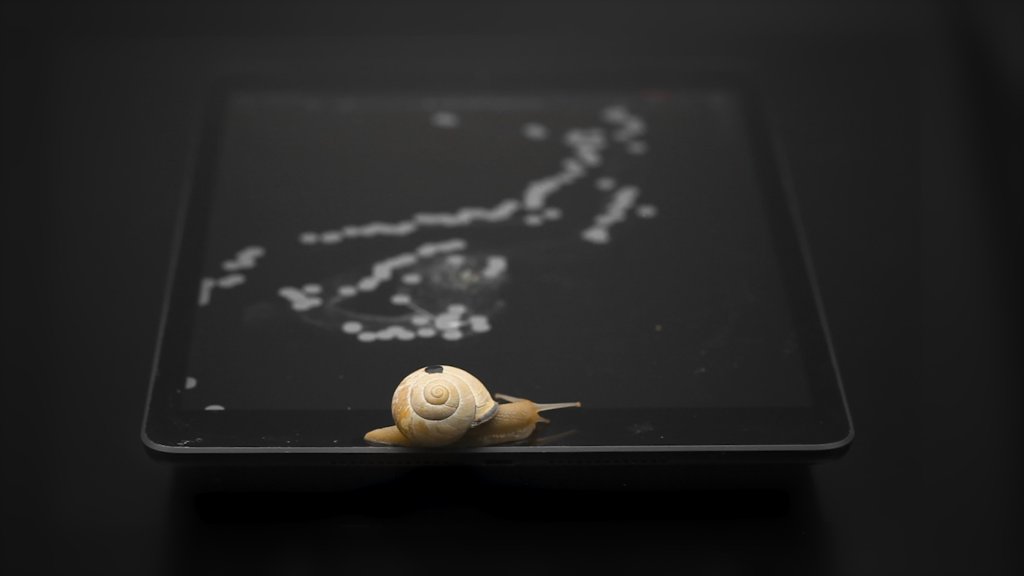
Another day another clean surface. Ms. Valentine immediately abandons her circle, heading for the far off edge, having already explored the entire tent upwards previously, she seems to confidently want to continue doing just that, moving as far from the known territory, the reality, as her strength permits. If brought back into the colony by force it would immediately turn around and head for the wildreness...BUT WHY?
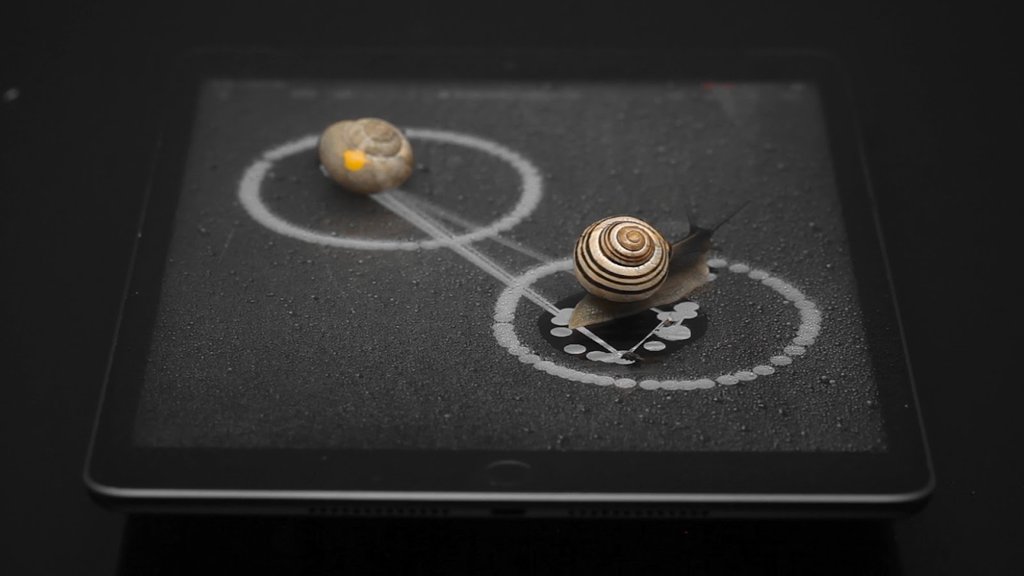
Bergeron true to its character is doing very little extremely well, Yellow, in the meantime, is running cicircles aorund him, a web with multiple connection points. Today they are so very well aligned: four antennas pointing in the same direction at all times.
As an interface, Unwhorl can become a model for designing technologies of proximity and seeding rather those of reducing doubt: technologies that allow frustration, doubt, and play. What other uses and implications could such development have in instances where physical proximity to other than humans is impossible or undesirable? I realize that collective euphoria carries certain risks such as tunnel vision and confirmation bias, but what interests me in this engagement is how a simple interspecies game was able to hijack the kind of collective, affective attention otherwise reserved for scrolling through social media in a filter bubble.