

Annabel Jonkman
Every year, many couches are simply thrown away while many of their parts could still last for years. Worn fabric or saggy foam can be enough for someone to replace the entire couch, even though the frame and other parts are still in good condition. Refurbishment can help couches last longer, but most are not designed for it. Foam is often glued in place and fabric attached with staples, making the parts that wear out first difficult and expensive to replace. Foam and fabric also have a large environmental impact. When the whole couch is replaced because these parts wear out, useful materials are lost long before they need to be.
What if this couch was the last you ever bought?
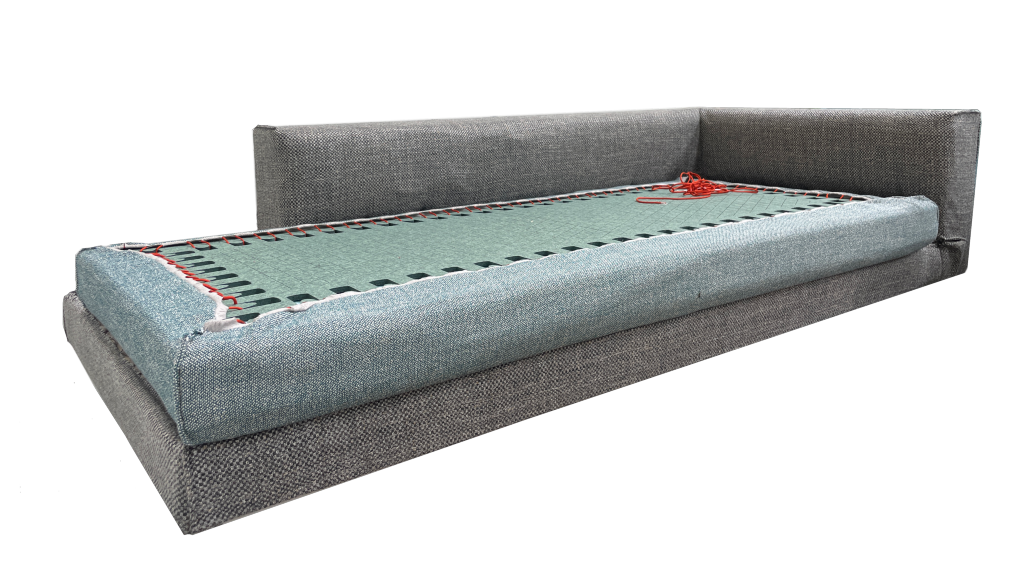
In Unstapled and Refoamed, we explored how a couch can be designed to make refurbishment easier. By taking apart and reupholstering existing couches, we identified two main barriers: removing the fabric and replacing glued foam. These became the starting point for two new design principles.
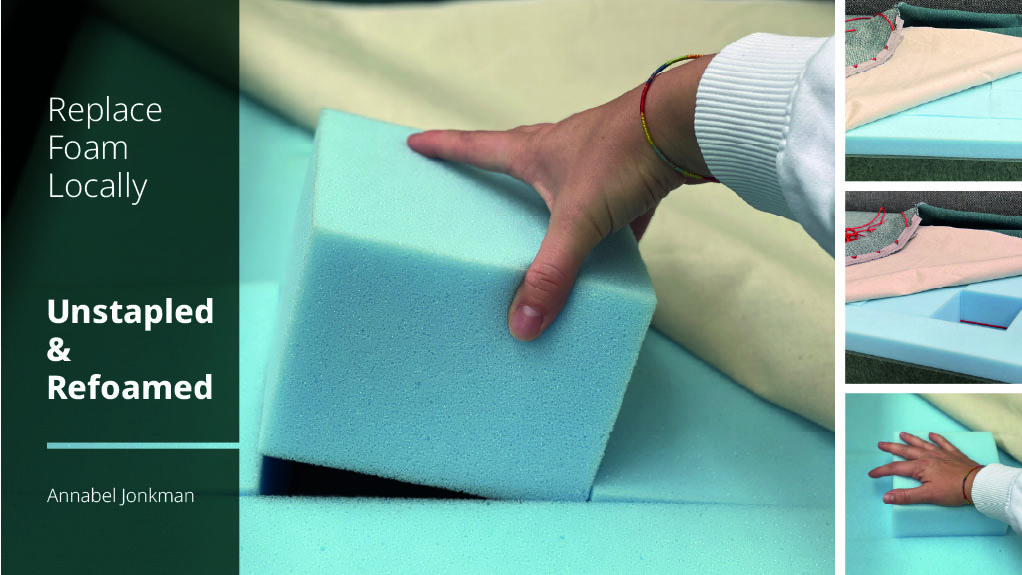
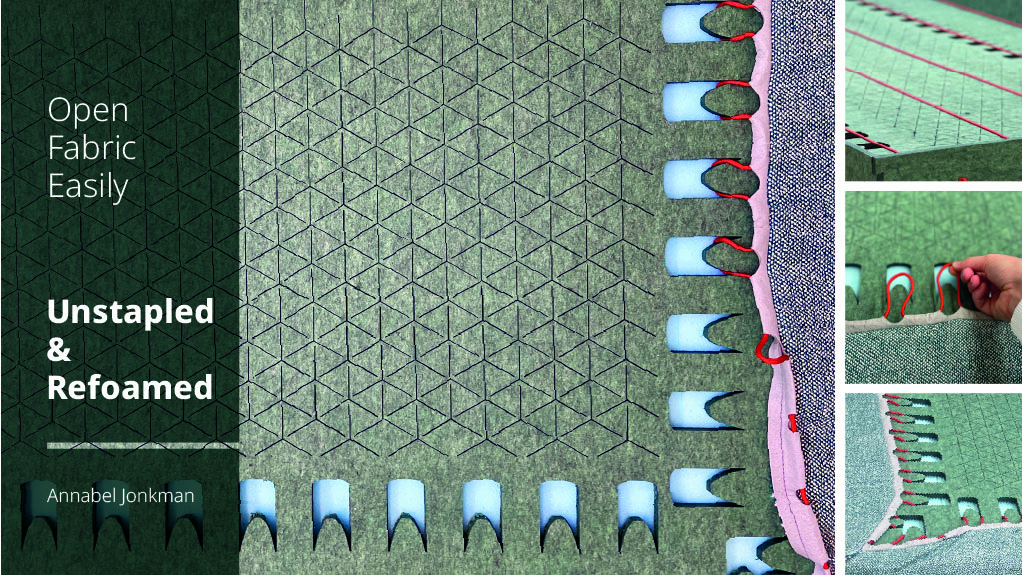
Instead of staples, the fabric can be tightened around the cushion using a pullcord that can be loosened again. Underneath, the foam is divided into separate blocks, allowing worn areas to be replaced without replacing the entire cushion. Both principles come together in a working demonstrator that can be taken apart and rebuilt.
The result shows a different way of designing upholstered furniture: not as one fixed object, but as a product made to be opened, repaired, and renewed over time.
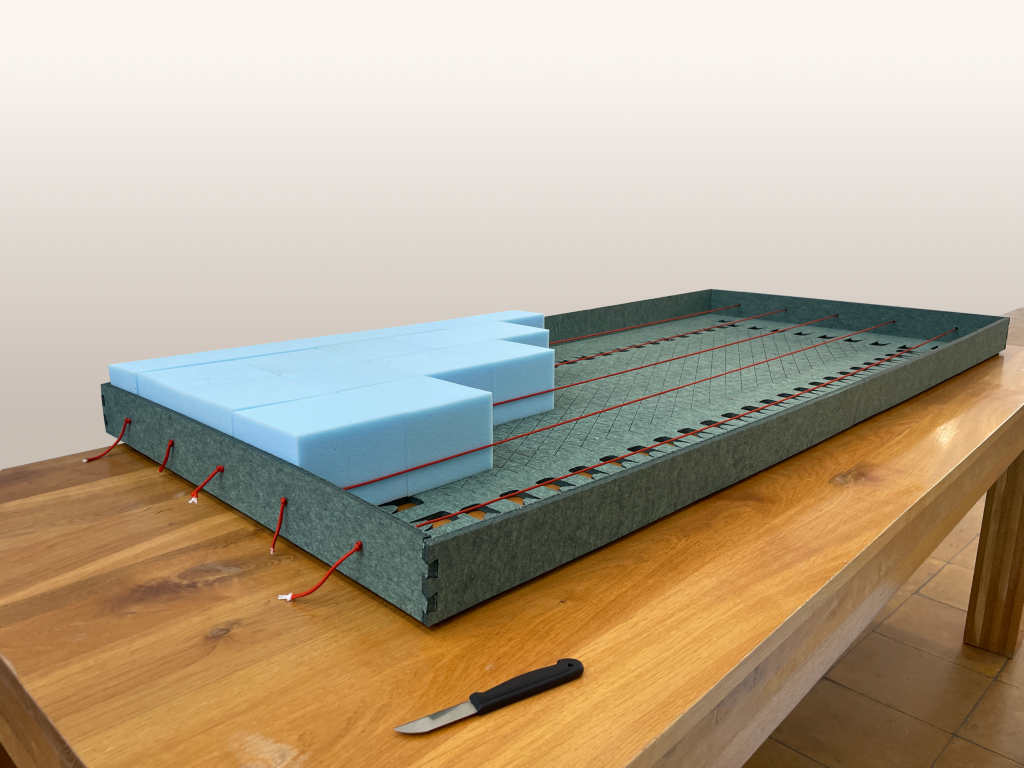
In Unstapled and Refoamed, we explored a different relationship with furniture, where a couch can change and be renewed instead of replaced. But designing for refurbishment is only one part of the challenge. Producers need access to their products after years of use, while take-back, transport, and refurbishment need to be organised in a practical and financially viable way. The concept is also not suitable for every couch, as refurbishment depends on the quality and remaining value of the original product. The project therefore shows that longer-lasting furniture requires more than a different product design; it requires changes throughout the furniture chain to make refurbishment work in practice.