Inger van Dok
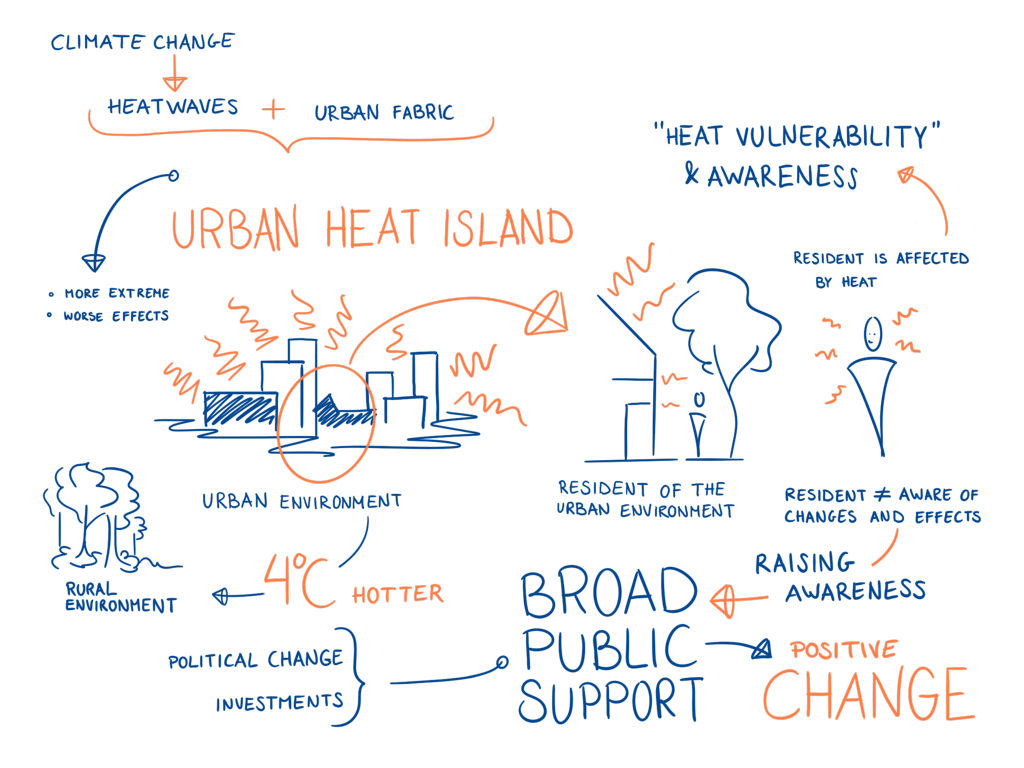
As the climate warms rapidly, our Dutch cities are ill-prepared to deal with this. You may have experienced it, that stifling heat that seems to hang around in cities, making daily life almost unbearable. Although everyone is vulnerable to extreme heat in different ways, the impact of heat on our daily lives is currently mainly expressed using numerical data and generic, top-down methodologies. However, how you’re affected by heat is extremely context-dependent. To be able to target the most vulnerable people and environments in our city, we need to understand what shapes them and how to reach them. Only then can we create a more personal sense of urgency and move forwards towards effective climate adaptation.
How vulnerable to extreme heat are you really?
With our ‘Heat City’ digital design, we translate the concept of heat vulnerability into something tangible. In this way, we create the cognitive shift needed in people to truly be aware of heat and its effects on their daily lives in an urban environment.
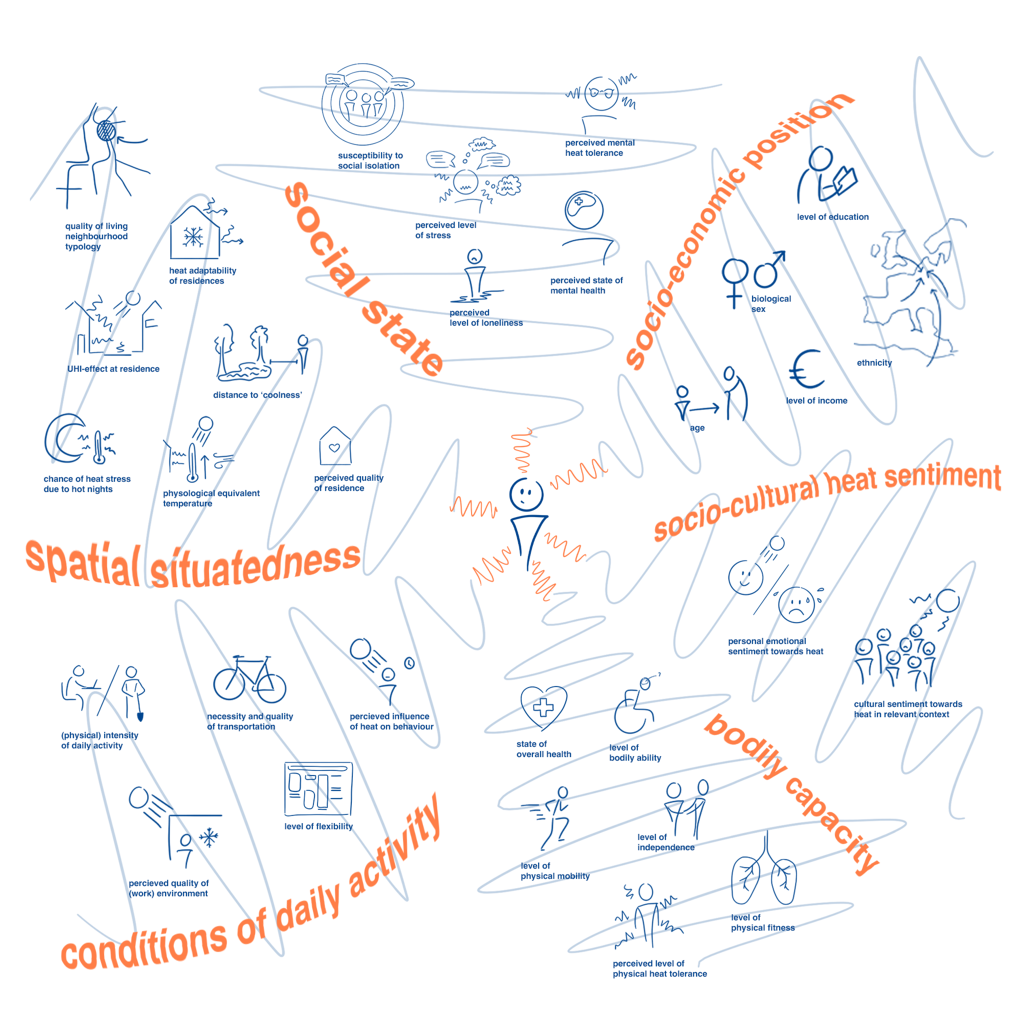
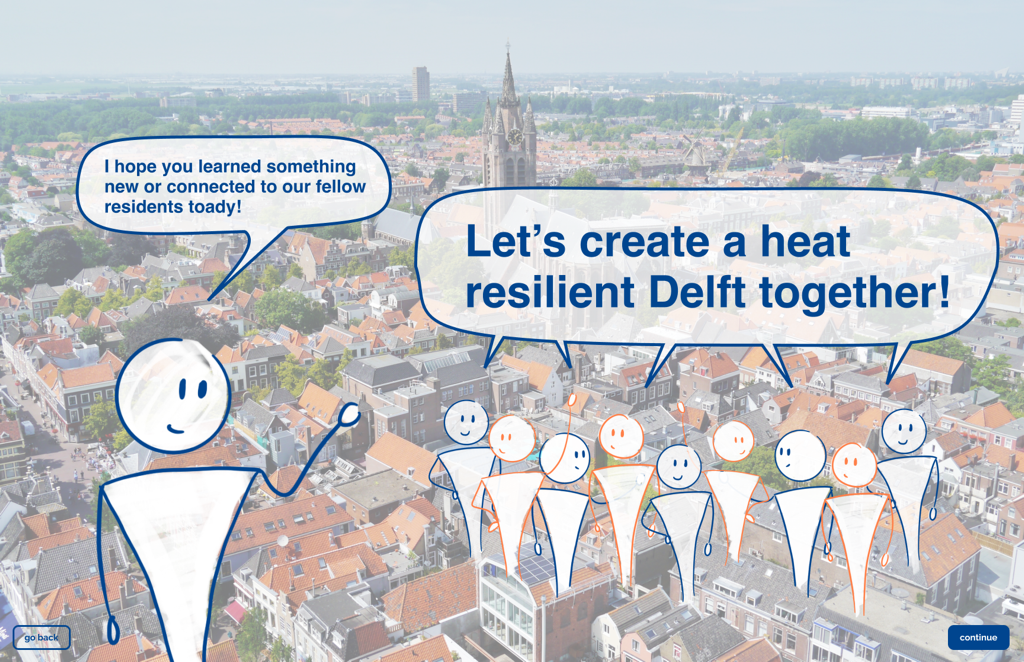
After analysing all the possible contextual factors influencing a resident's vulnerability to heat, we shaped these factors into an interactive narrative situated in the residents’ personal context, in this case the city of Delft.
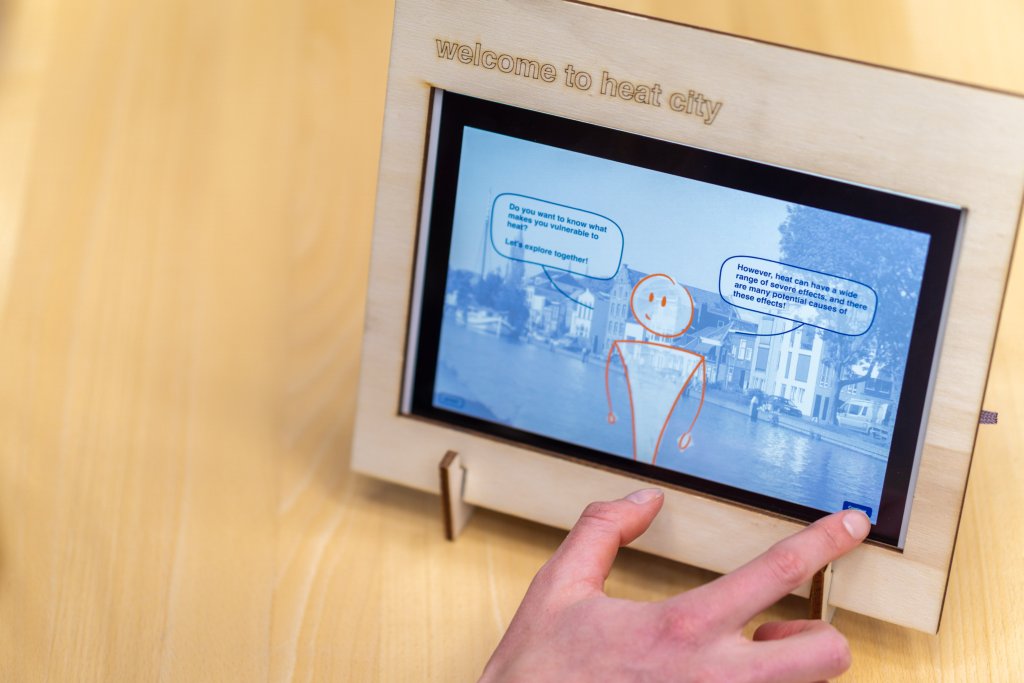
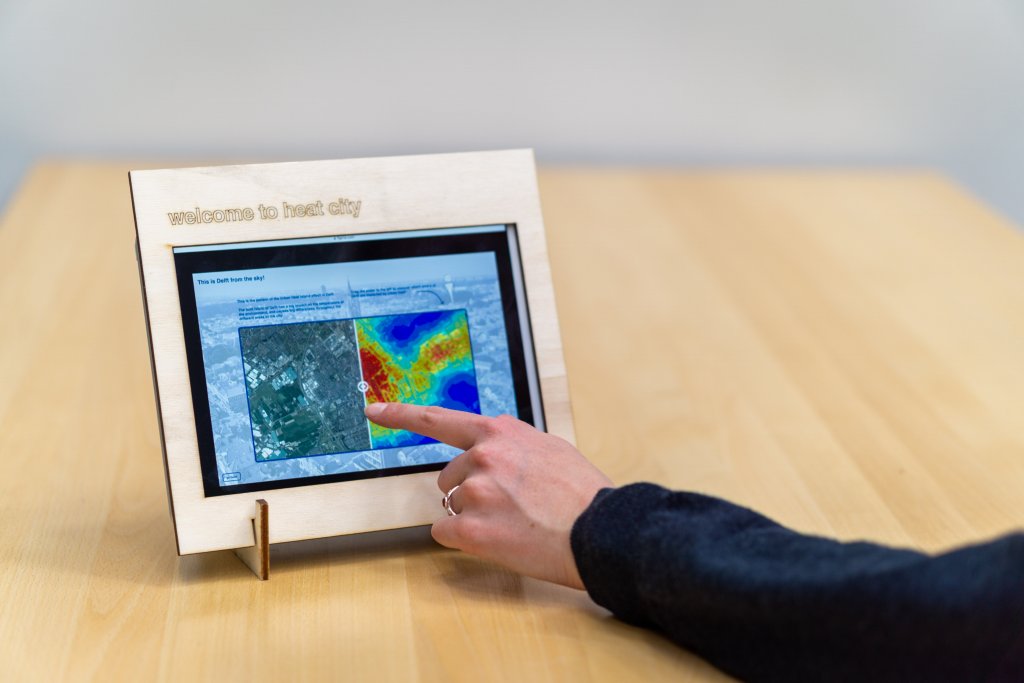
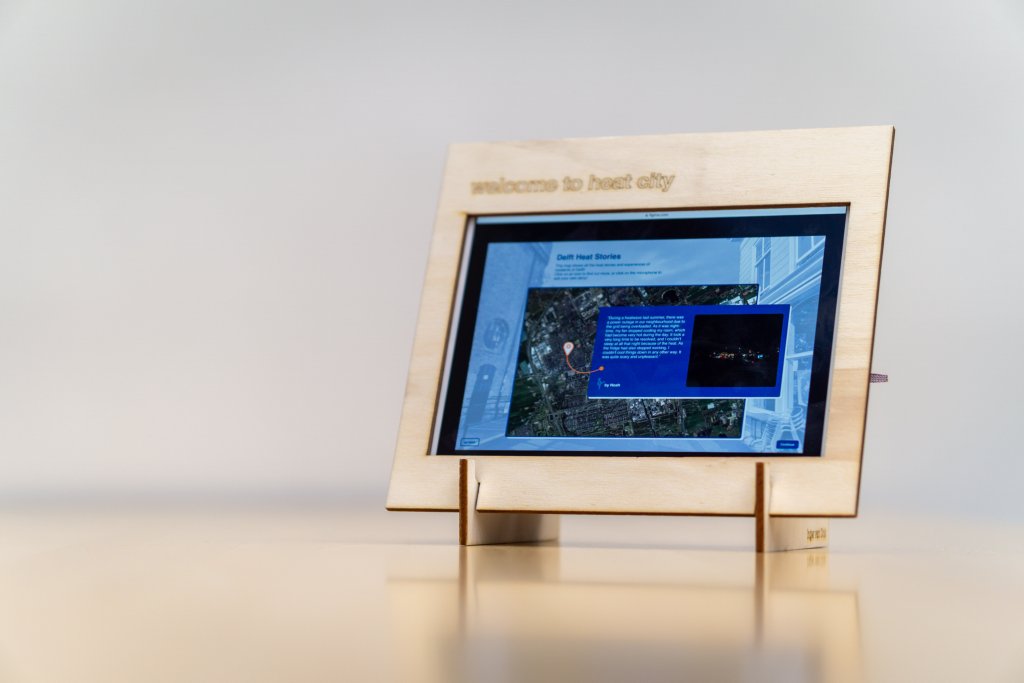
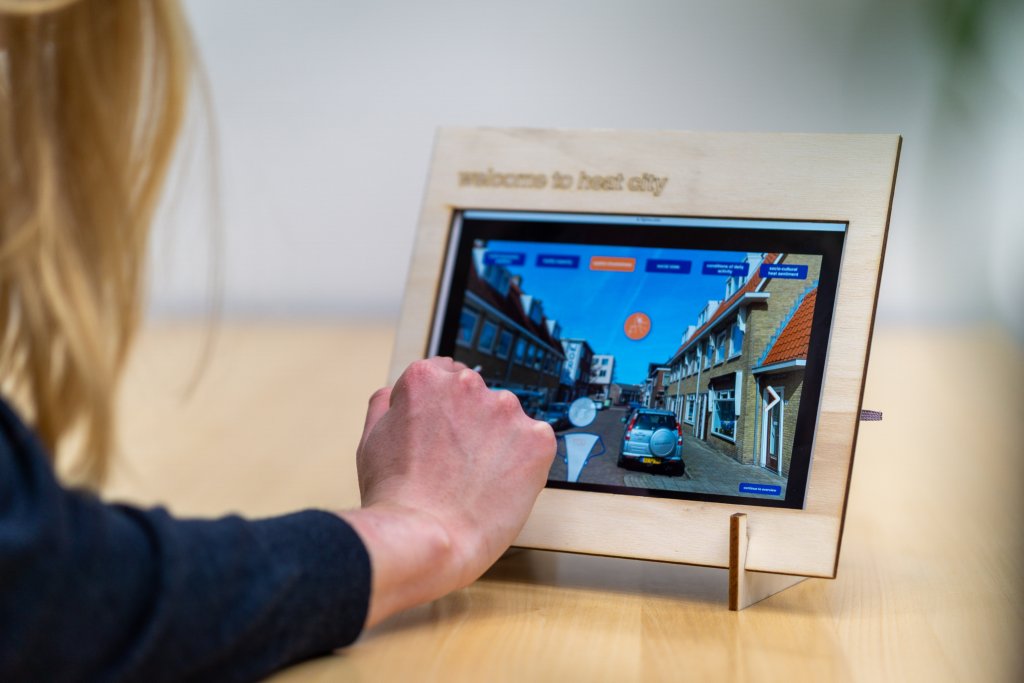
Supported by big data trends and questions to form an understanding of the residents’ context, our design transforms relevant, abstract, impersonal climate data into a concrete, personal perspective. Through the platform, residents can converse with the tool to discover their own vulnerabilities, or empathise with the heat experience stories of other residents in the city. Ultimately, ‘Heat City’ opens residents’ eyes to the invisible threat of urban heat in our cities.
Rather than jumping straight into the difficult challenge of climate action, as a first step, we focus on raising people’s awareness. In this way we demonstrate that urban heat is not an abstract phenomenon, it’s present in the daily experiences and lived environment of every resident. Gaining a full understanding of its impact requires looking beyond the data towards the richness of residents’ contexts. Spreading the word requires a design that meets residents where they are. Using a human-centred approach, our design reaches residents in a relatable and meaningful way, guiding users towards a deeper understanding and bridging the valuable step needed to set in motion communal support for much-needed climate action.