



Célia Cannappah, Sam Parker, Dr. ir. Willem Haanstra, Prof. dr. Jan Braaskma
Sustainability is becoming an increasing concern for the European railway sector. Therefore, the sector is developing eco-labels designed to help when selecting and purchasing new assets. Eco-labels have been used in Europe as a comparison tool to help guide consumer choices when buying products or services. This same mechanism can be applied by railway stakeholders to consider sustainability alongside urban planning and finances of new assets. A consortium of European railway manufacturers, infrastructure managers, and rolling stock operators has been empowered to co-design these eco-labels. Twente university functions as a facilitator to provide equal grounds for unbiased participation of all co-designers, thereby creating a feeling of ownership over the process and final result.
Can you imagine an eco-label for the European railways?
Railway assets tend to have lifespans exceeding forty years, making it essential to consider lifecycle planning as early as possible in their design phase. Therefore, three indicators were chosen to encompass the lifecycle of these assets: global warming potential (GWP); energy efficiency; and circularity for trains and infrastructure. Each of these indicators has to be calculated, balancing accuracy and completeness with simplicity and accessibility.
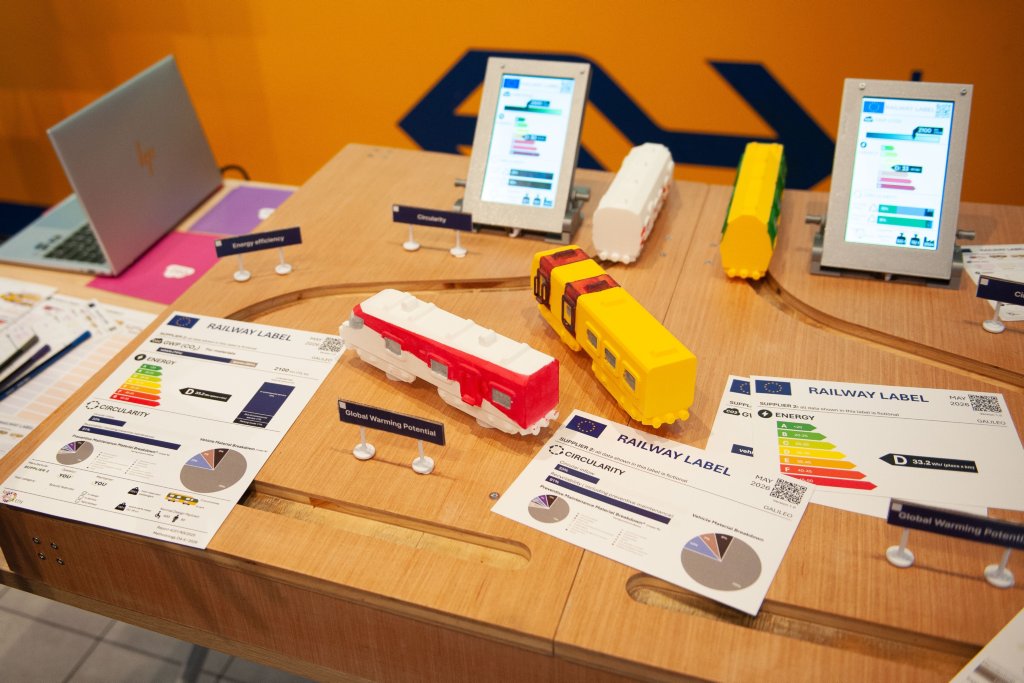
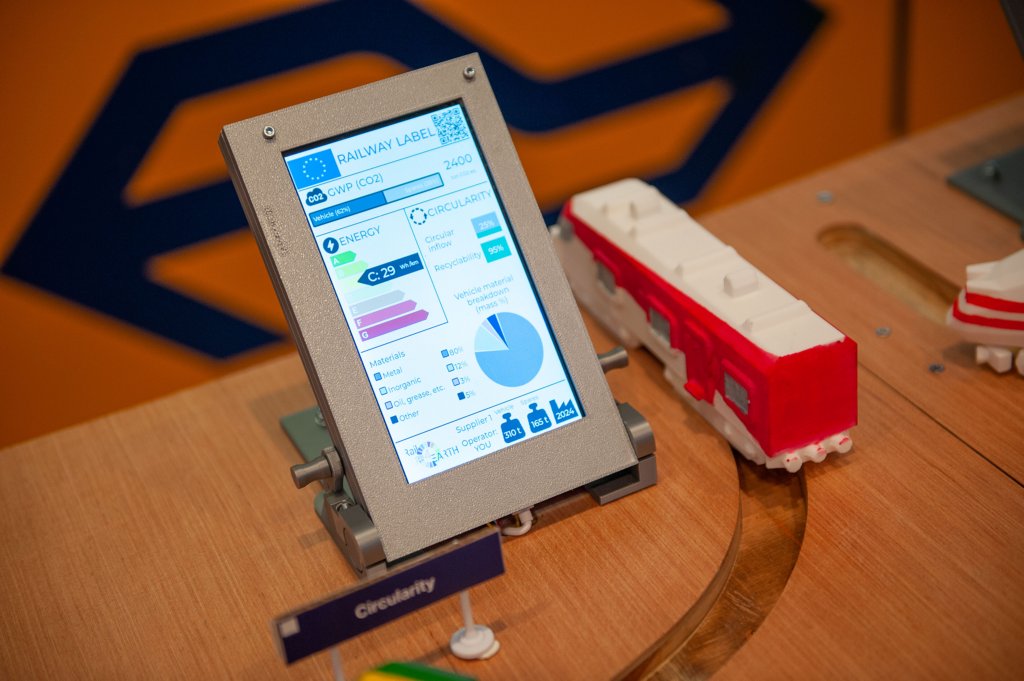
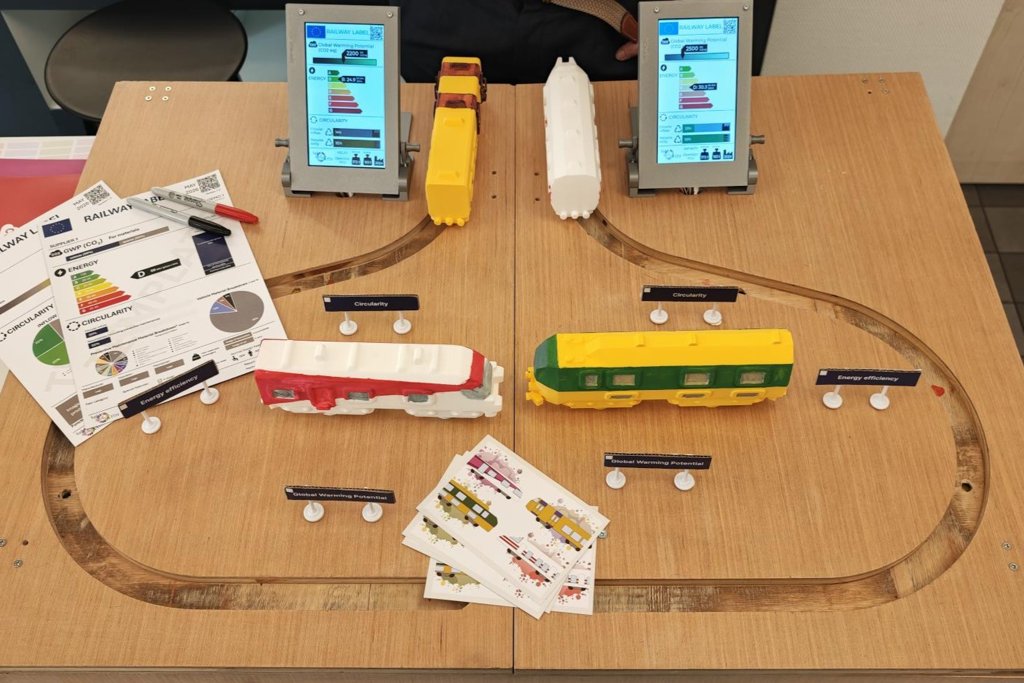
Navigating this design space with different types of organisations from different countries is a balancing act between freedom and control, and it requires consensus-building.
The consortium participants have expert knowledge about railways, but they need support in navigating this complex design space. Thus, we organised several co-design workshops through which the group progressed from individual pen-and-paper ideas to consolidated high-fidelity prototypes. These were further tested on existing cases to demonstrate their real-world feasibility.
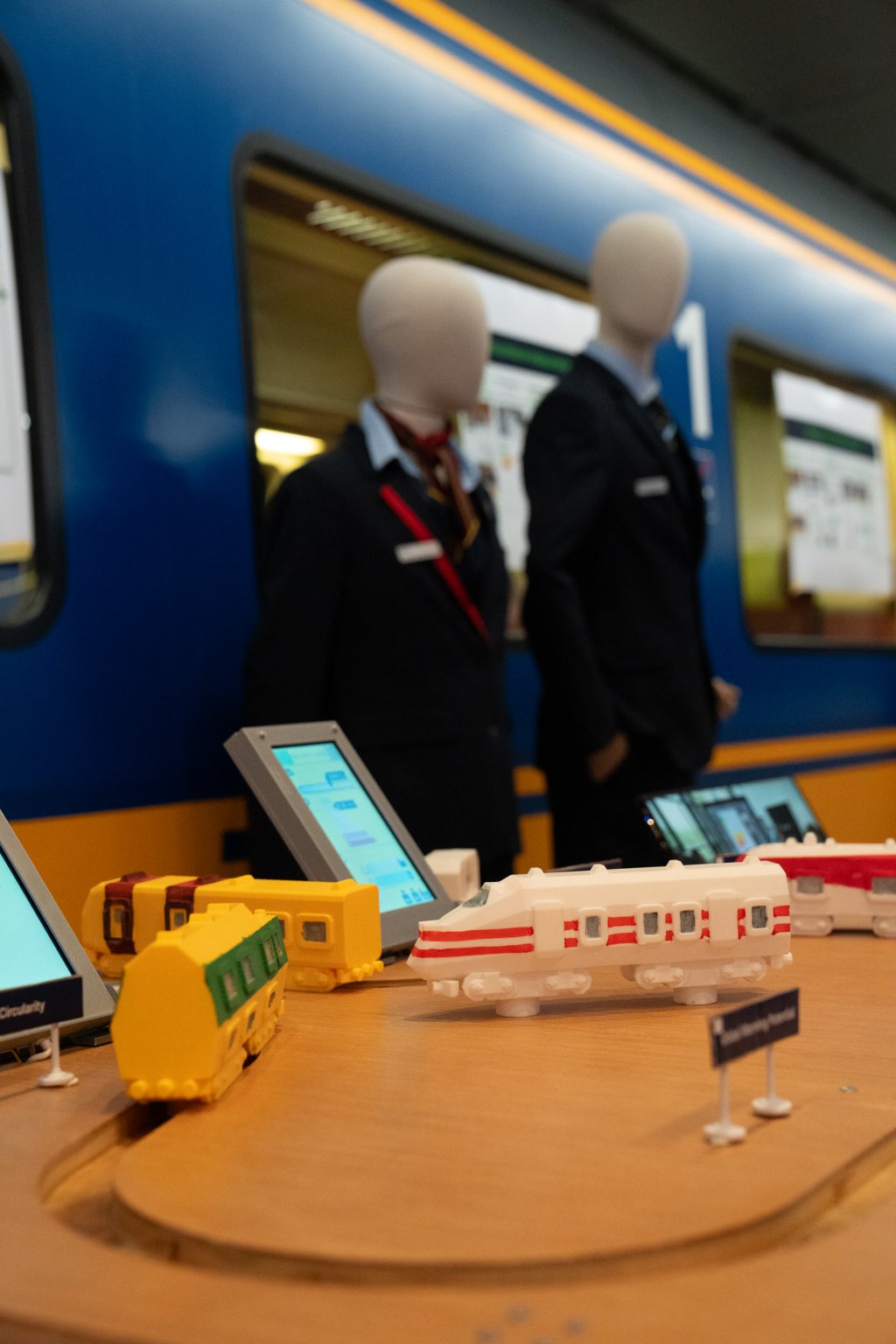
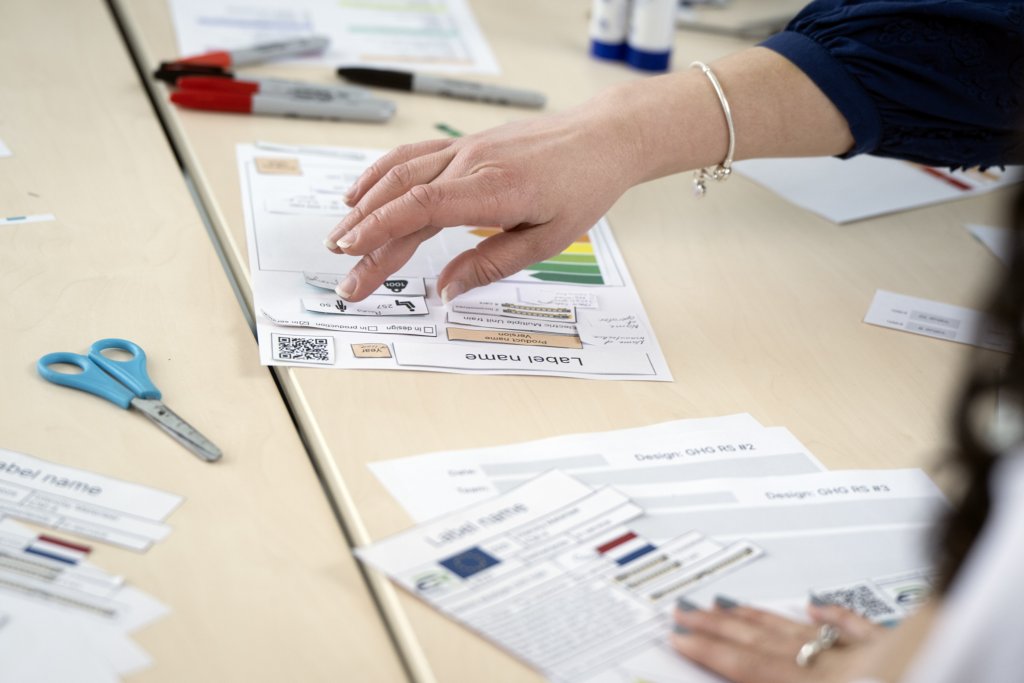
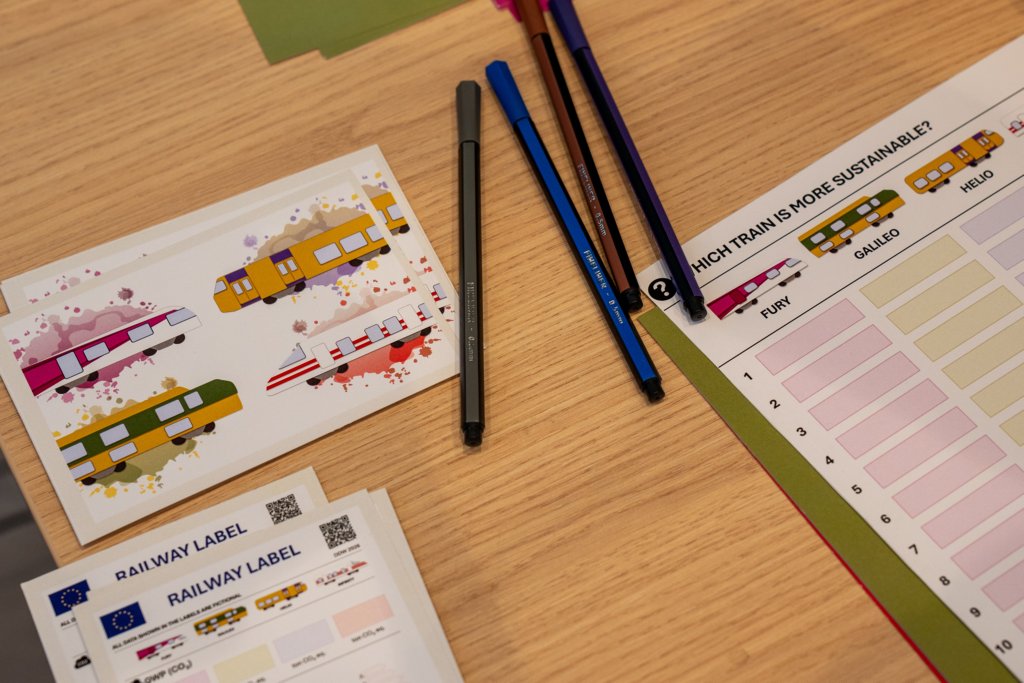
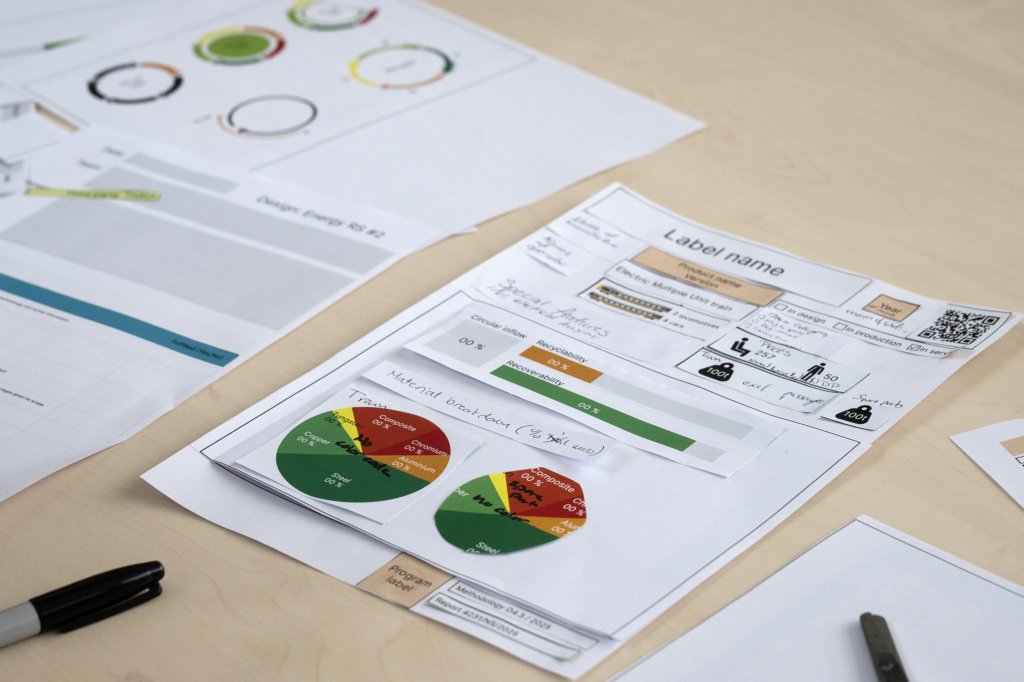
The eco-label’s development is contingent on stakeholders understanding the problem and accepting that labels are a necessary tool. This hands-on exhibit explores sector harmonisation, as the eco-label is the result of consensus-building and simplified depiction. Comparability is simulated by people interacting with four model trains and their label. They are asked “which train is more sustainable” by comparing results at three ‘stations’: GWP, energy efficiency, and circularity. The full label is then displayed at the terminus. Lastly, it engages stakeholders to reflect on how they would decide if they were to select a train, reflect on their own decision-making for other products, and check whether the interaction would ‘push’ them in a certain direction.