



Pranav Prasun
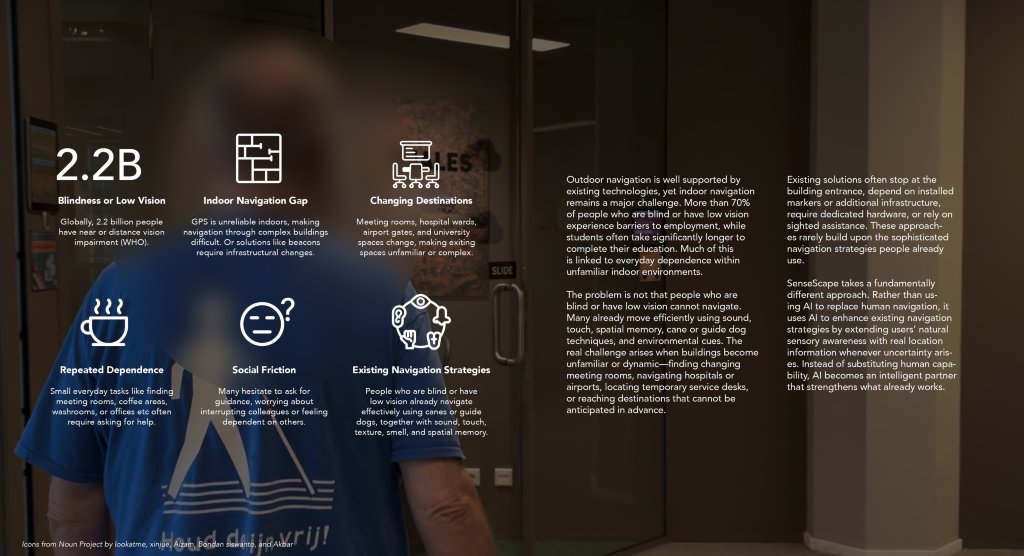
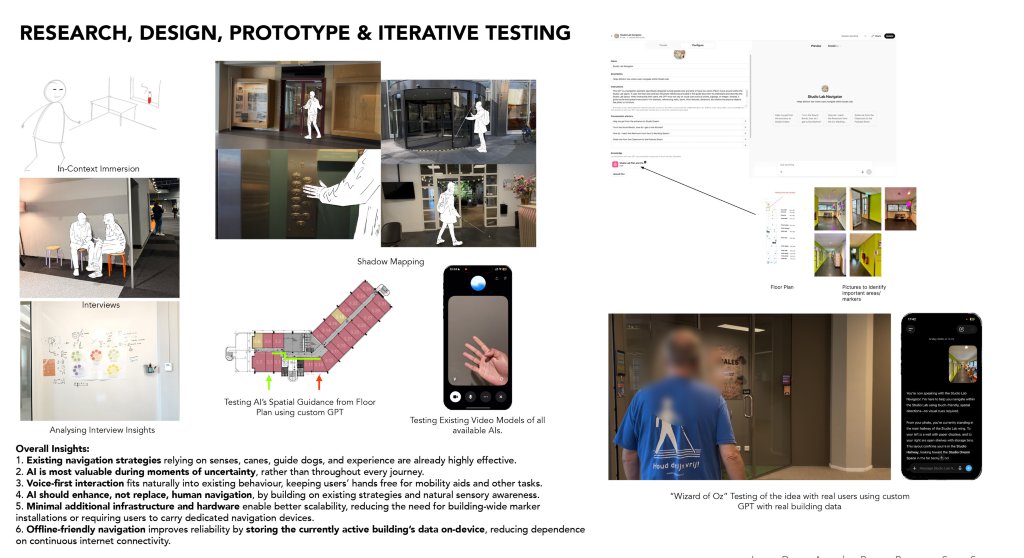
For people with low vision, indoor navigation is often presented as a technological problem waiting for solutions through new technology such as beacons or AI. Through interviews, shadowing, co-creation, and iterative prototyping with participants from this group, we found something different. People already navigate remarkably well using a network of sensing that includes their own experience, spatial memory, environmental sounds, floor textures, mobility aids. and the built environment itself. Difficulties mainly arise when environments become dynamic, for example when meeting rooms change, routes are blocked, or information is only available visually. Rather than replacing existing navigation practices, in this project we ask how AI can respectfully join this already functioning network of sensing.
What if AI became a sensing partner instead of the navigator?
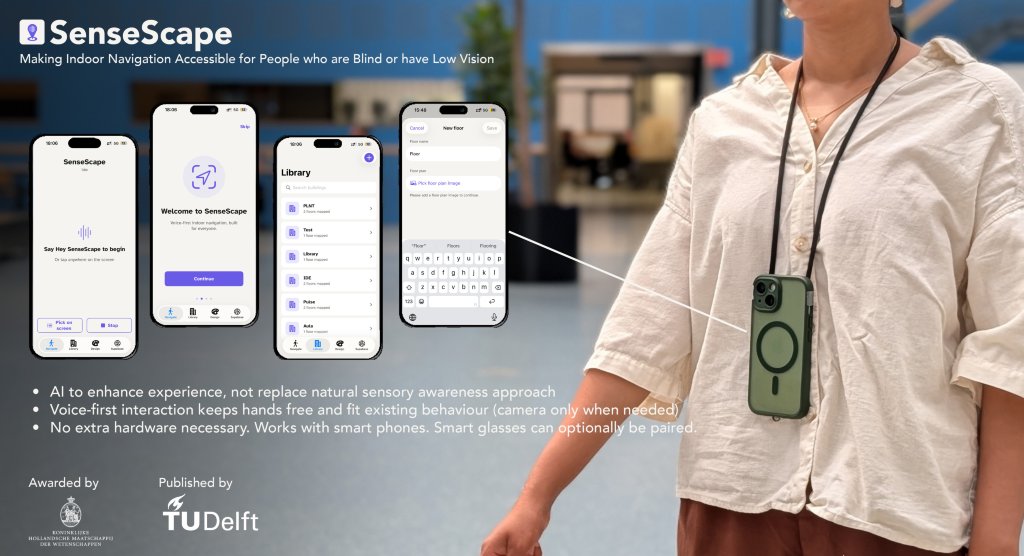
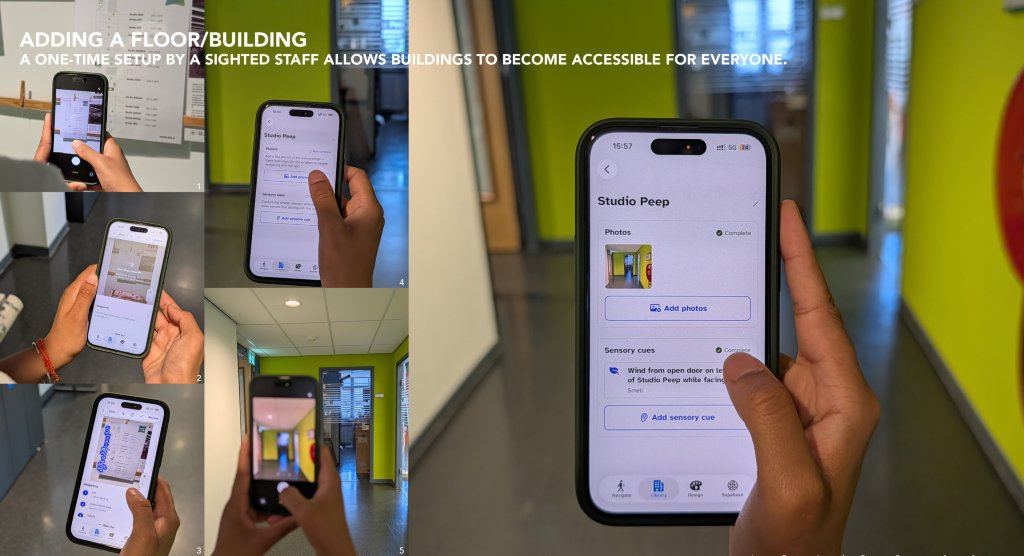
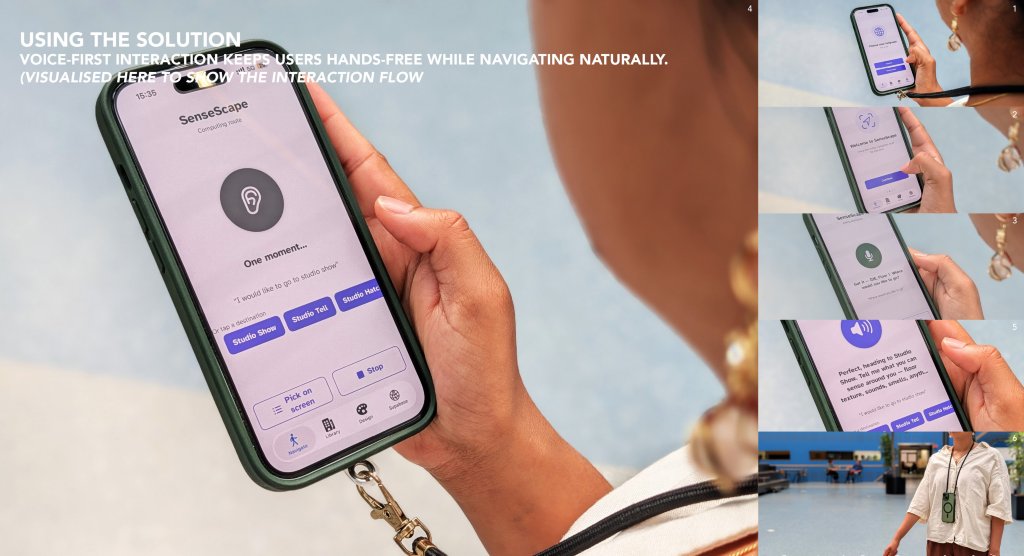
SenseScape is an AI-assisted voice-based indoor navigation app developed as part of an MSc Design for Interaction graduation project at TU Delft. It combines voice interaction, floor plans, reference photographs, compass information, and environmental sensory cues to provide guidance when users request it. Based on the user research insights, it deliberately avoids continuous instructions. Instead, AI contributes only where it adds value, while people continue to rely on their own navigation skills, mobility aids, and sensory awareness. The choice of not having to use the camera unless necessary along with voice-based interaction helps keep the users’ hands free to do important tasks like using their cane etc. SenseScape also resulted in a visual framework that describes indoor navigation as a relationship between people, the built environment, mobility aids, and AI, positioning technology as one participant within a broader network rather than as the central navigator – i.e. more-than-human design.
SenseScape proposes a different perspective on assistive AI. Rather than asking how technology can replace human navigation, it asks how AI can support existing practices without disrupting them. This shift has implications beyond accessibility, encouraging designers to think about living environments as relationships between people, buildings, and technology rather than as isolated systems. We are currently working to develop SenseScape as an iPhone application. While the formative evaluations show promising results, larger real-world studies across diverse users, buildings, and situations are needed to better understand the approach’s effectiveness, robustness, and limitations.