



Parjanya Pratap Singh, Xuan Liu, Marvin Taslim, Tanishq Shivname
Navigating a train station is not only about knowing where to go. It also involves continuously confirming that you are still going in the right direction. Sighted travellers naturally use signs, departure boards, landmarks, and surrounding movement to validate their decisions. For blind and visually impaired travellers, this confirmation can require more effort or reliance on other people or technology. Research through shadowing and an expert interview revealed that uncertainty often emerged when confirmation was unavailable, rather than when route information was missing. This shifted POLARIS’s focus from providing more directions to supporting confidence and orientation. In this project, we investigated how multisensory feedback can provide reassurance while allowing the traveller to remain an active decision-maker.
Can assistive technology guide visually impaired individuals without removing agency?
POLARIS is a multisensory navigation system combining sound and haptic feedback. Navigation is organised around checkpoints rather than continuous step-by-step instruction. Audio cues provide directional information, while haptic feedback acts as a physical confirmation of movement and alignment. The prototype was developed iteratively through sensory explorations and functional testing, eventually focusing on a sweep-and-align interaction.
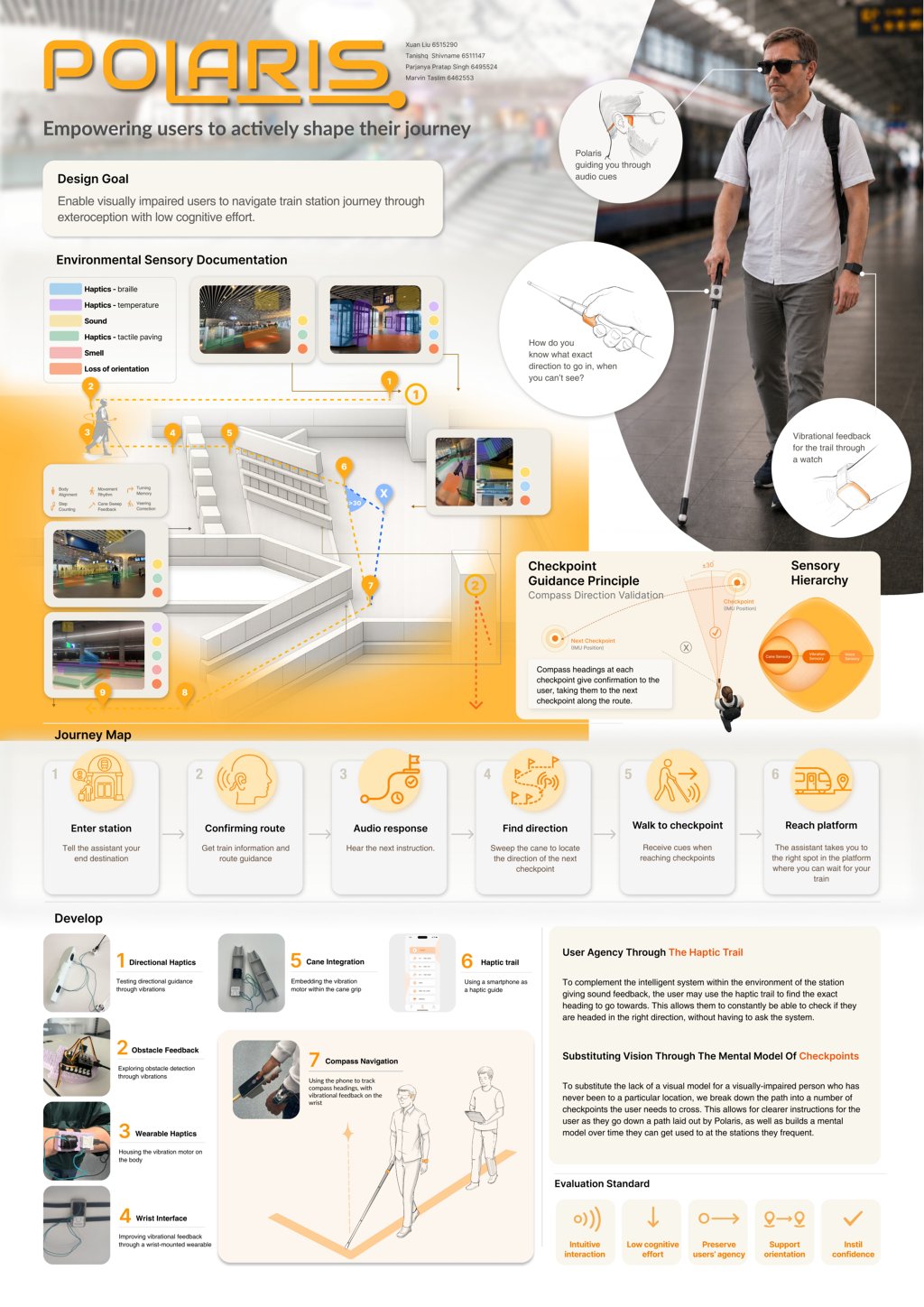
A controlled evaluation at TU Delft tested navigation with blindfolded participants, followed by a contextual evaluation in Delft train station with a visually impaired participant. Participants generally understood the interaction quickly and described the system as reassuring and adaptive. The prototype is not intended to navigate on behalf of the user. Instead, it supports the user's own spatial decisions by providing confirmation at key moments, creating a relationship between technology, bodily movement, and environmental awareness.
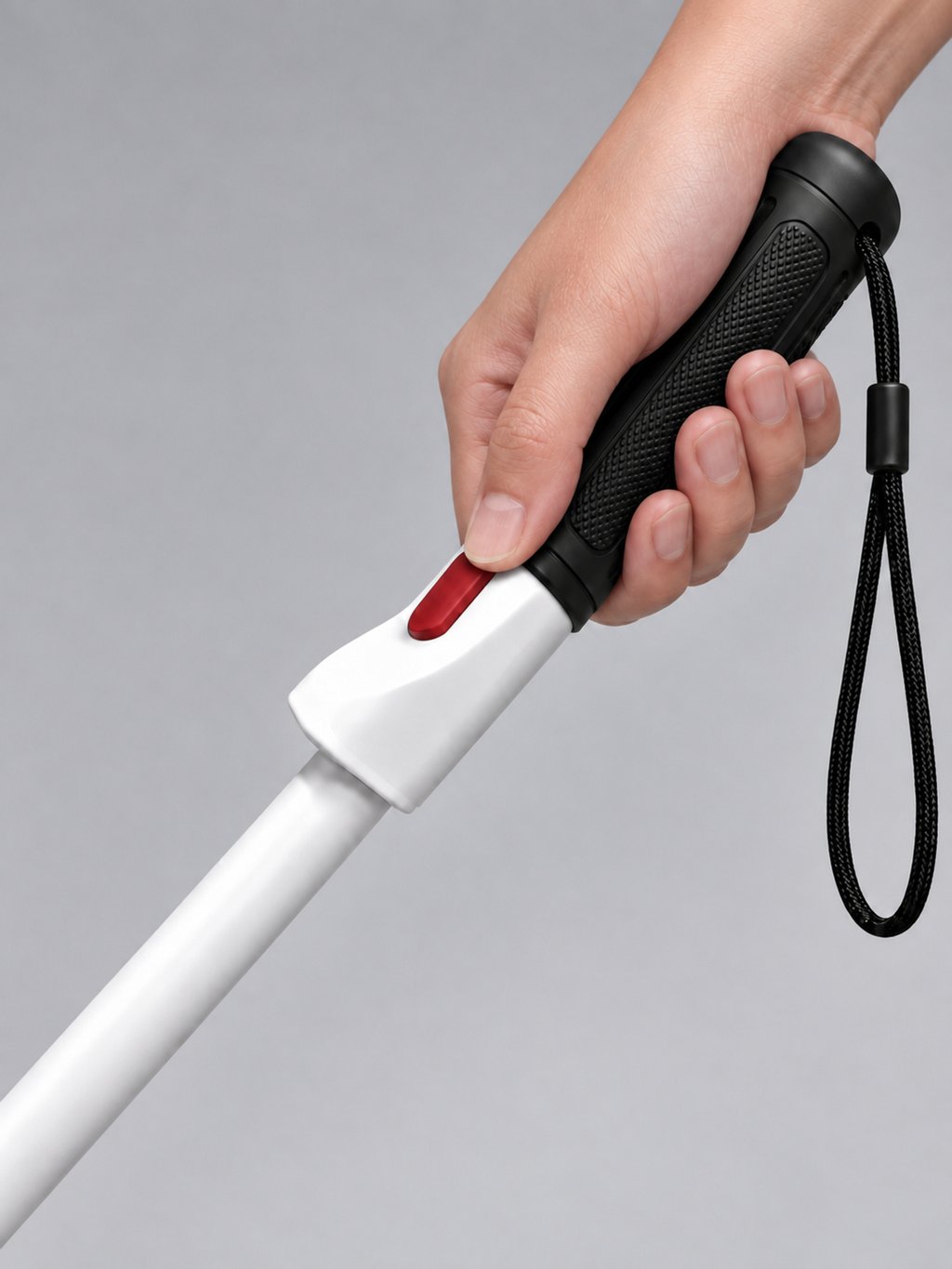
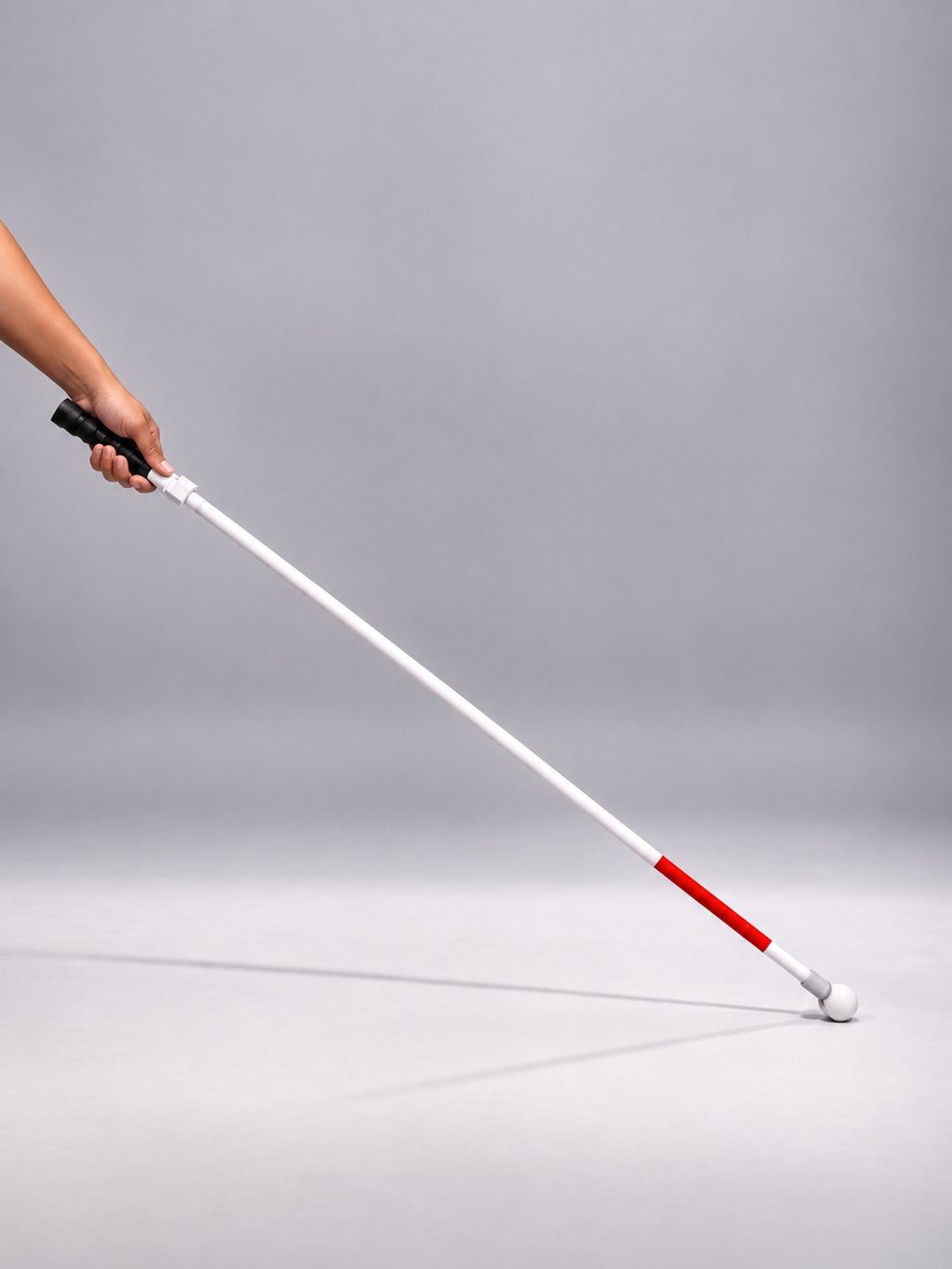
The prototype results were promising, with participants reaching destinations and reporting high levels of trust, confidence, and agency. However, the evaluation also revealed limitations, including short or subtle haptic signals and moments of uncertainty during environmental transitions. Thus, POLARIS is not a finished solution, but it opens the discussion on how assistive technologies can support independence without gradually taking over human decision-making.