


Bas Kramer, Rohan Daniel
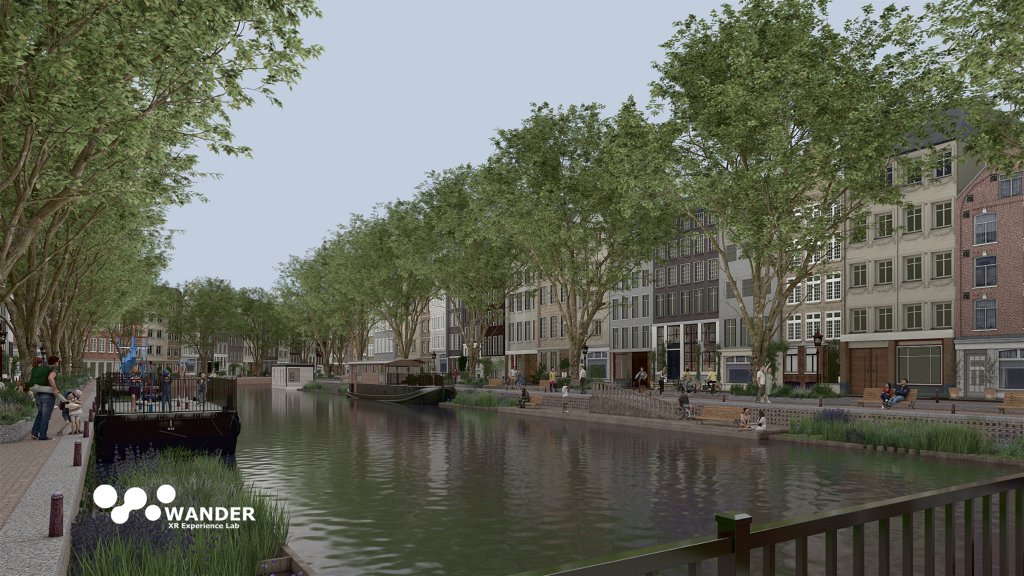
Amsterdam’s historic canals are under pressure. Many quay walls are ageing, while the same compact spaces must also respond to climate change, biodiversity loss, new energy systems, changing mobility, and the growing demand for functional public space. In our project, Future-Proofing Amsterdam’s Canal-scapes, we view this necessary renewal as an opportunity rather than a detached engineering task. We investigated how the canal edge can be redesigned so that infrastructure, nature, water, movement, and daily urban life can work together, while preserving the character of Amsterdam’s historic canals.
Can a quay wall solve multiple urban challenges in one go?
Using a transdisciplinary Research Through Design process, the project brought together multi-disciplinary expertise in engineering, mobility, energy, hydrology, biodiversity, microclimate, heritage, and public space design. Repeated cycles of co-design exploration, testing, expert evaluation, and revision, informed the design decisions that led to the development of three representative evidence-based designs, each addressing a different level of technological readiness. This process helped identify conflicts, opportunities, and synergies between functions and showed that multifunctionality does not come from accumulating more functions, but from synergistically combining compatible interventions across the quay wall, street, and canal.
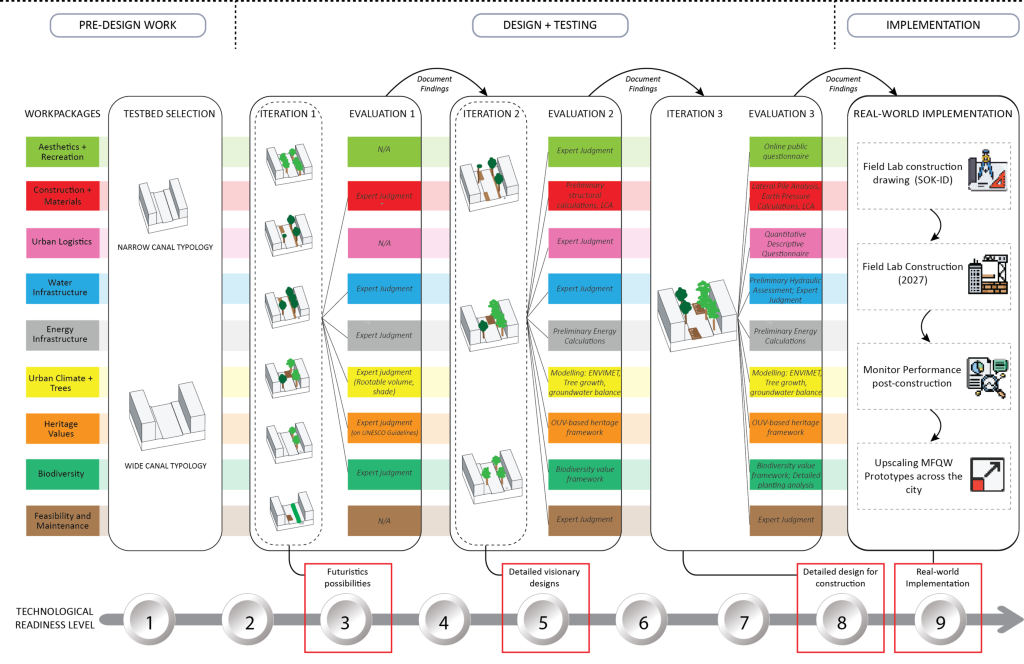
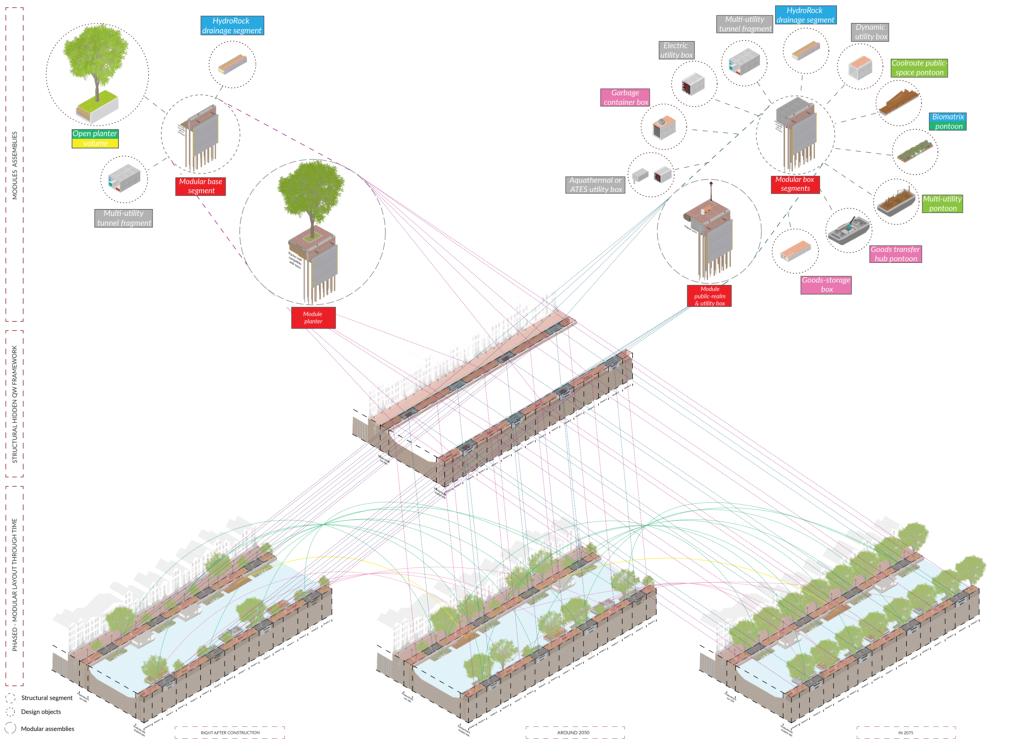
We applied a modular strategy based on repeatable elements that can be adapted to local conditions. These can create space for trees, water storage, habitats, logistics, recreation, and underground services such as aqua-thermal energy systems. Floating elements can be added, moved or removed, while underground modular boxes can change function over time.
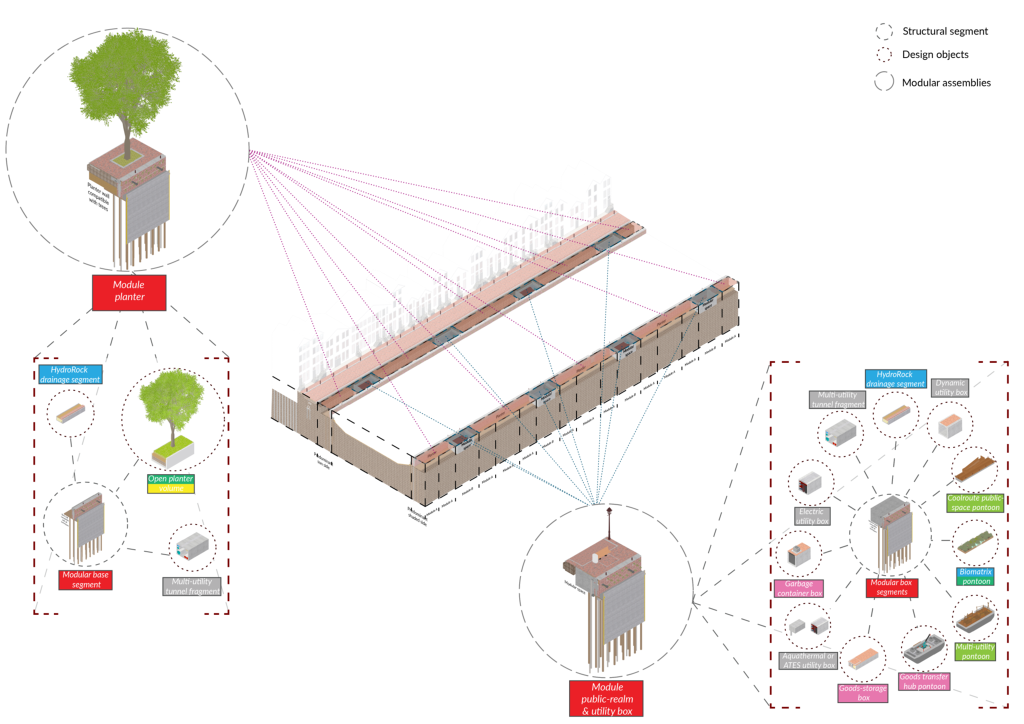
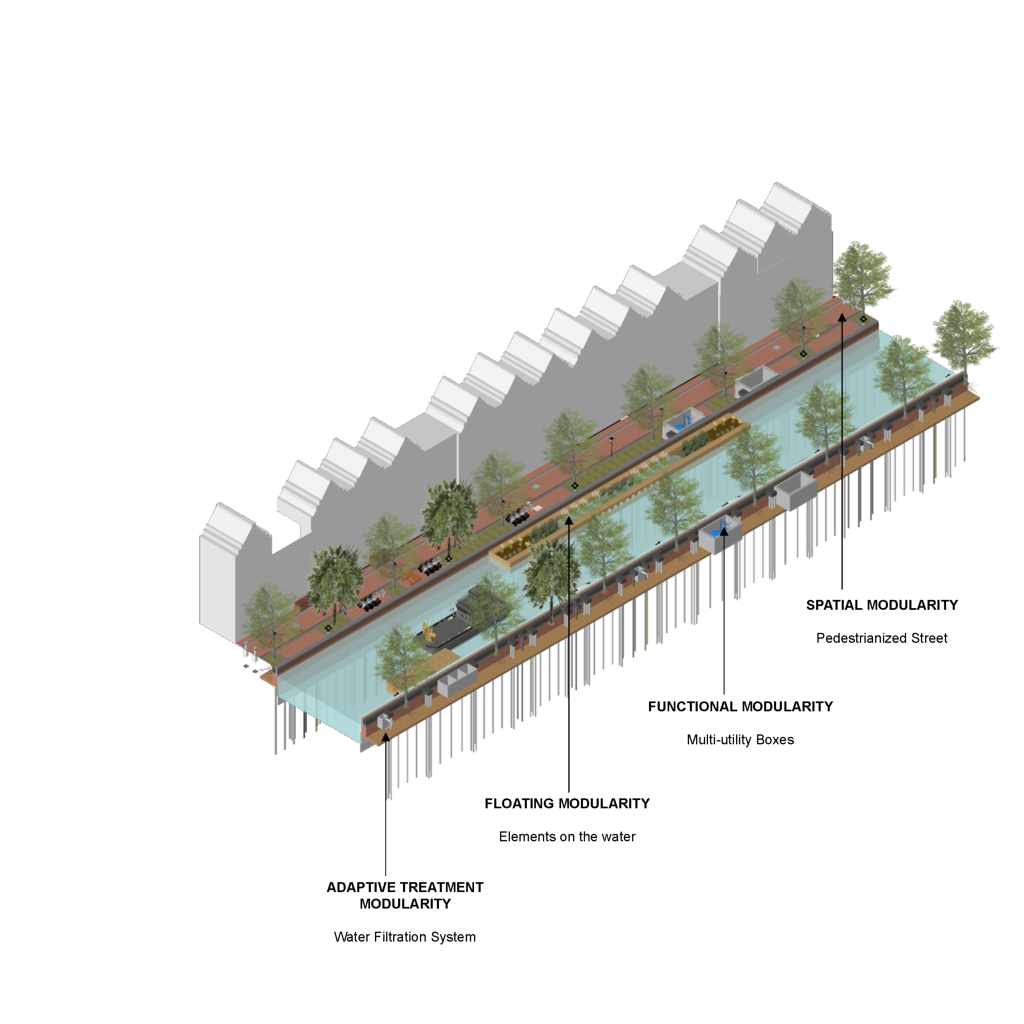
Consequently, the project shows the value of using design as a transdisciplinary testing ground for complex urban challenges. By bringing different disciplines together in the design process, trade-offs can be identified before implementation and used to inform better design decisions. The resulting modular framework demonstrates how quay wall renewal can support public life, biodiversity, climate adaptation, and the energy transition within the same canal environment. Its strength lies in combining a repeatable design logic with site-specific adaptation.
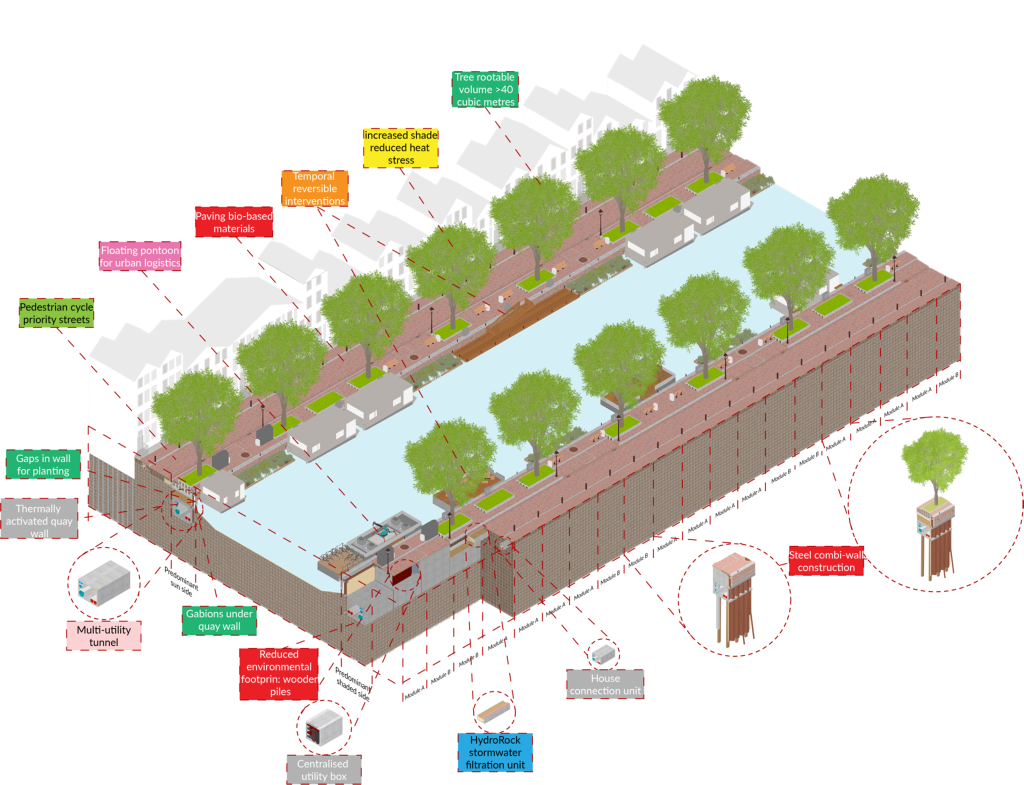
However, this framework is not a universal solution as local conditions, available space, and technological readiness all determine what can be implemented.
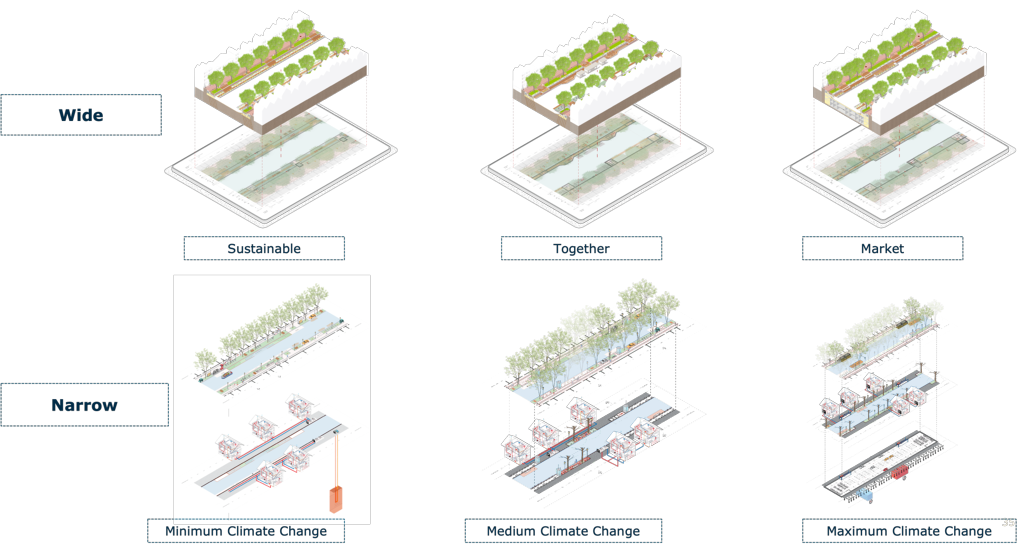
We contribute a practical design framework for creating multifunctional infrastructures that are adaptable, useful, and ecologically supportive over time. We show how necessary infrastructure renewal can contribute to both a better Living Environment and a Thriving Planet.
Project partners