



Marcos Montero Grande, Armağan Karahanoğlu, Kerem Doğan
To address the challenge of people's increasing mental health struggles, many digital interventions such as mobile apps are set to overcome accessibility limitations of the existing mental healthcare system. In the case of the most common and untreated/undiagnosed mental health struggles, digital mental health technology offers highly accessible and commercially available online interventions. Many of these are enabled through powerful market values like the ability to acquire user data, which in turn poses dilemmas that require closer attention. Here now aims to provoke reflection on these potential future implications through a design artifact.
Entrusting our mental health to digital technologies…at what cost?
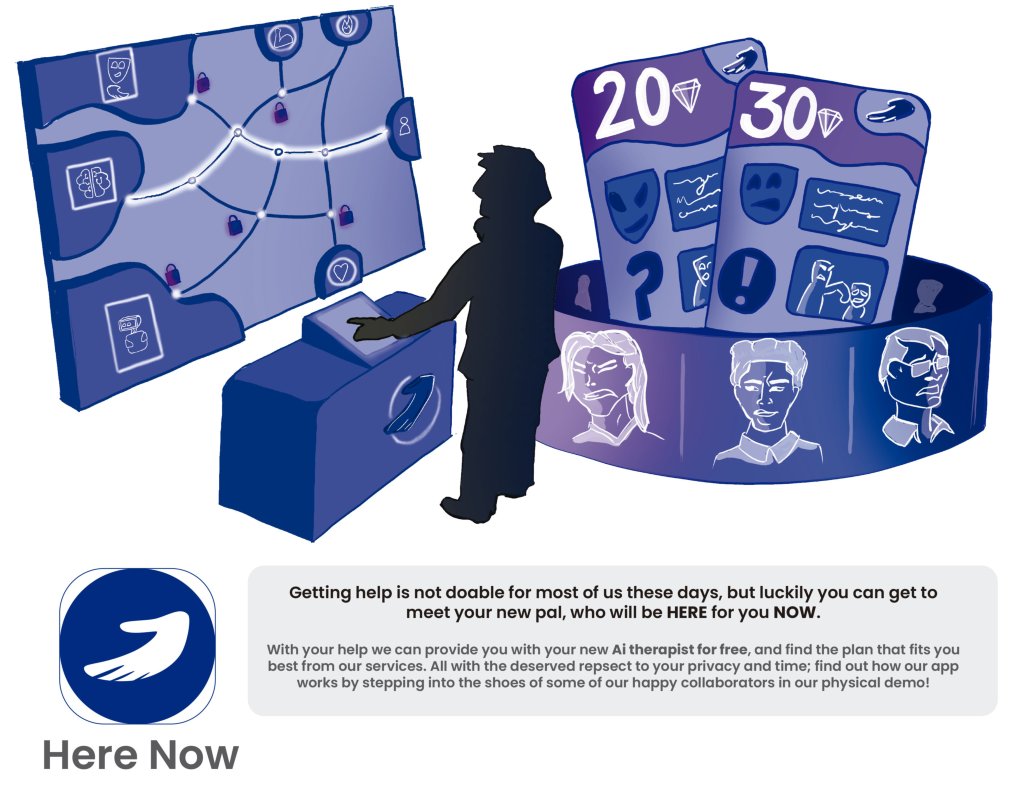
Here Now is a speculative design installation through which the audience can experience a future fictional scenario where a mental health app offers a physical demo of its services through examples of successfully treated patients. The audience is guided by an AI host character displayed on a touchscreen interface that promises to deliver tailored, state-of-the-art, technology-based interventions considering patients’ preferences for free. The audience dive into the story of one of the patients by being given sensitive personal data cards with barcodes that can be scanned and loaded into the touchscreen and traded for points. More points are awarded by watching ads. These points are then used to unlock light-up paths in a map on a physical board to reach interventions represented inside boxes, navigating through different dilemmas.
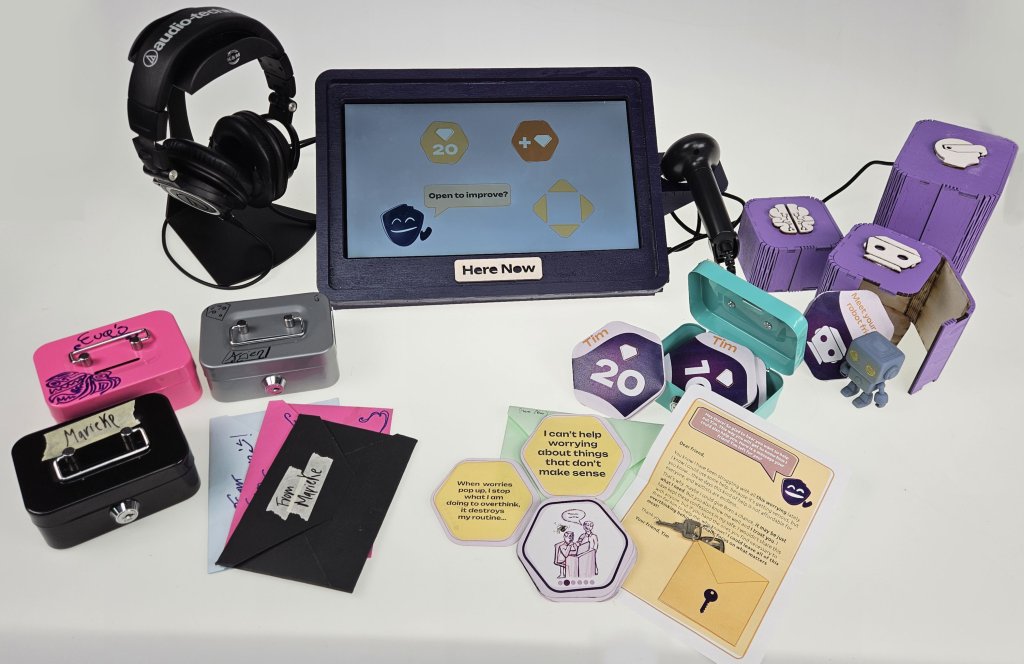
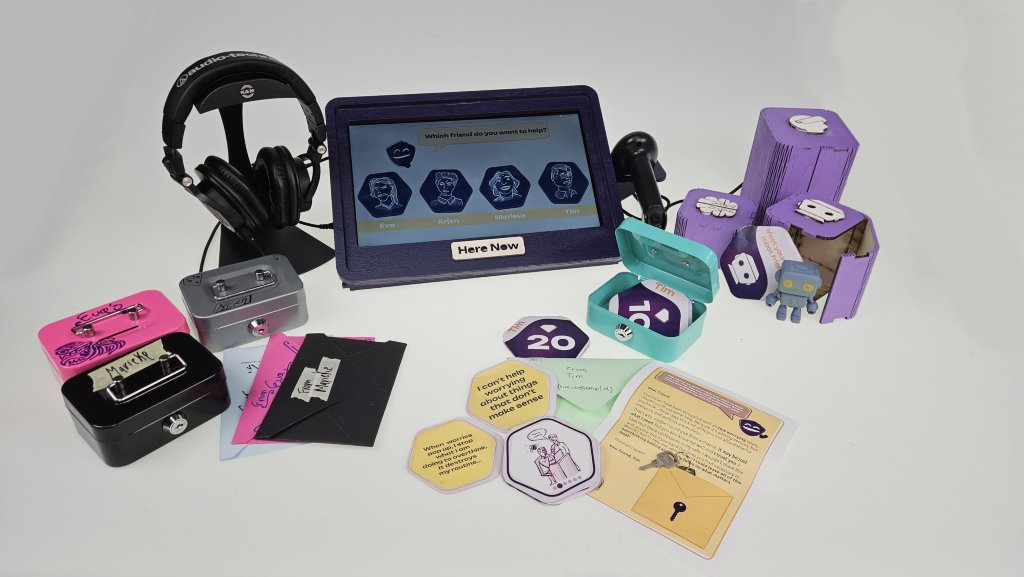
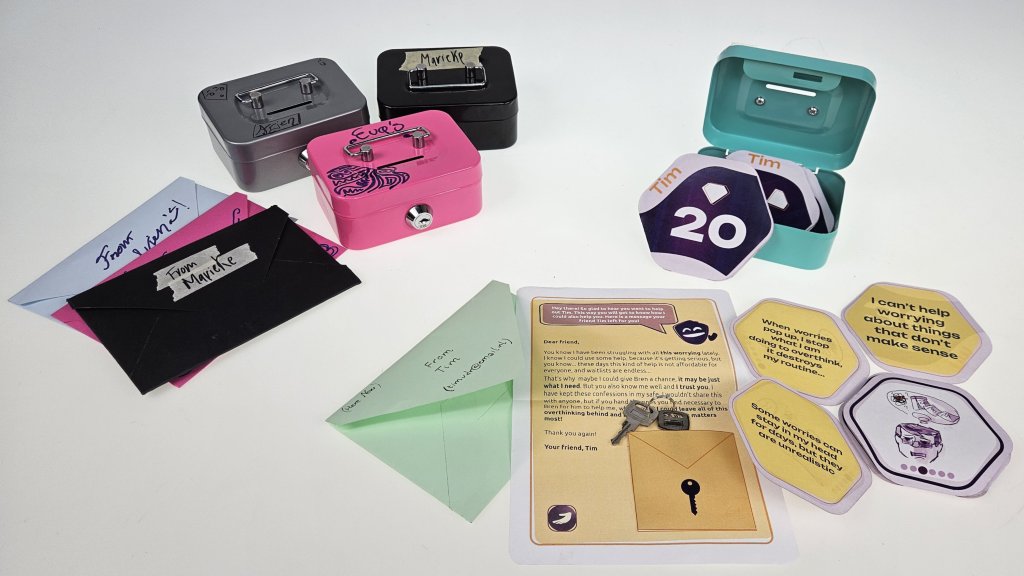
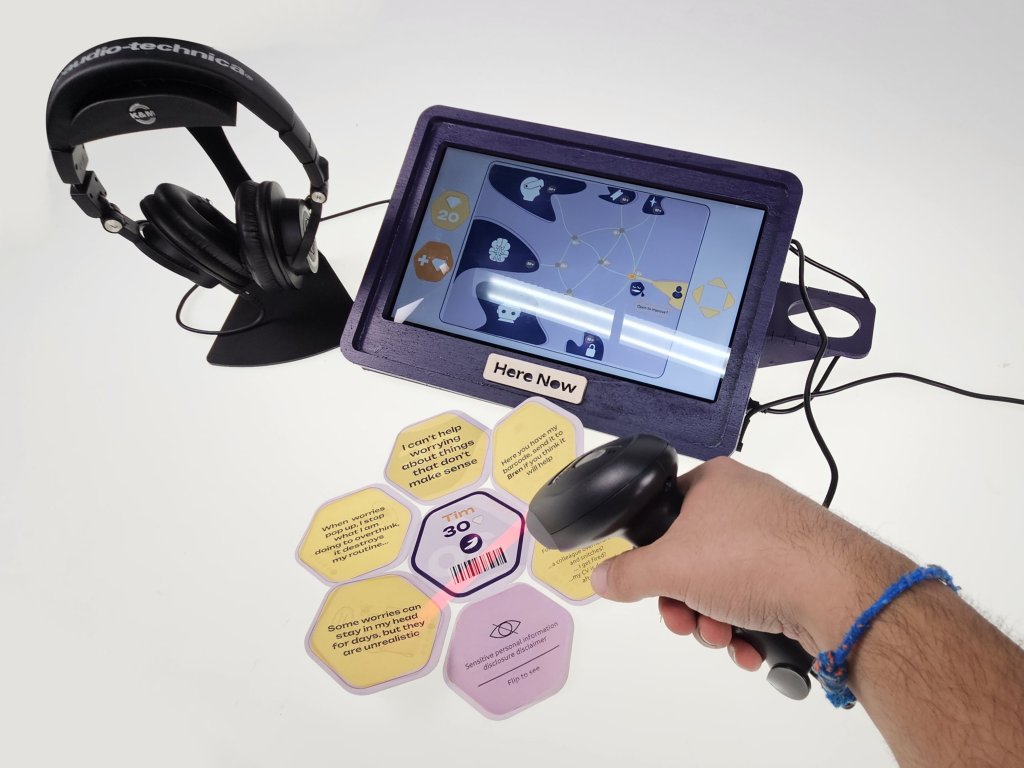
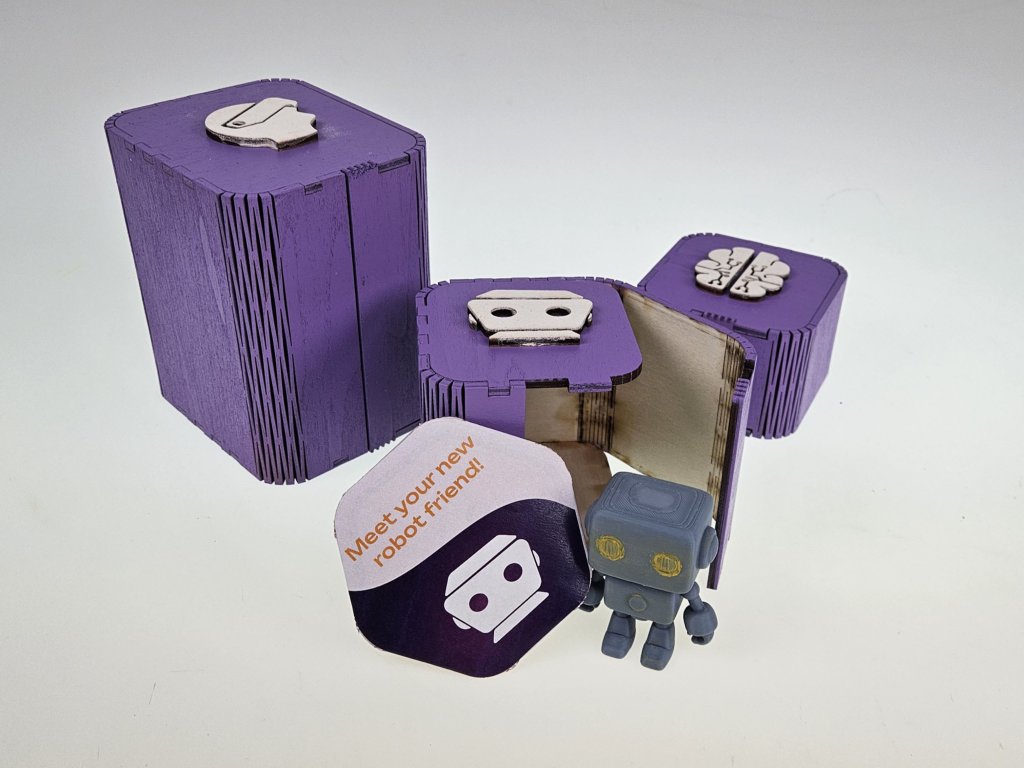
The embodiment of the market values obtained by mental health apps from their users in Here Now allows the audience to confront their importance. Sensitive user data is directly traded in exchange for different treatments that vary in scope, complexity, and economic cost. Different users have different values, and through this installation they can reflect on what we consider as more or less desirable futures in the development of digital mental health technologies. Thanks to these reflections, we become aware of the implications and decide on how these health and wellbeing technologies should be regulated in the future. However, the experience is limited in its impact as a short reflection activity, depending on the audience's prior assumptions.