

Anish Rajiv Mohite, Yoeri Vijn, Koen Kamstra, Simon Van Lierde, Cristóvão Camilo Cabral Fernandes
Across rural Uganda, access to dermatological expertise is nearly non-existent, with just 12 dermatologists serving a population of 45 million. Community health workers at local clinics are often the first point of contact for patients with suspect skin lesions, yet they lack the medical training and diagnostic equipment needed to identify conditions like DCPA. Without reliable tools, critical referral decisions are delayed, worsening patient outcomes. The design problem, therefore, centres on creating a durable, low-cost, offline-capable device that empowers non-specialist workers to perform accurate pre-diagnostics and streamline the patient journey toward timely care.
How can we empower rural healthcare workers to identify skin diseases?
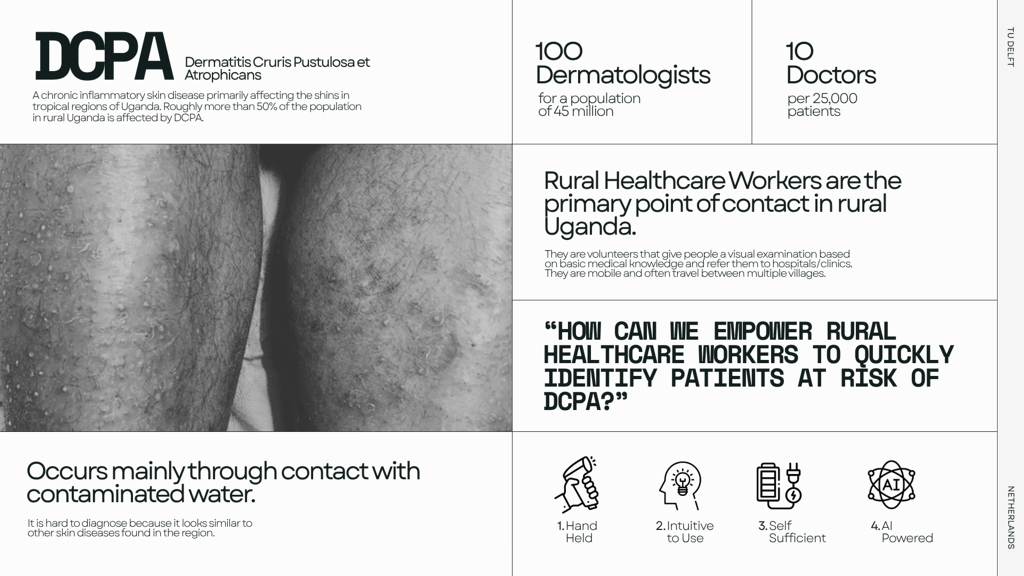
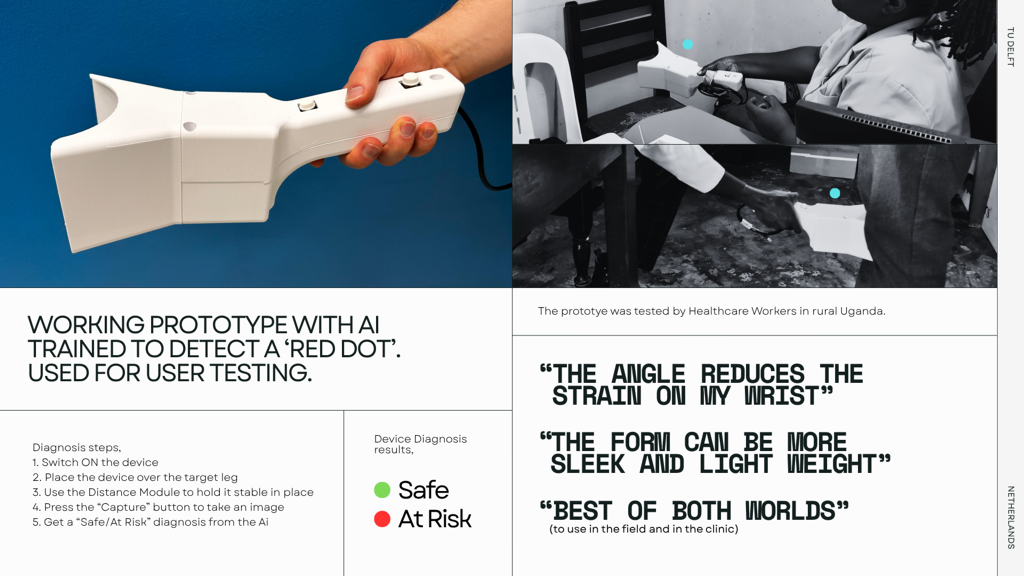
The DCPA Care Scan is a handheld diagnostic device that uses offline AI to analyse lower-leg skin images and deliver immediate “Safe” or “At Risk” feedback via intuitive LEDs. Housed in a rugged, 3D-printed PETG shell, it integrates a low-cost AI board (Google Coral), a camera, and standardized LEDs. A physical cone enforces a fixed 5cm distance from the skin, blocking ambient light and ensuring consistent focus, critical for achieving a 91.5% average AI confidence score. The device operates entirely offline, preserving patient data security, and it functions reliably during 8-hour shifts despite power outages. Developed through Martin van Mameren’s PhD research at TU Delft, the design underwent extensive field testing in Ugandan clinics. Early user feedback describing prototypes as “bulky and boxy” drove iterative ergonomic refinements, resulting in a sleek, minimalist form optimized for real-world use by nurses with limited technical training.
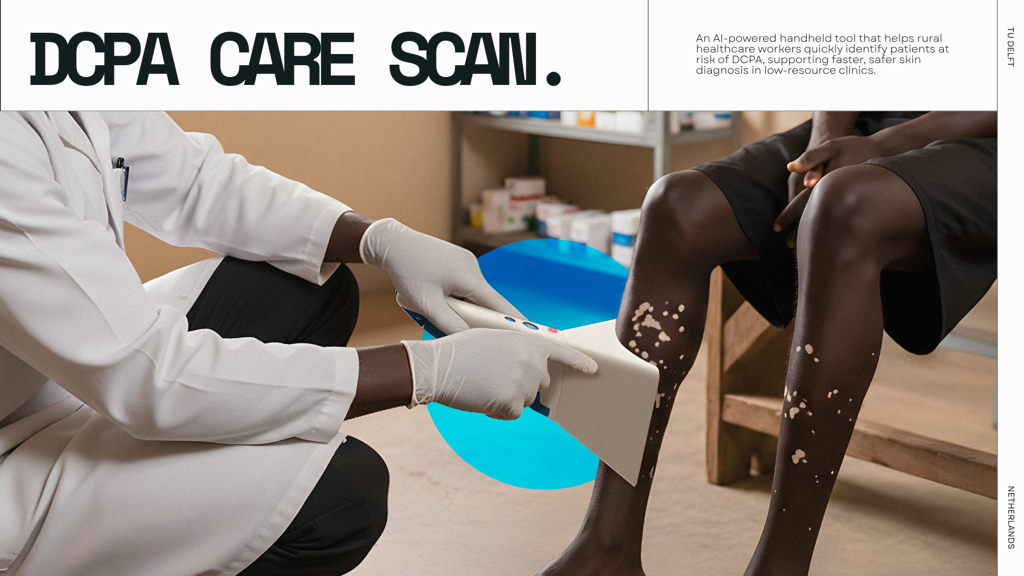
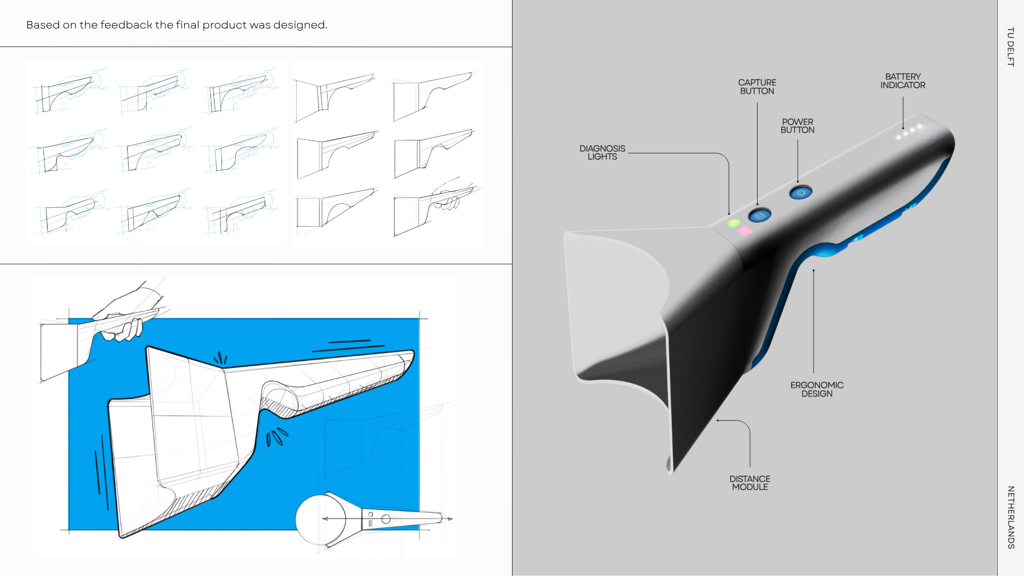
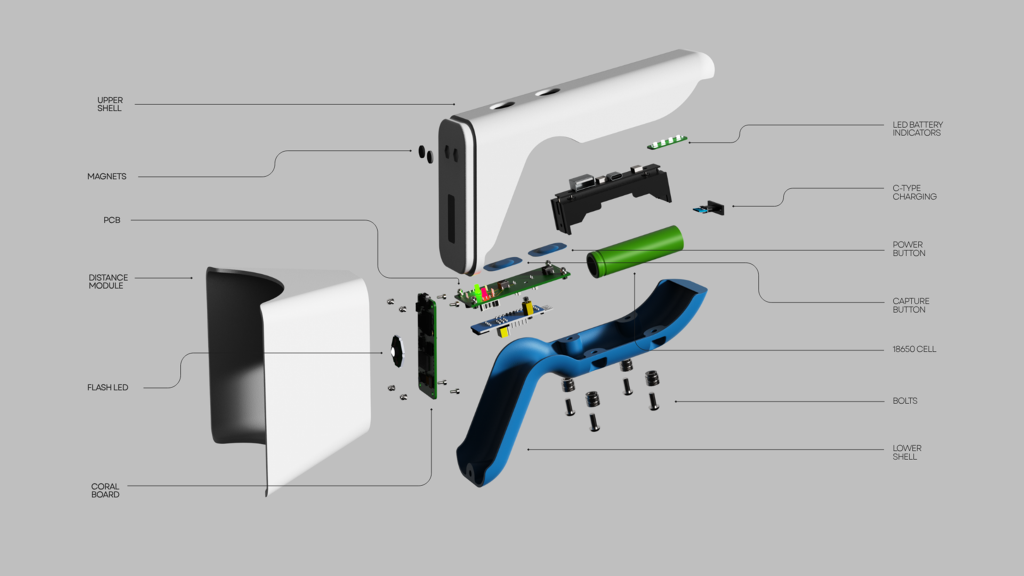
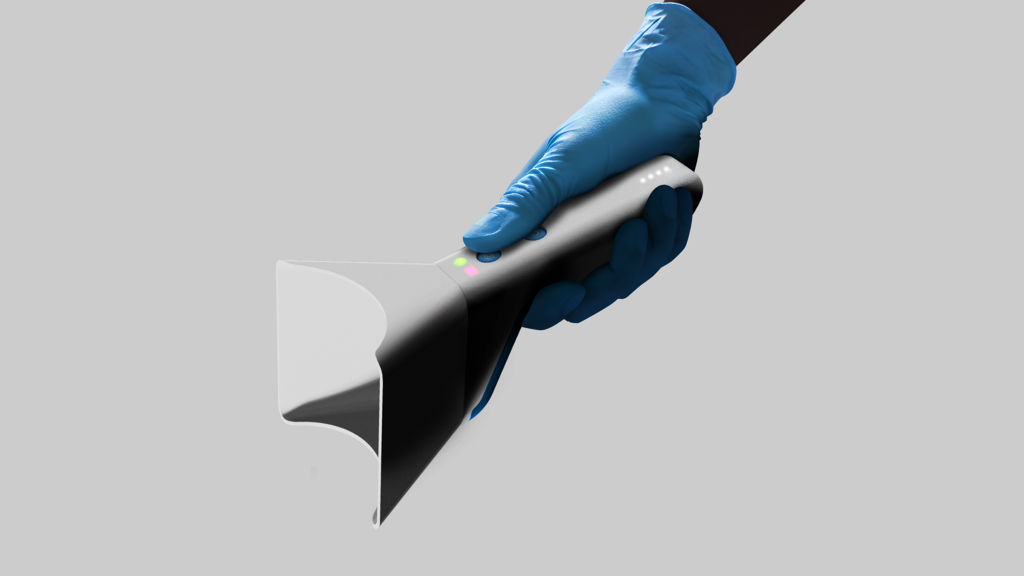
The DCPA Care Scan directly addresses the theme of equitable healthcare access by enabling early, accurate skin cancer screening in resource-limited settings. Its offline AI functionality eliminates dependency on internet infrastructure, while its intuitive one-button interface democratizes diagnostic capability for non-specialist workers. By reducing referral delays, the device has the potential to significantly improve patient outcomes and reduce the strain on Uganda’s overstretched dermatology services. However, the current prototype relies on a discontinued Google Coral board, necessitating future migration to a custom PCB and HDR camera for scalability and cost reduction. Additionally, while field-tested, broader professional user trials and long-term durability validation in harsh environments are still required before full market deployment.