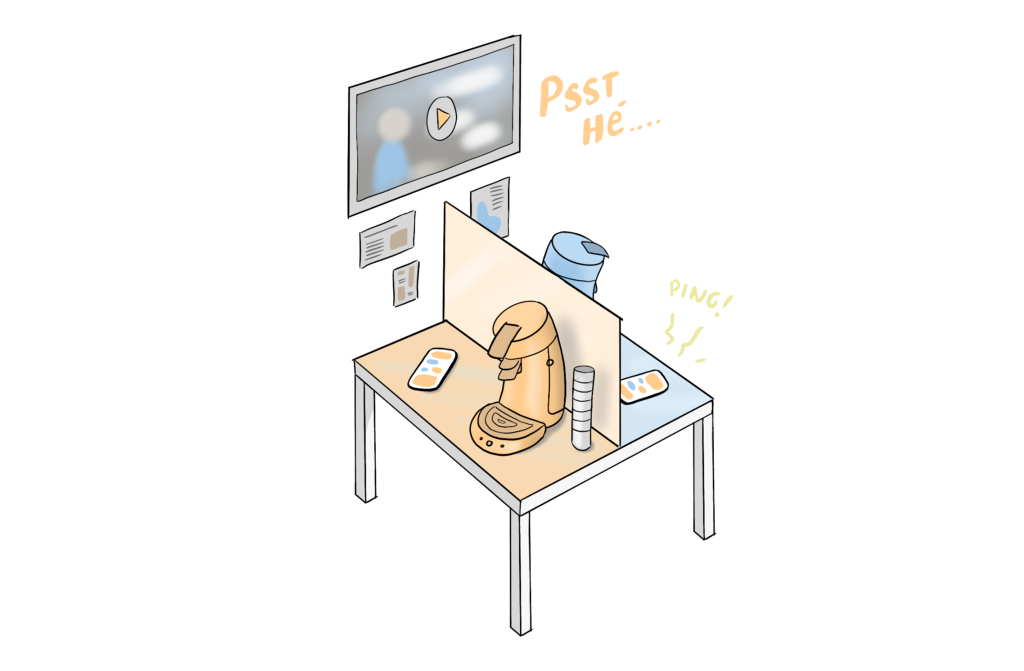


Mariska Geelhoed
Household electrical appliances, from coffee machines to washing machines, are a growing contributor to global e-waste. Extending the lifespan of these products through regular maintenance can help reduce the volume of waste. As part of the Re-Care research project, we investigated why product owners often neglect maintenance, and how better maintenance behaviour could be stimulated. User research showed that the main barrier for performing maintenance was a lack of urgency: as long as an appliance still works, maintenance is easily postponed. Product owners may also be unaware that maintenance is needed, how to perform it, or which tools and materials are required. This makes maintenance difficult to prioritise, especially when there is no immediate reason to act.
What if appliances could gossip about how we treat them?
The Senseo coffee machine was selected as a case study. Repair Cafés see coffee machines more often than any other household electrical appliance, with Senseos being particularly common. Many of their failures are related to poor maintenance, such as limescale build-up, even though this is relatively easy to prevent. We explored different ways of encouraging maintenance, eventually leading to a more unconventional approach: using social pressure to motivate people to perform maintenance.
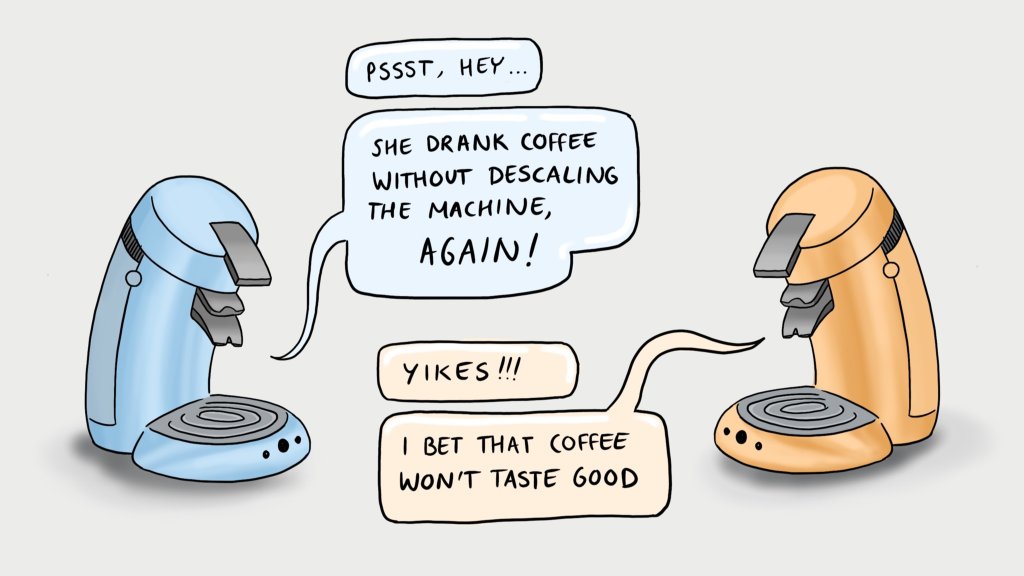
In Gossiping Senseos, users join a group chat together with people they know and their personified Senseos. The people themselves cannot respond, but they can see the appliances gossip about their owners. Messages include maintenance tips and usage statistics and become increasingly critical and judging when maintenance is neglected. This makes normally private behaviour visible to others.
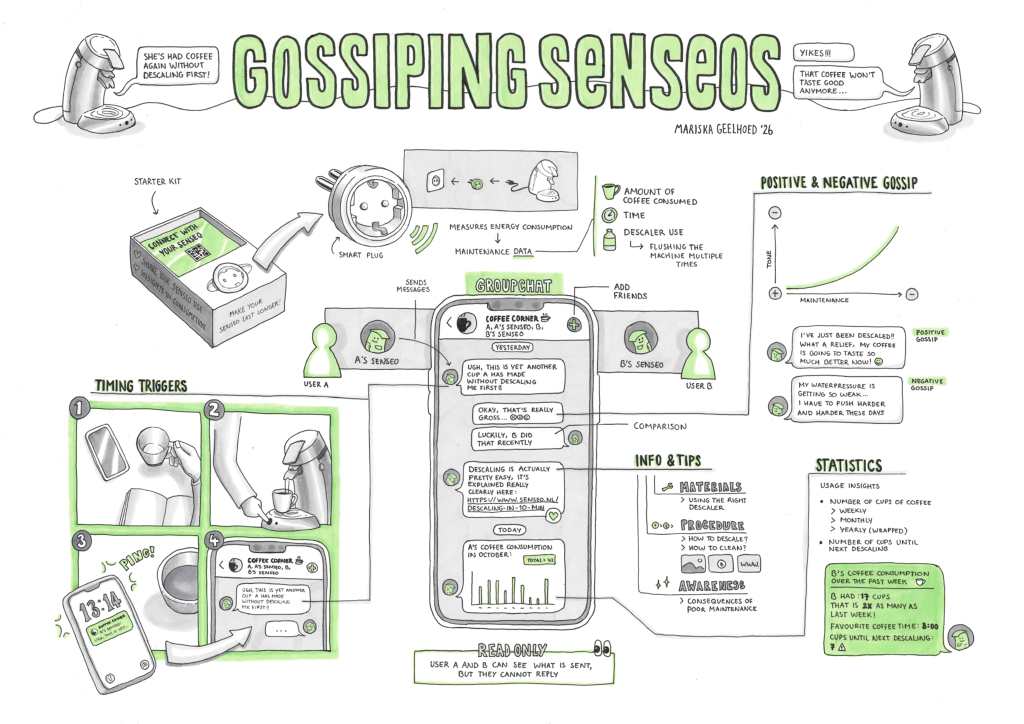
The concept was tested with Senseo owners in their daily lives. It did not lead directly to more maintenance, but it did make maintenance more visible and discussable. The personified Senseos could make people feel judged by their own appliance, while the playful and humorous messages caught their attention and encouraged them to discuss maintenance with people around them. The results of these tests do not show or prove that gossiping appliances will improve people’s product maintenance, but they do show the potential of approaching maintenance as something social, rather than simply a practical task that happens privately.