



Wiebke Stadtlander, Maria Christoforidou, Dr. Aslı Günay, Irene Wols, Dr. Jelle van Dijk, Dr. Carissa Champlin, Dr. ir. Robert-Jan den Haan
Have you ever tried to think like a fish?
The North Sea has become a space where different human, more-than-human, and corporate interests constantly compete. Long-standing practices of managed nature and engineered ecosystems in the Netherlands are spilling over the coastline. But who actually gets a seat at the table to decide its future, and whose voices are ignored? And how can we create a space where different actors can come together, share their perspectives, listen to others, and relearn how to engage with this plurality of human and more-than-human voices?
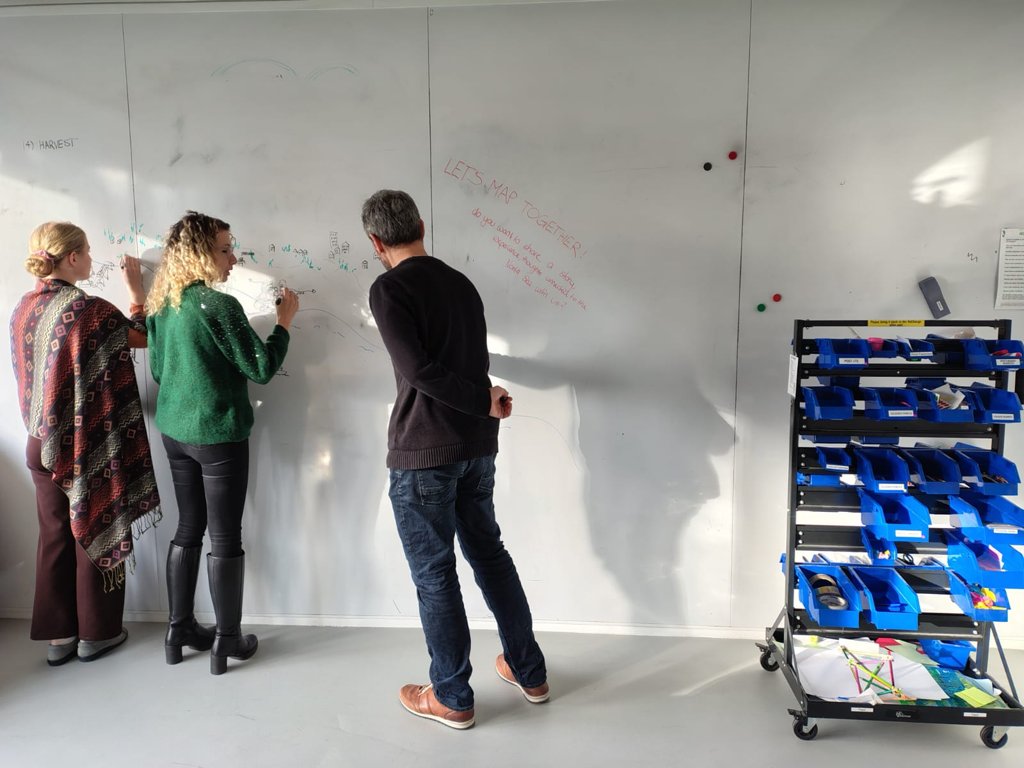
The experience begins with a collective drawing exercise where visitors map personal connections to the North Sea, sparking warm, spontaneous dialogue. Sea(t) at the Table, a prototype with a rotating tabletop, then invites 4 visitors to participate in a 15-minute, immersive role-playing experience. In the first round, players actively share their own perspectives on an imaginary scenario and listen deeply to others’ perspectives, thereby highlighting similarities and differences. In the second round, the table shifts physically to resemble the sound of water, inviting players to take on the roles of more-than-human entities and reconsider the same imaginary scenario from this new perspective.
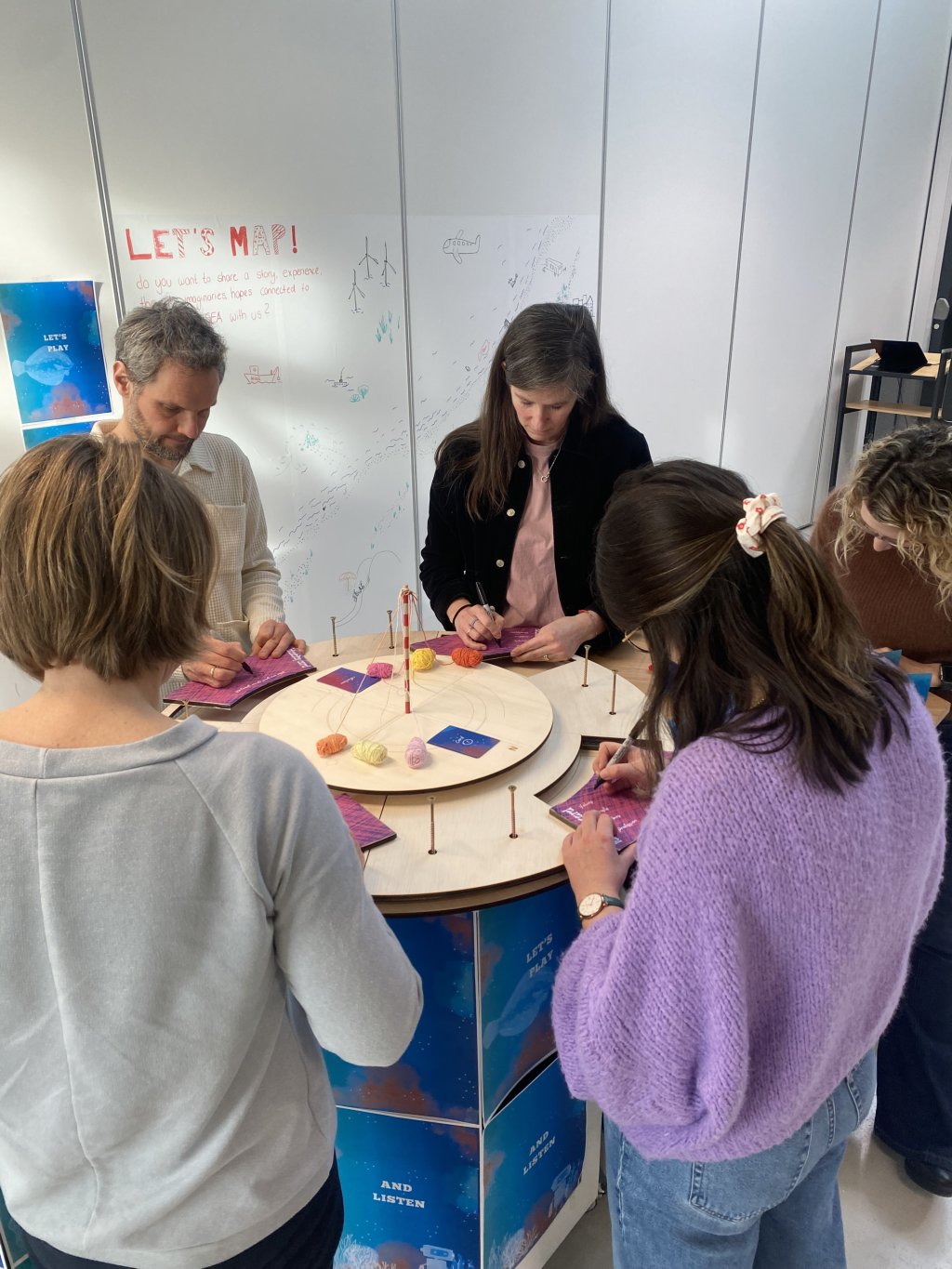
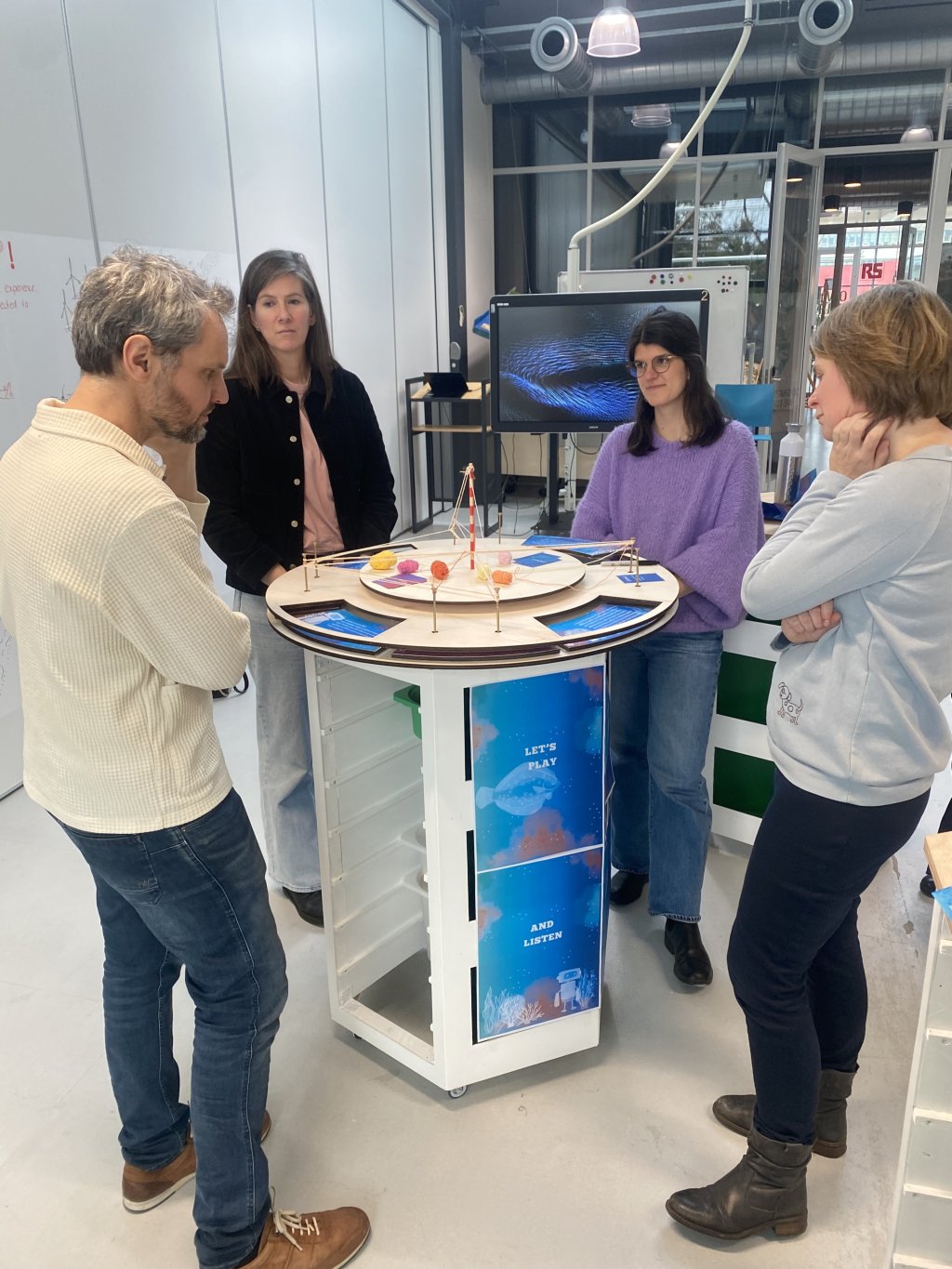
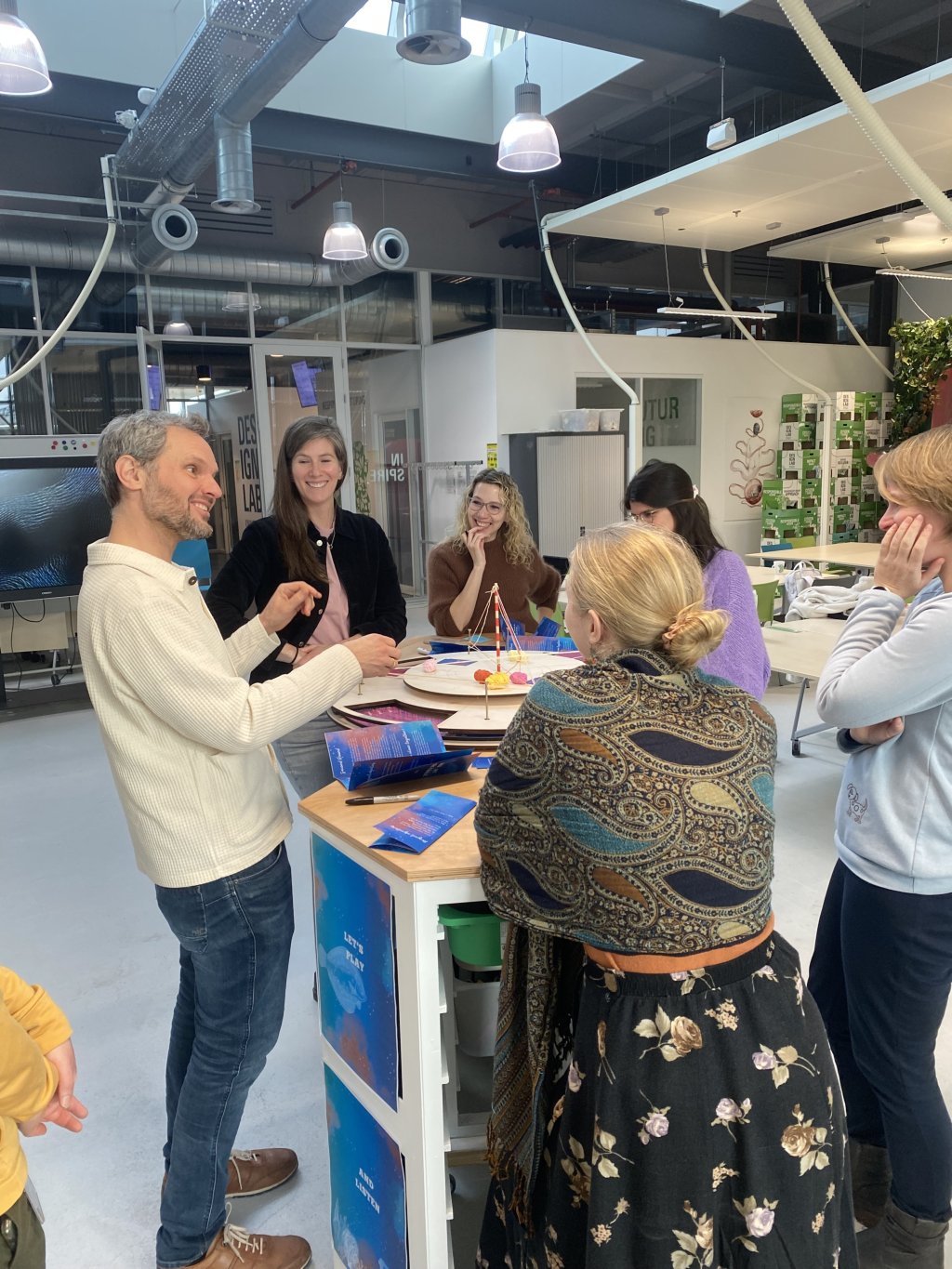
Rather than hiding conflict or forcing premature consensus, Sea(t) at the Table creates a physical interaction where different actors engage with each other.
Sea(t) at the Table offers a way to connect with different human and more-than-human worlds, allowing actors to pause, listen, and interact with them. While this sparks reflections on the needs and wants of all those at the table, it needs more methodological steps to truly co-create an equal society.
#CreativeIntelligence #EmbodiedCognition #Prototyping #More-than-Human #SituatedMethodologies