

Ilia Giokari, Stella Boess, Natassia Jacobs
What does a period pad assume about its user?
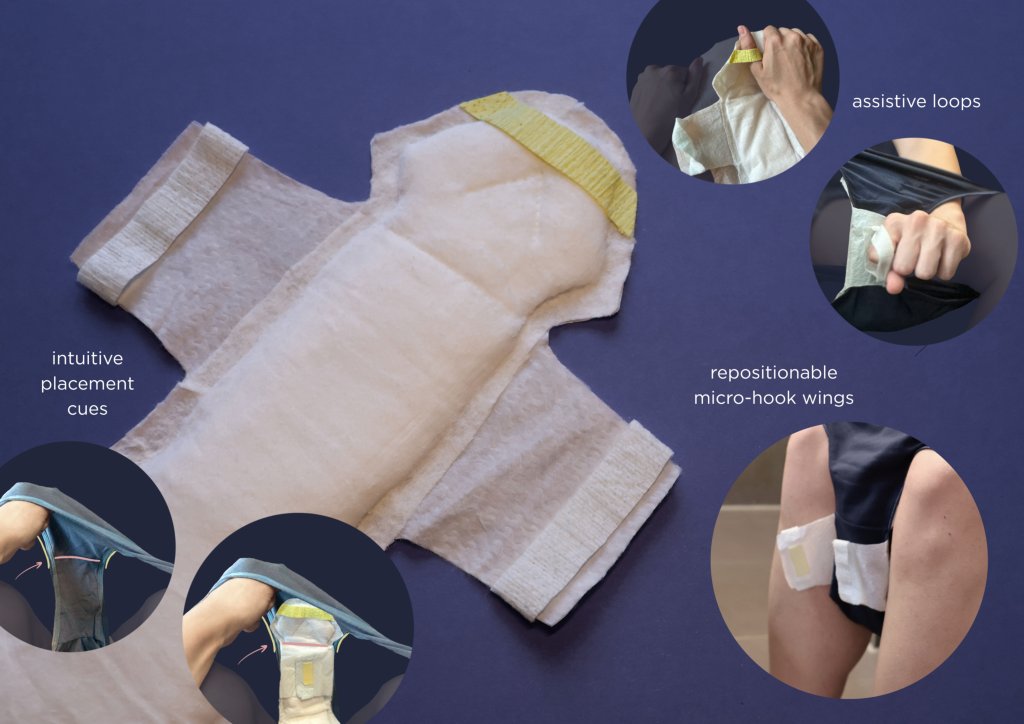
Most menstrual pads are designed with little consideration for the different ways people may need or want to interact with them. Opening, positioning, securing, and removing a pad can require fine motor control, hand strength, and two-handed coordination, while correct orientation and placement often rely on subtle visual and sensory cues, making the process inaccessible to many users with disabilities. We involved disabled menstruators in this project and they described difficulties with pinching and peeling, identifying the pad’s orientation, securing unreliable wings and adhesives, and avoiding leakage or discomfort from certain materials and odours. The design problem lies in these everyday interactions: conventional pads can create unnecessary physical and sensory barriers that make independent period management more difficult, affecting comfort, autonomy, confidence, and dignity.
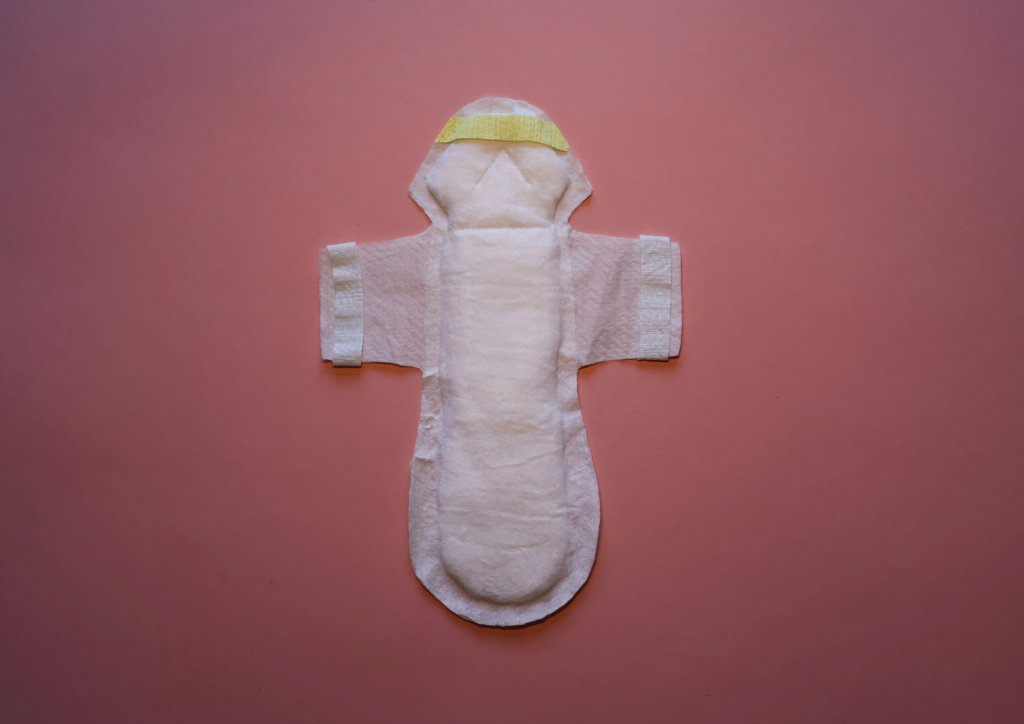
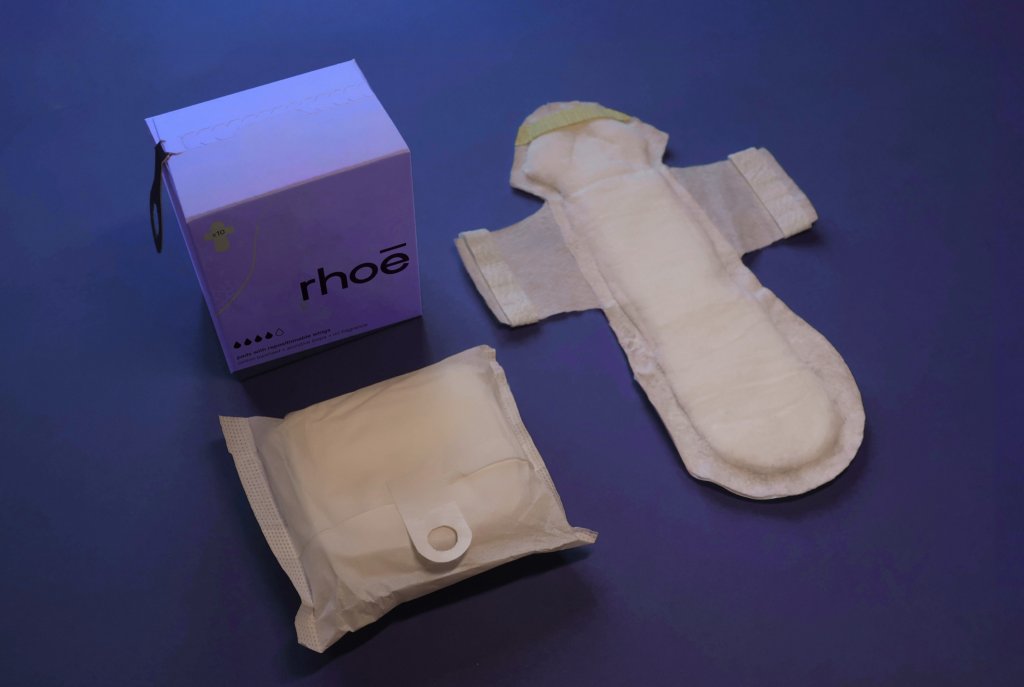
Rhoē is a redesigned disposable menstrual pad shaped by the lived experiences of disabled menstruators. Through interviews, collaborative ideation sessions, and prototype testing, participants shared their experiences with existing pads and gave feedback on possible solutions, guiding the final design.