



Robin Jonker, Wouter Eggink, Jelle van Dijk
Does genuine connection rely on social norms and rules?
Social connection is essential for wellbeing, but navigating social interaction is harder for neurodivergent people as society and its technologies are largely built around neurotypical communication styles. This is especially true in university project groups, where students are often paired with strangers and expected to collaborate. Researchers commonly measure interaction quality using 'rapport', a sense of mutual understanding and connection. However, existing definitions of rapport lean on cues like eye contact, synchronised body language and empathy, quietly favouring neurotypical ways of interacting.
Robin Jonker's graduation project asks: how can 'meaningful social interaction' be redefined so that it works for everyone, not just the neurotypical majority, and how can this understanding shape the design of genuinely inclusive technology?
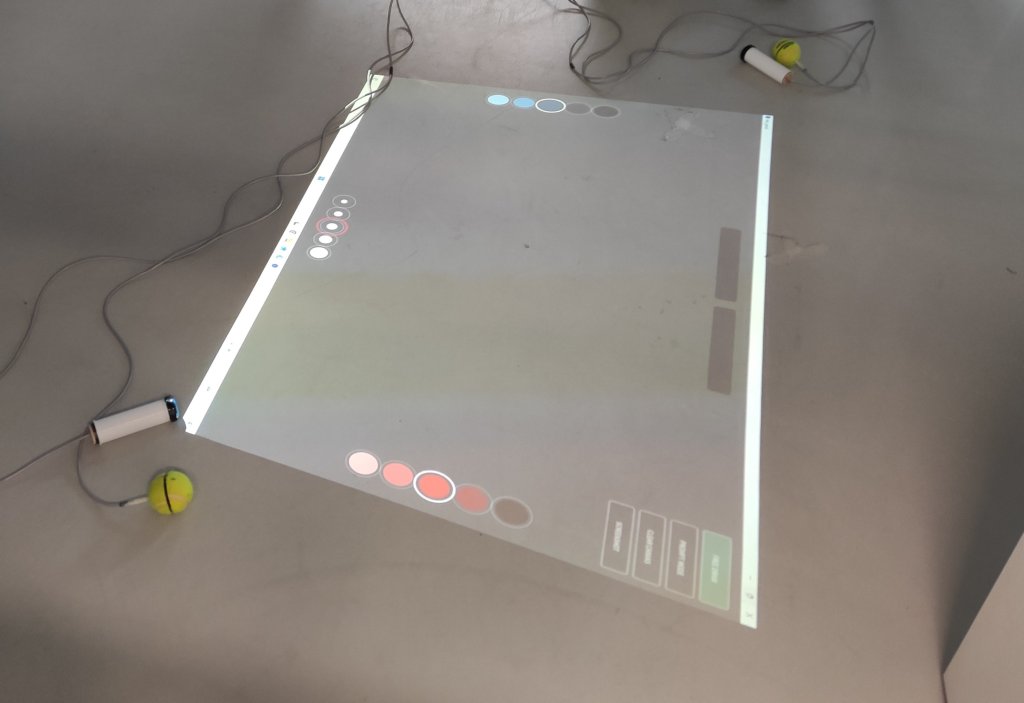
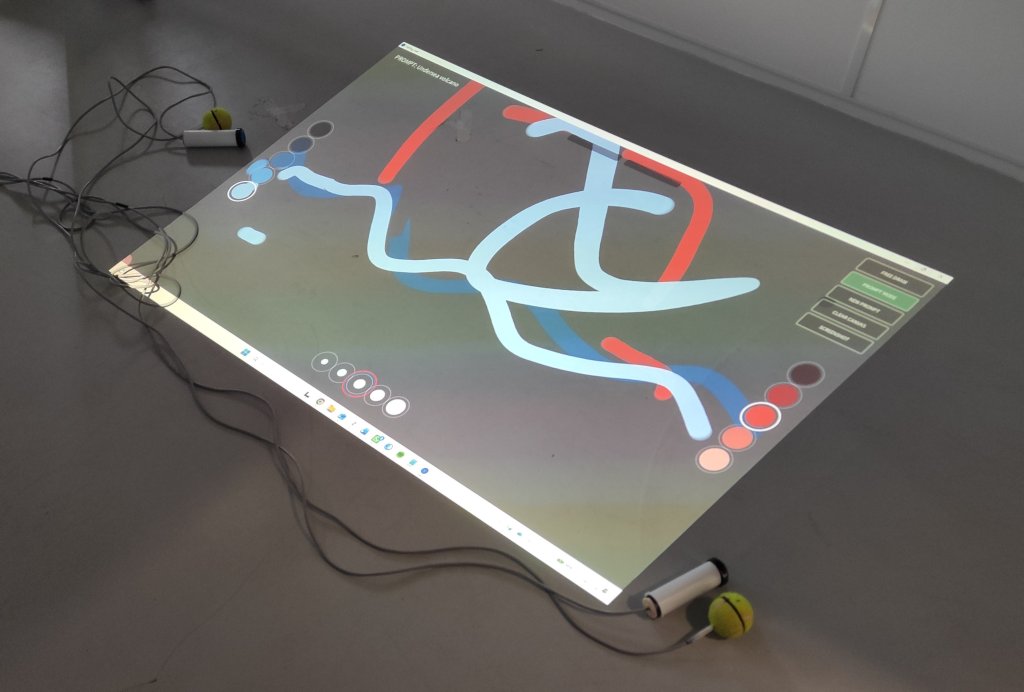
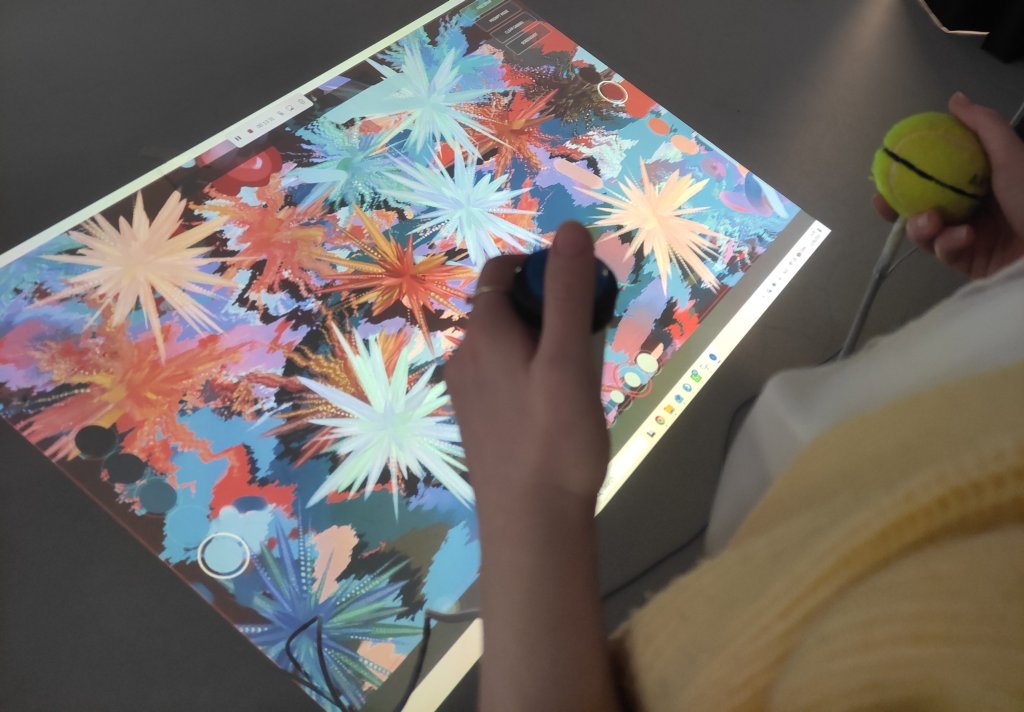
Philosophy and design are combined into one approach, weaving conceptual engineering (a philosophical method for improving concepts) together with iterative prototyping, so each informs the other. Over three rounds, Robin tested and refined both a new definition of rapport and a matching prototype with students. The final prototype is a two-person collaborative drawing tool: using a joystick and a large paint button, users draw together on a shared digital canvas projected onto the floor. Cooperation is rewarded and colours merge when players draw close together, with shared 'explosions' and canvas 'tears' emerging from how the pair interact. Long connecting cables encourage movement, keeping the whole body involved rather than just eyes and hands.
This process led to a new definition: rapport as a person's conviction of sharing a social reality with another, built from an ongoing, internal alignment of perspective rather than a checklist of visible behaviours. This shifts the focus from what interaction looks like to what it means to those having it, making it usable across communicative styles. The approach also suggests that designing for neuro-inclusion and designing for everyone may ultimately be the same task.