




On 7 and 8 April 2026, the Royal Dutch Mathematical Society (KWG), the Belgian Mathematical Society (BMS) and the Luxembourg Mathematical Society (SML) joined forces to organise the BeNeLux Mathematical Congress in Antwerp, Belgium. The BeNeLux MC offered a much wider view of mathematics than normally encountered at conferences.
4TU+.AMI organised two sessions during the conference:
- The session on 'Evidence-Based Practices in Teaching Mathematics' at the University Level was chaired by Annoesjka Cabo (TU Delft and AMI Strategic Research Initiative MEReP). The invited speakers were Tracy Craig (UT), Jos Hageman (WUR) and Stephanie Bridoux (University of Mons).
- The session on 'Sequential Decision Making' which will be chaired by Anne Zandler (UT) and Janusz Meylahn (UT). The invited speakers were Joachim Arts (University of Luxembourg), Ann Nowé (Vrije Universiteit Brussel), Ward Romeijnders (RUG).
Evidence-Based Practices in Teaching Mathematics
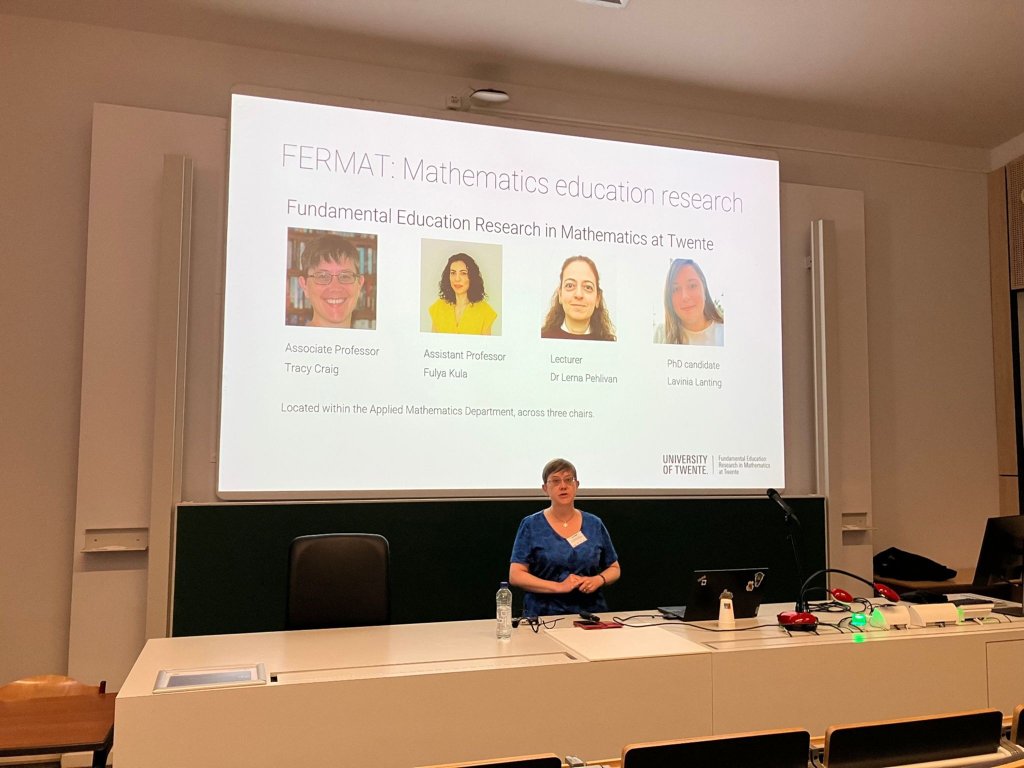
During her talk, Tracy Craig presented three studies related to multivariable and vector calculus, carried out by the mathematics education research group, FERMAT, at the University of Twente. These studies show that the geometric demands of constructing multivariable integrals are considerably higher than many mathematics teachers might suspect and that decision making in problem solving is possible to assess, but challenging to teach.
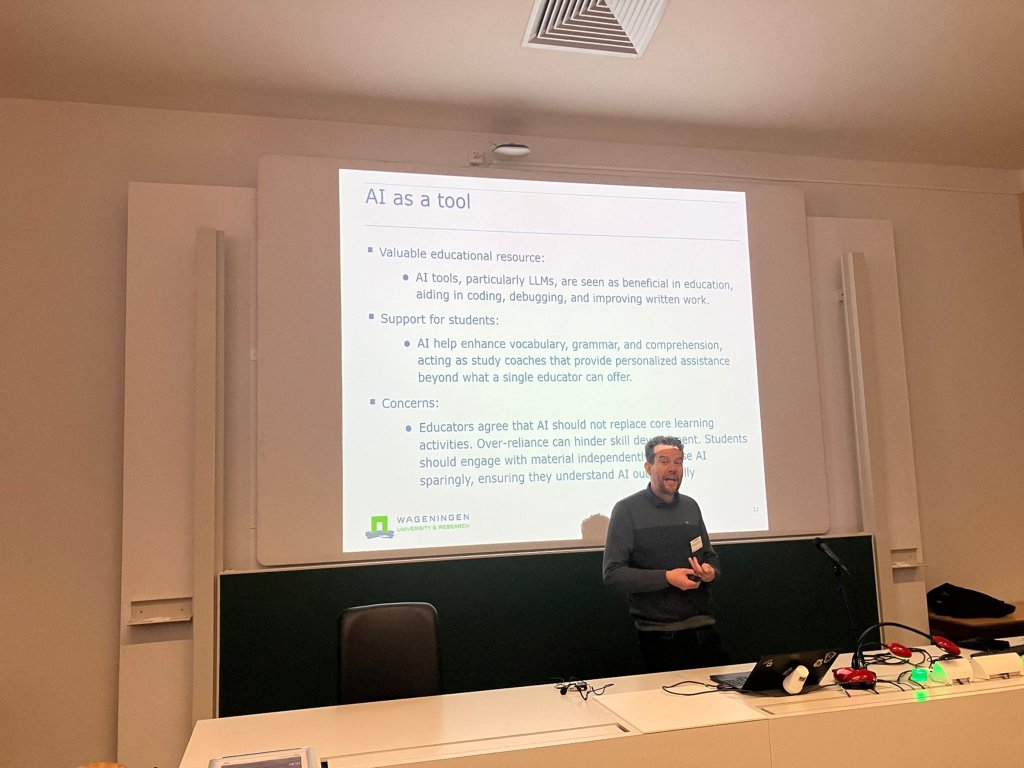
Jos Hageman shared some experiences with AI tools, particularly large language models like ChatGPT, and data science education at Wageningen University. Based on interviews with course coordinators, he discussed what they have learned about both the opportunities and challenges that AI brings to the classroom. The main take away message was that AI can be a valuable educational asset when used thoughtfully to complement, rather than replace, fundamental learning processes.
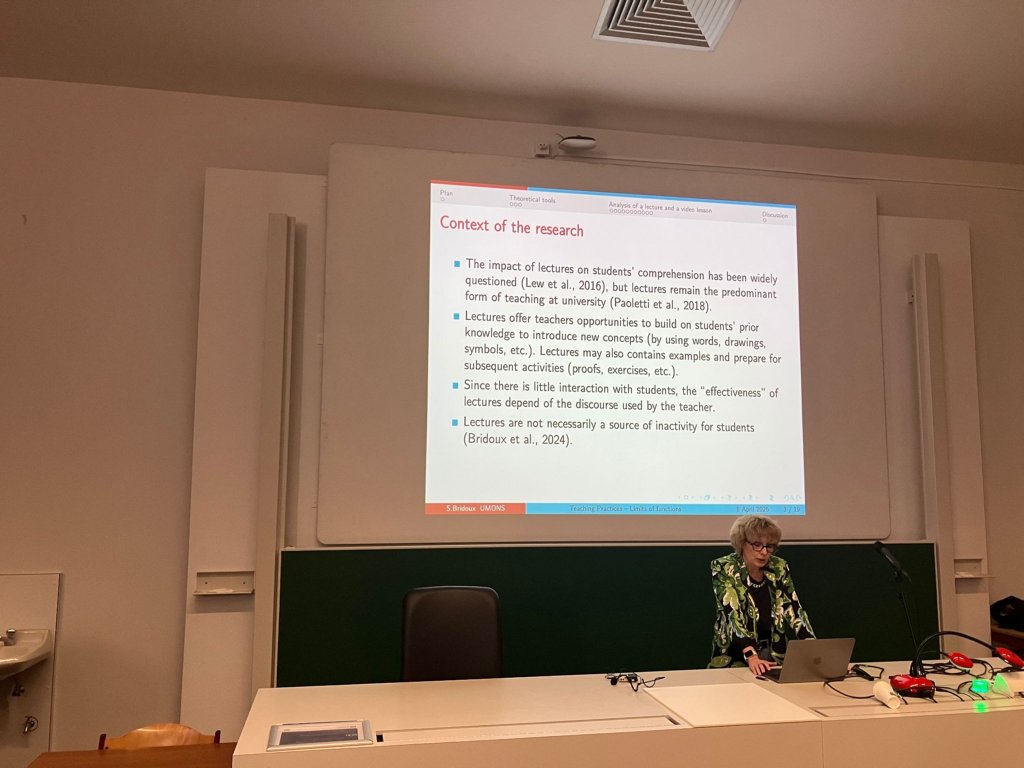
Stephanie Bridoux, from the University of Mons, discussed educational practices to support first year students to understand and work with the formal definition of a limit of a function. The introduction of the formal definition of the limit of a function in the first year of university constitutes a major source of difficulty for students. Her presentation focused on the analysis of lecturers’ discourse when they introduce this concept, drawing on two didactical tools : the notion of relief, and that of discursive proximities.
Sequential Decision Making
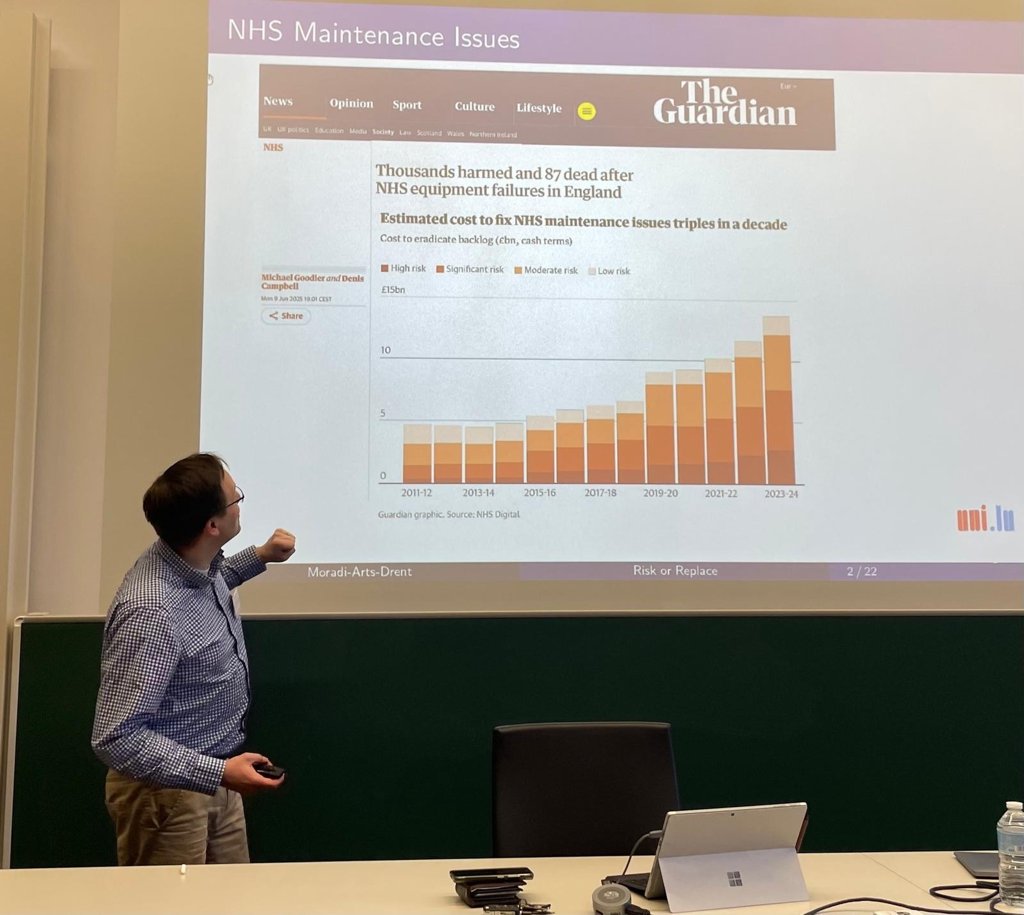
During his talk Joachim Arts discussed the Condition-based maintenance (CBM) approach which plans interventions for deteriorating systems according to their observed operational state. CBM reduces unplanned downtime, extends usable lifetime, avoids unnecessary replacement, and mitigates the environmental impact associated with manufacturing and transporting new equipment.
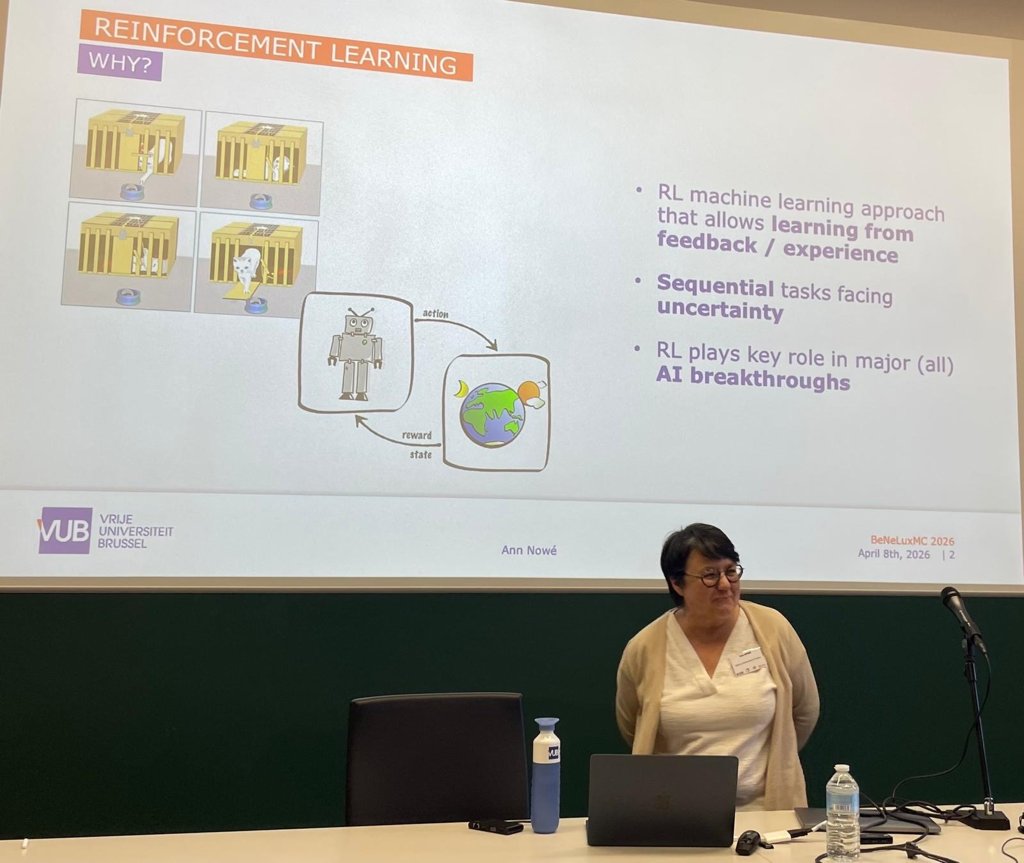
Ann Nowé discussed the connection between reinforcement learning (RL) and stochastic approximation, highlighting how this link can be used to establish convergence guarantees across a wide range of settings.
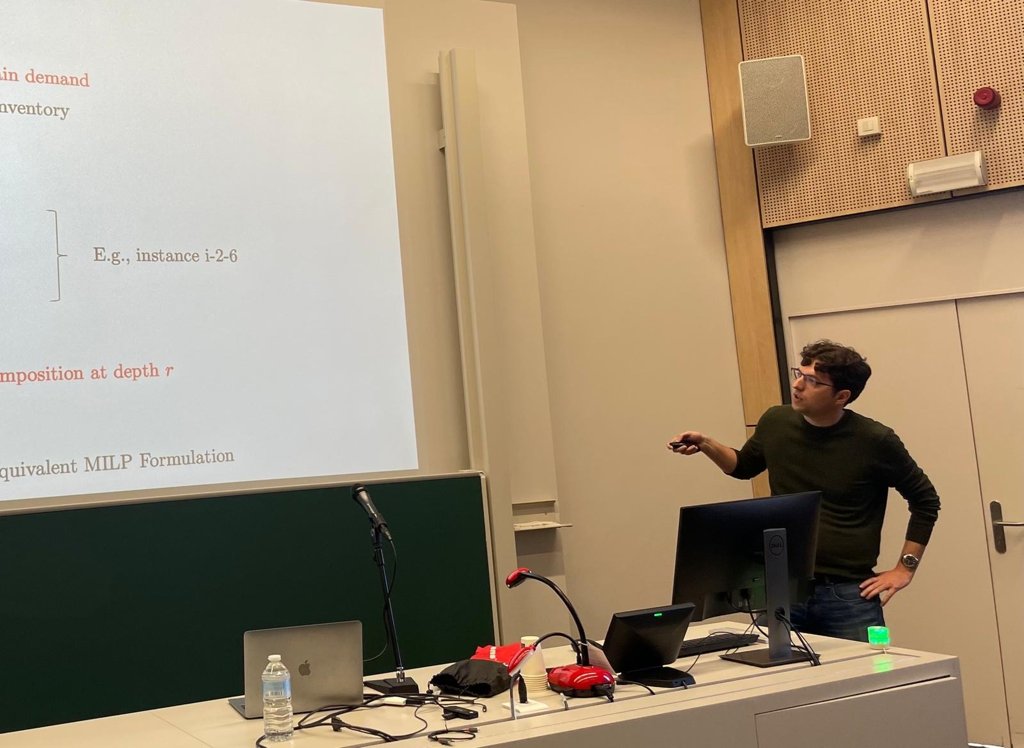
Finally, Ward Romeinders presented their work on multistage stochastic mixed-integer programs with general mixed-integer state variables in all time stages. Using numerical experiments they show that their scaled cuts outperform Lagrangian cuts.
All abstracts of the talks can be found in this booklet on the website of the Belgian Mathematical Society.