




On Monday 29 June 2026, researchers from across the 4TU+.AMI network gathered in Groningen for the annual 4TU+.AMI Community Event. Hosted at the House of Connections, the event offered an opportunity to connect with colleagues, welcome new members to the community, and learn about the latest research developments across the Dutch applied mathematics community.
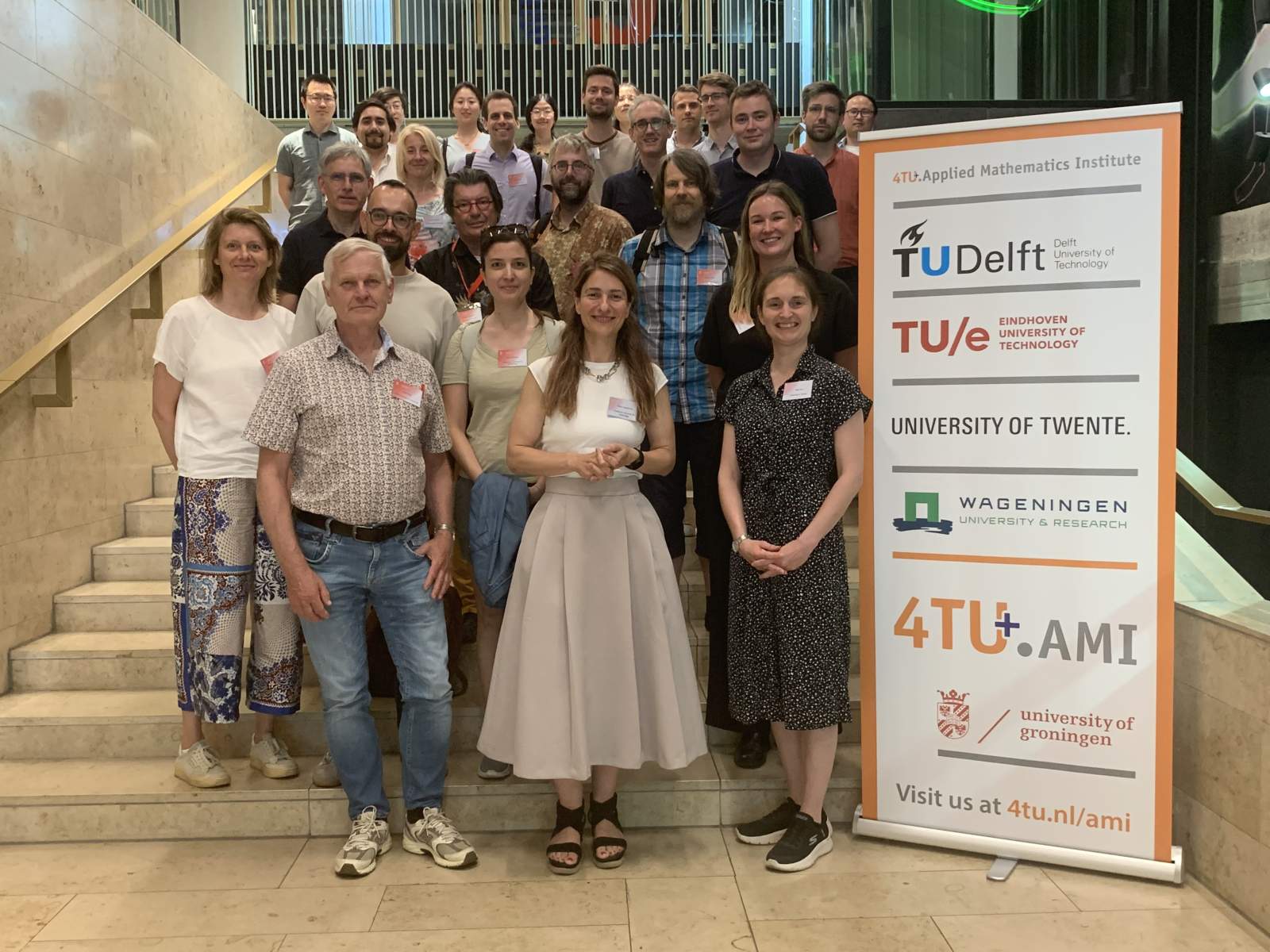
The day started with a warm welcome from the local organisers, followed by a diverse scientific programme highlighting the breadth of applied mathematics research.
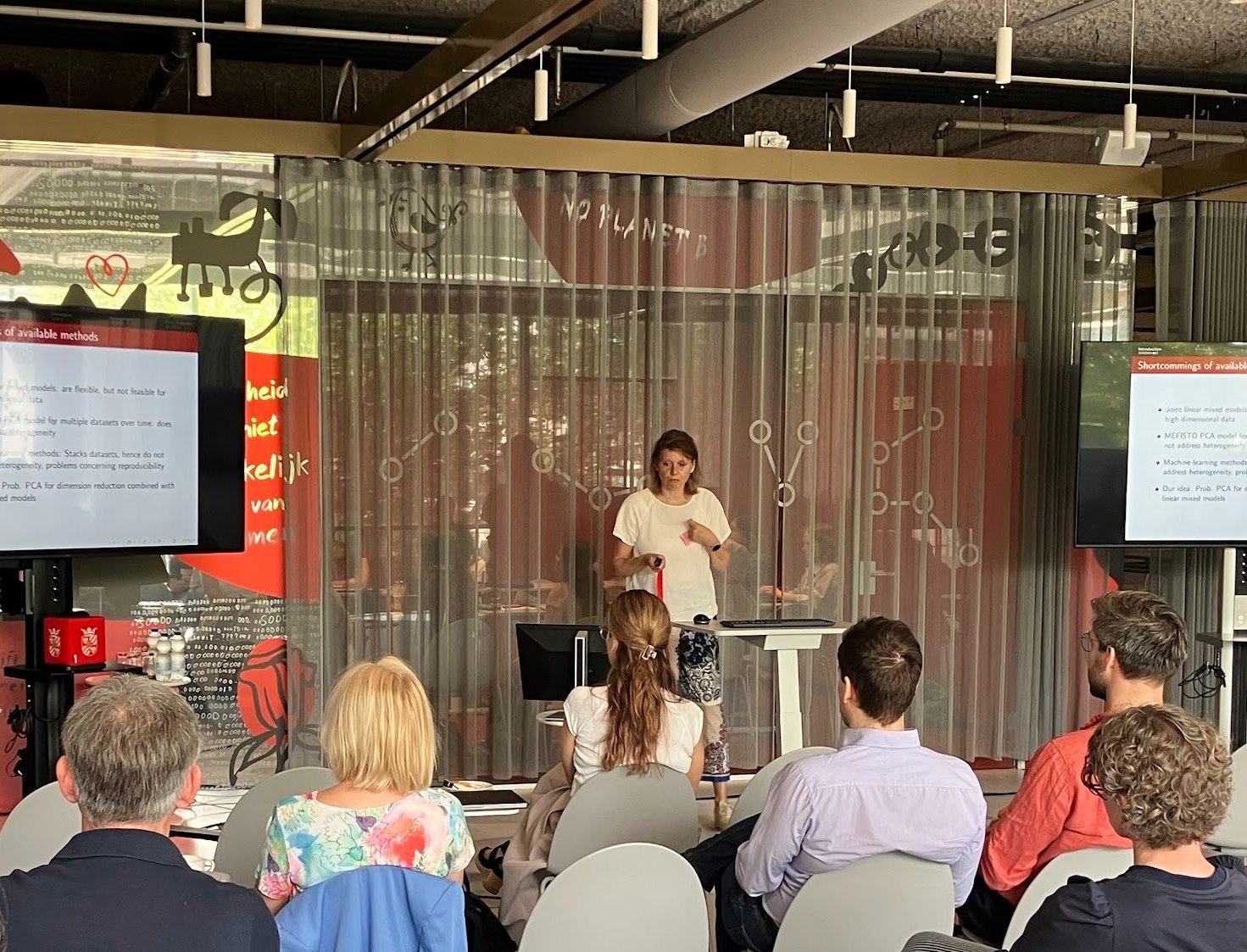
The first keynote lecture was given by Jeanine Duistermaat (Eindhoven University of Technology), who presented new statistical methods for analysing complex temporal multi-omics data (i.e. biological analysis approach in which the data consists of multiple "omes", such as the genome, epigenome, transcriptome, proteome, metabolome, exposome, and microbiome). By extending existing dimension reduction techniques to account for longitudinal biological data, her work demonstrates how advanced statistical modelling can provide meaningful biological insights while remaining computationally efficient.
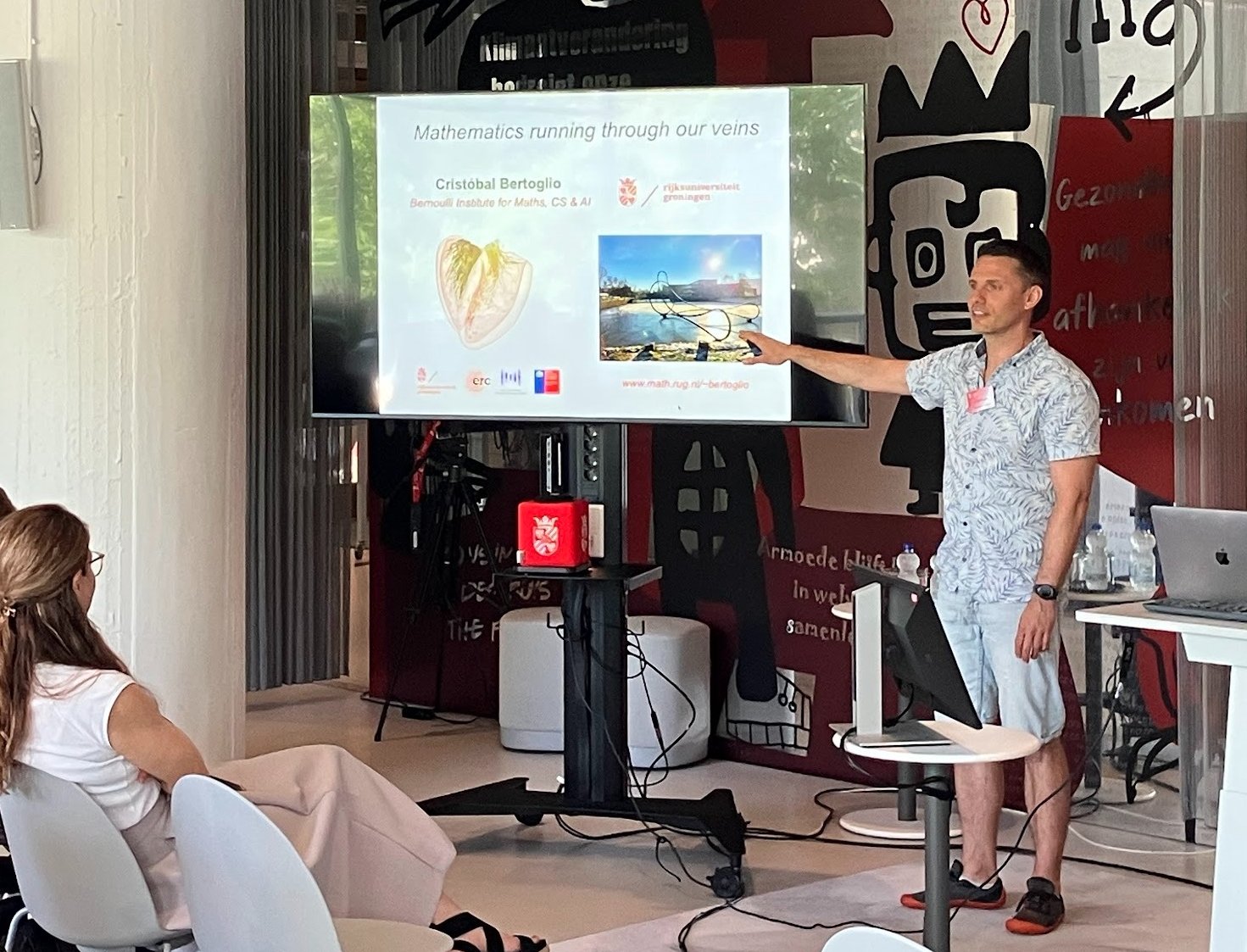
Cristóbal Bertoglio (University of Groningen) then presented some new highlights from his research on mathematical models of the cardiovascular system. His presentation illustrated how numerical methods, fluid mechanics and clinical data can be combined to develop personalised cardiovascular models that may ultimately support clinical decision-making.
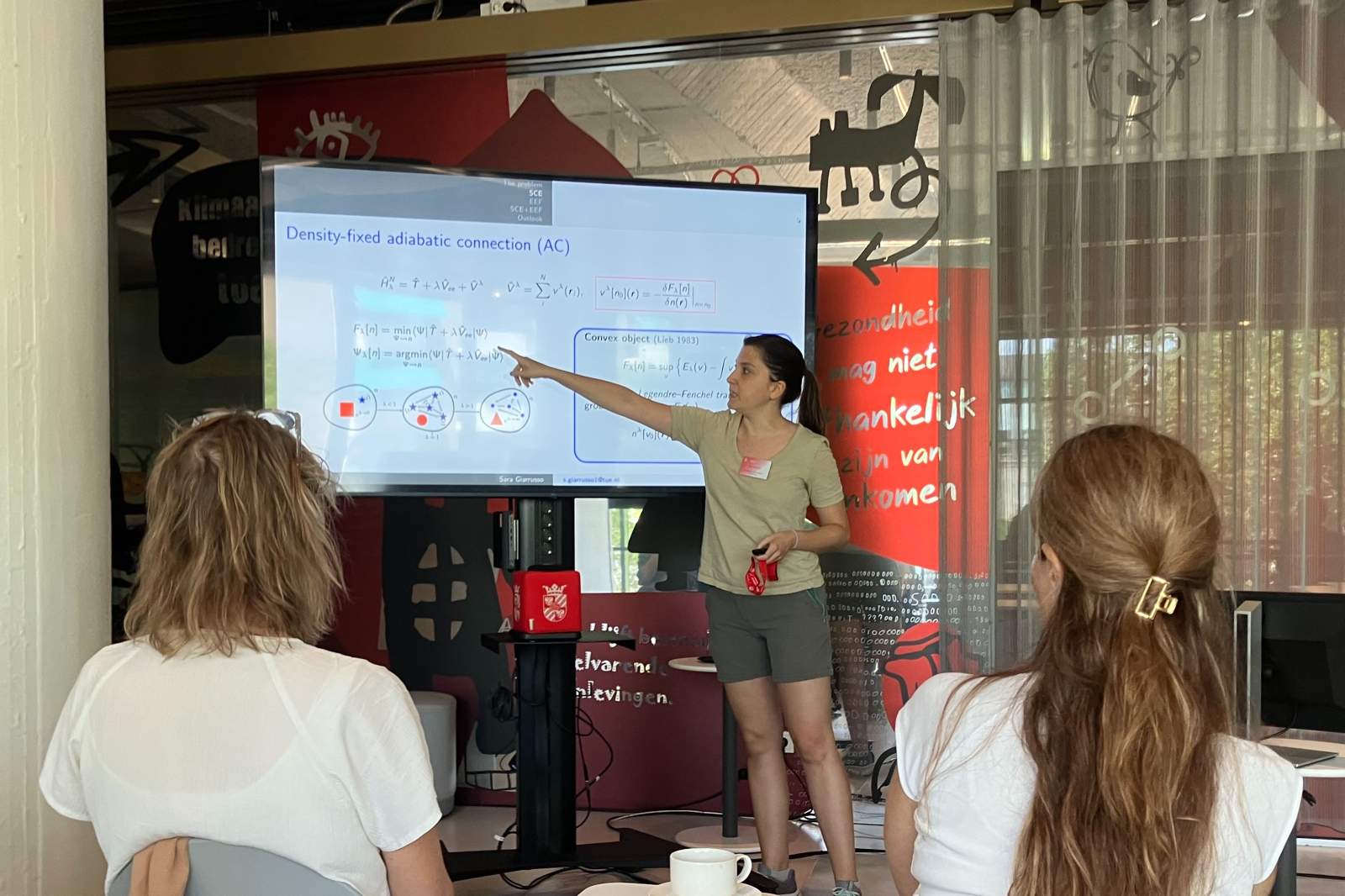
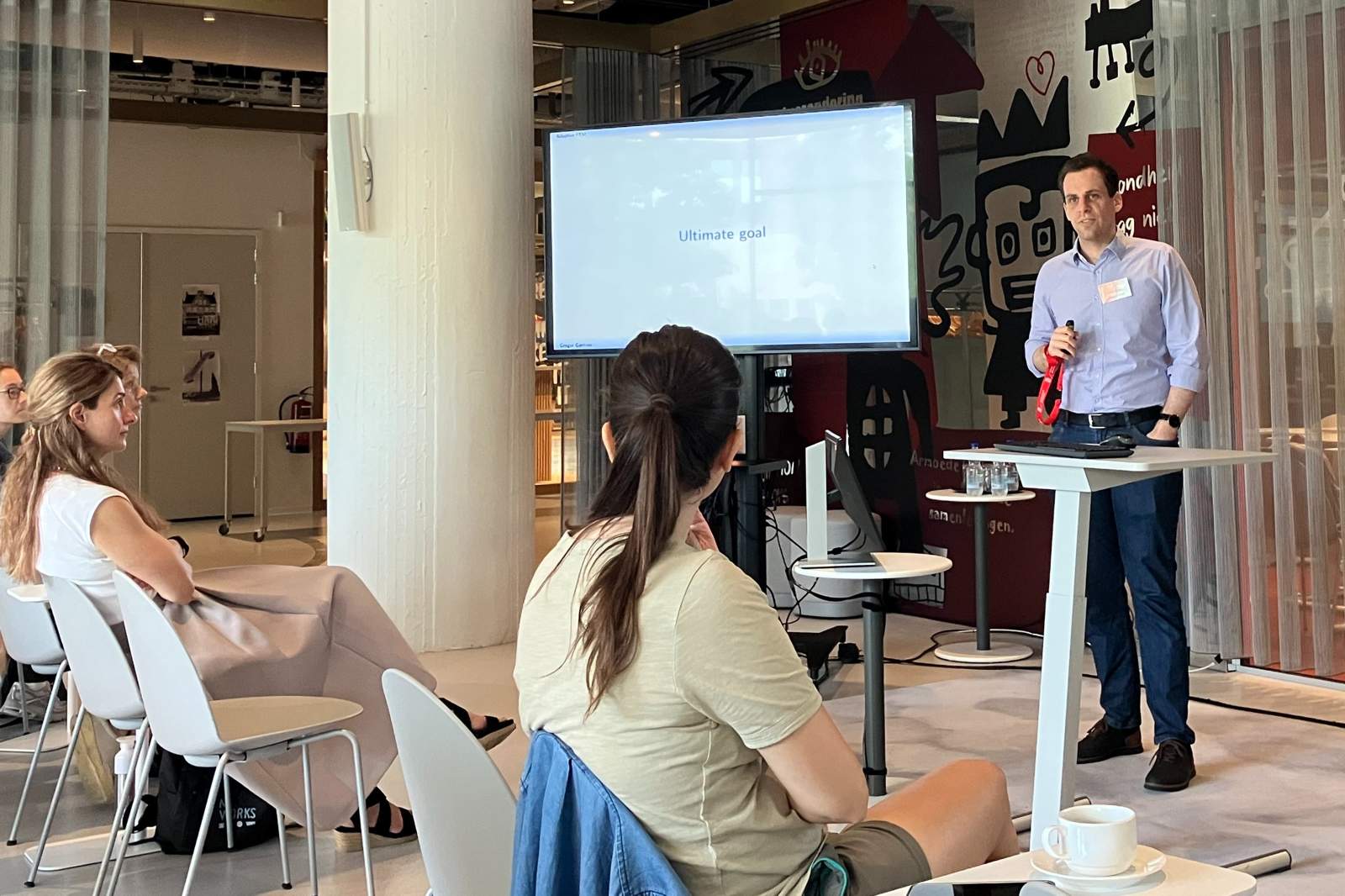
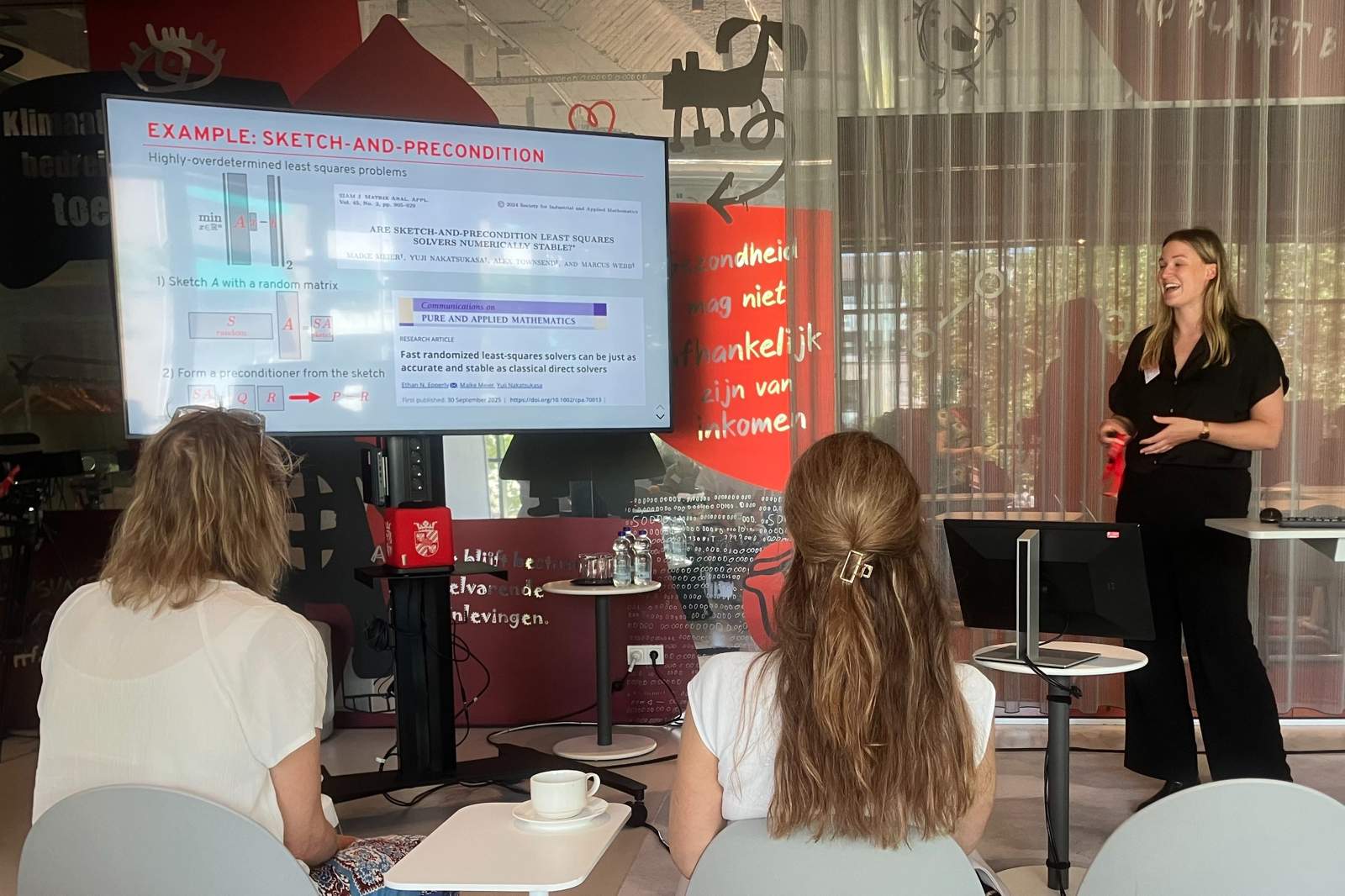
One of the highlights of the afternoon was the series of short presentations by newly joined members of the 4TU+.AMI network. Sara Giarrusso (TU Eindhoven), Gregor Gantner (University of Twente) and Maike Meier (University of Groningen) introduced themselves and presented snapshots of their research, giving the community an overview of the expertise that has recently joined the network. The diversity of research topics these young researchers bring to the AMI community is exceptional.
Sara’s research lies at the interface between physics, chemistry, and mathematics and aims to understand better subatomic structures. She studies multi-particle Schrödinger equations in the context of specific chemical compounds and her goal is to improve the current mathematical models which don’t give accurate predictions at the moment. Gregor’s research focuses on adaptive numerical methods for partial differential equations. Partial differential equations are fundamental to modern mathematics and engineering, but are also notoriously difficult to solve. This is why it is very important to develop accurate approximation methods. Maike’s research lies in numerical linear algebra and inverse problems. An inverse problem refers to the process of calculating from a set of observations the causal factors that produced them. An important example comes from healthcare where a leading question is how we can reconstruct an image from the data we obtain from an X-ray or MRI scan. Maike uses approximate computing techniques such as randomization and mixed-precision arithmetic to speed-up computations for large inverse problems.
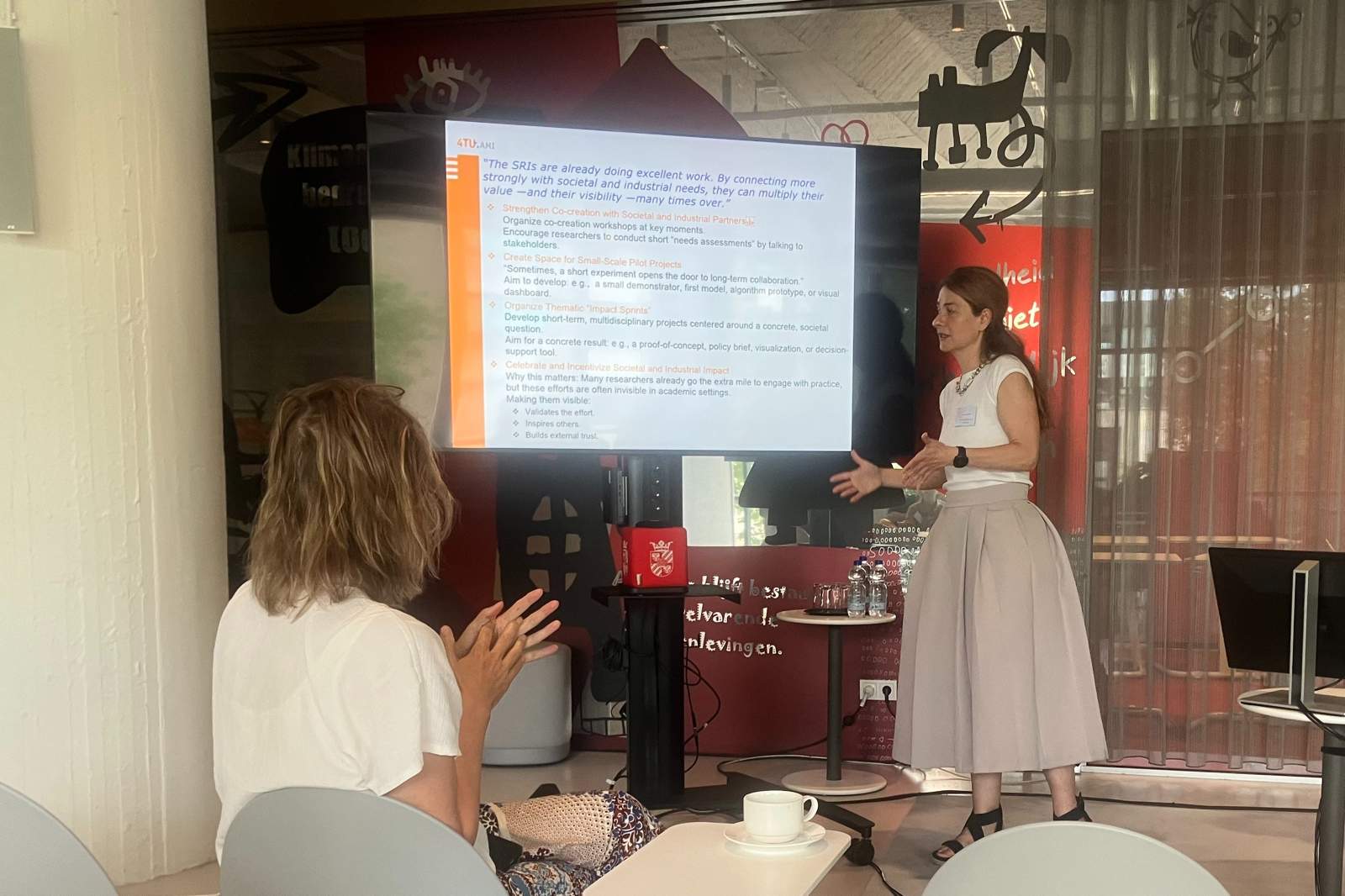
Stella Kapodistria, Scientific Director of 4TU+.AMI, closed the morning session by providing an overview of recent activities within the institute and highlighting ongoing initiatives that continue to strengthen collaboration between the participating universities.
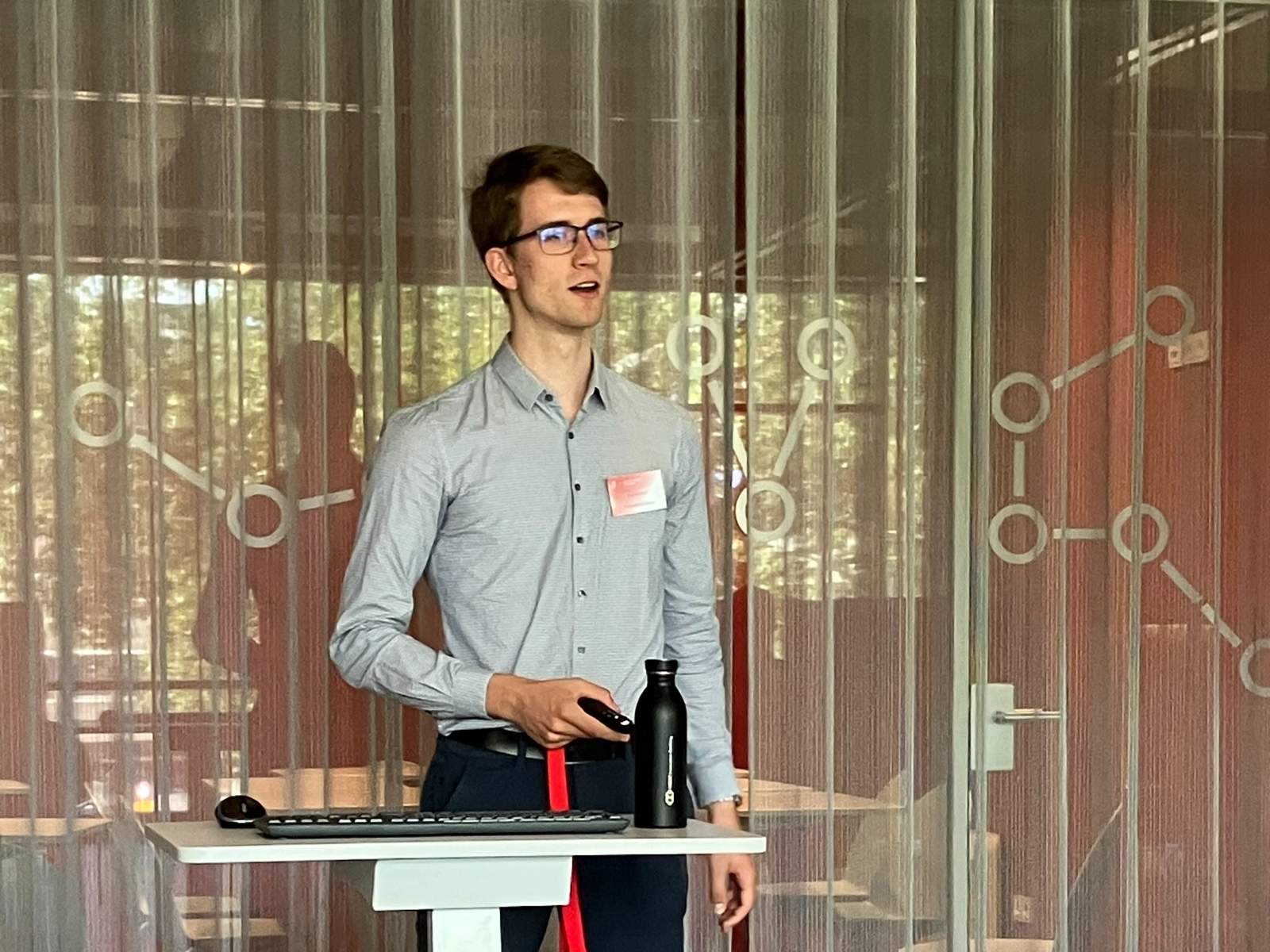
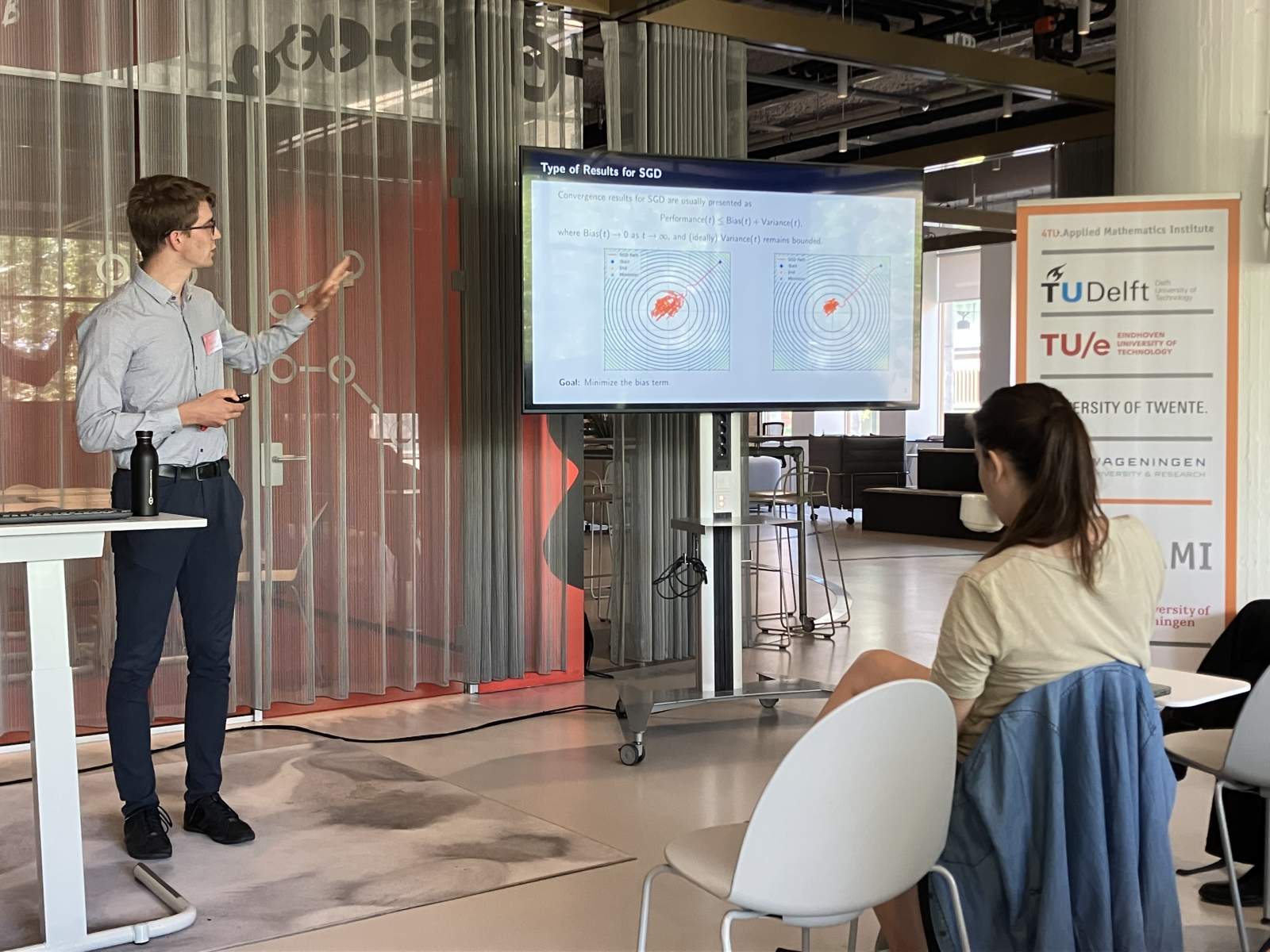
The scientific programme continued in the afternoon with Daniel Cortild (University of Oxford), who presented new theoretical results on stochastic gradient descent using computer-aided Lyapunov analysis.
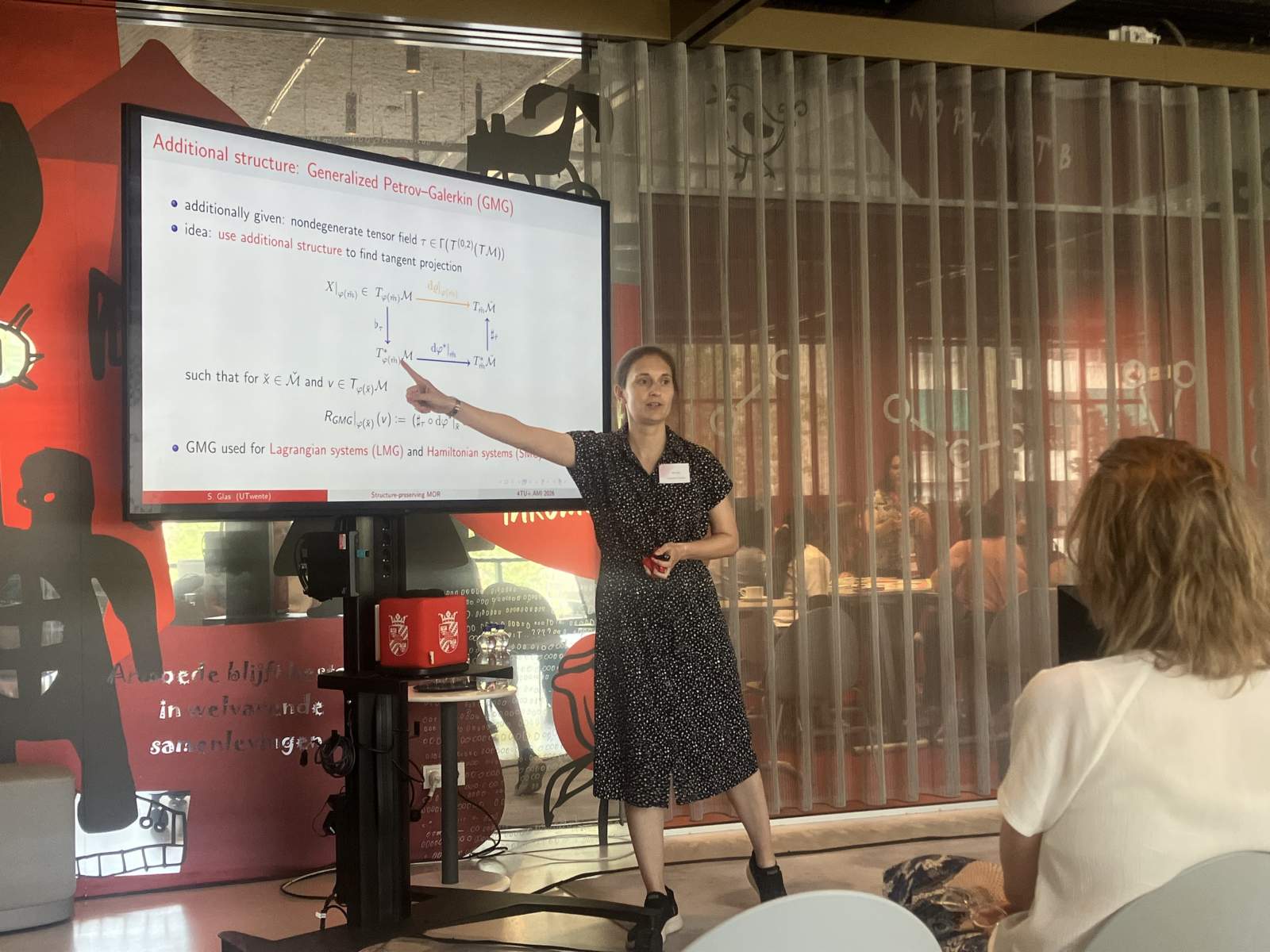
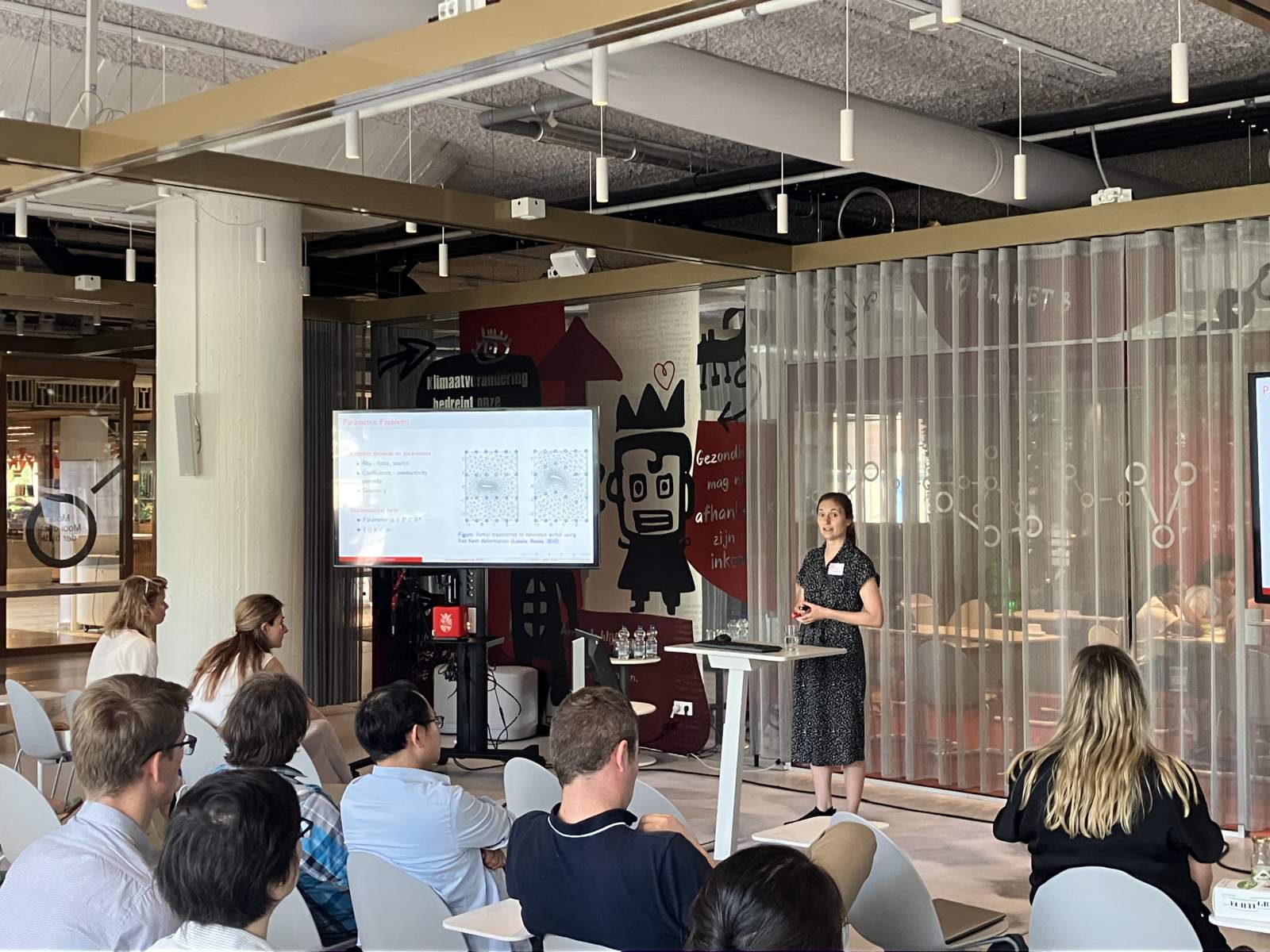
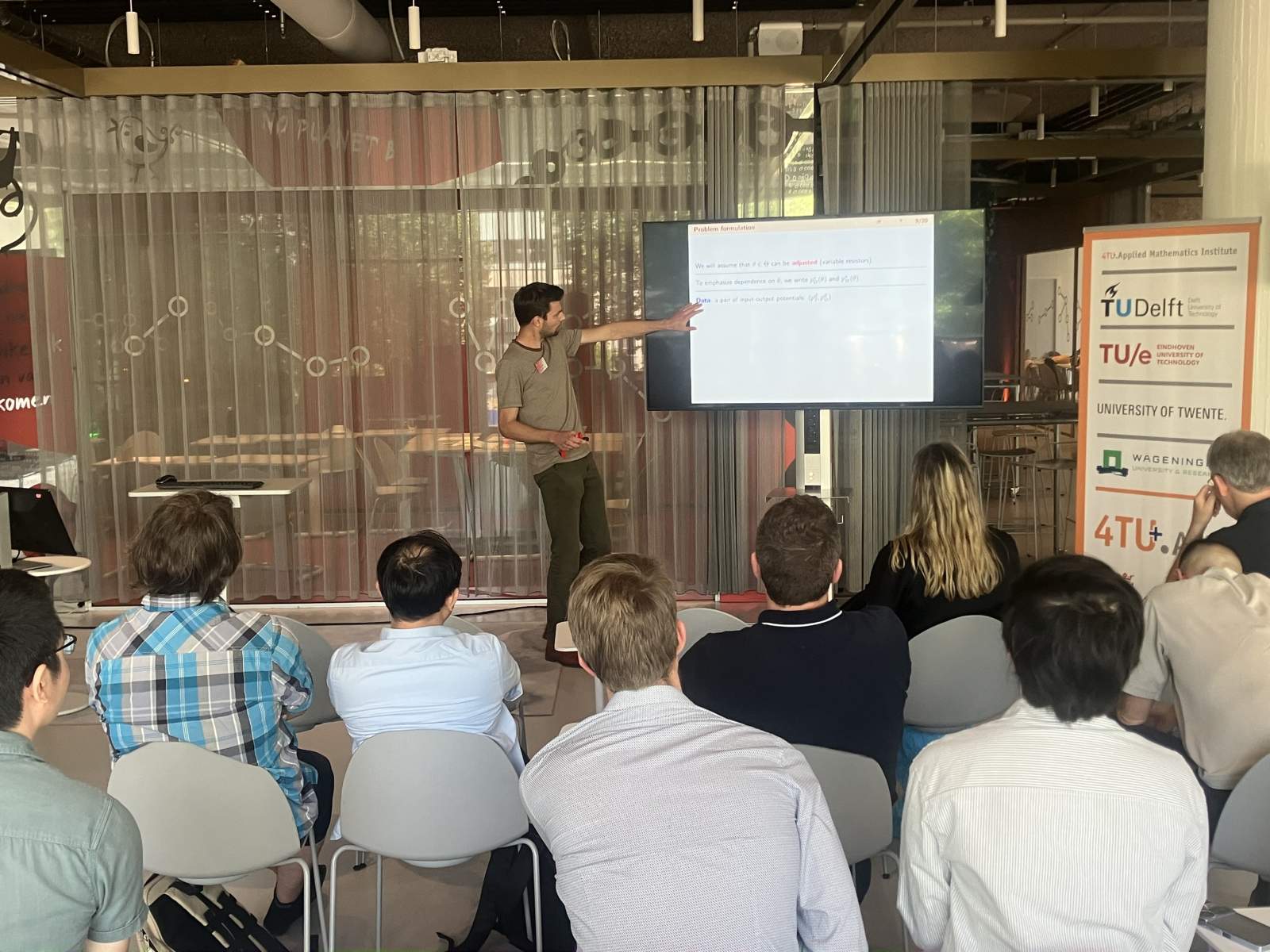
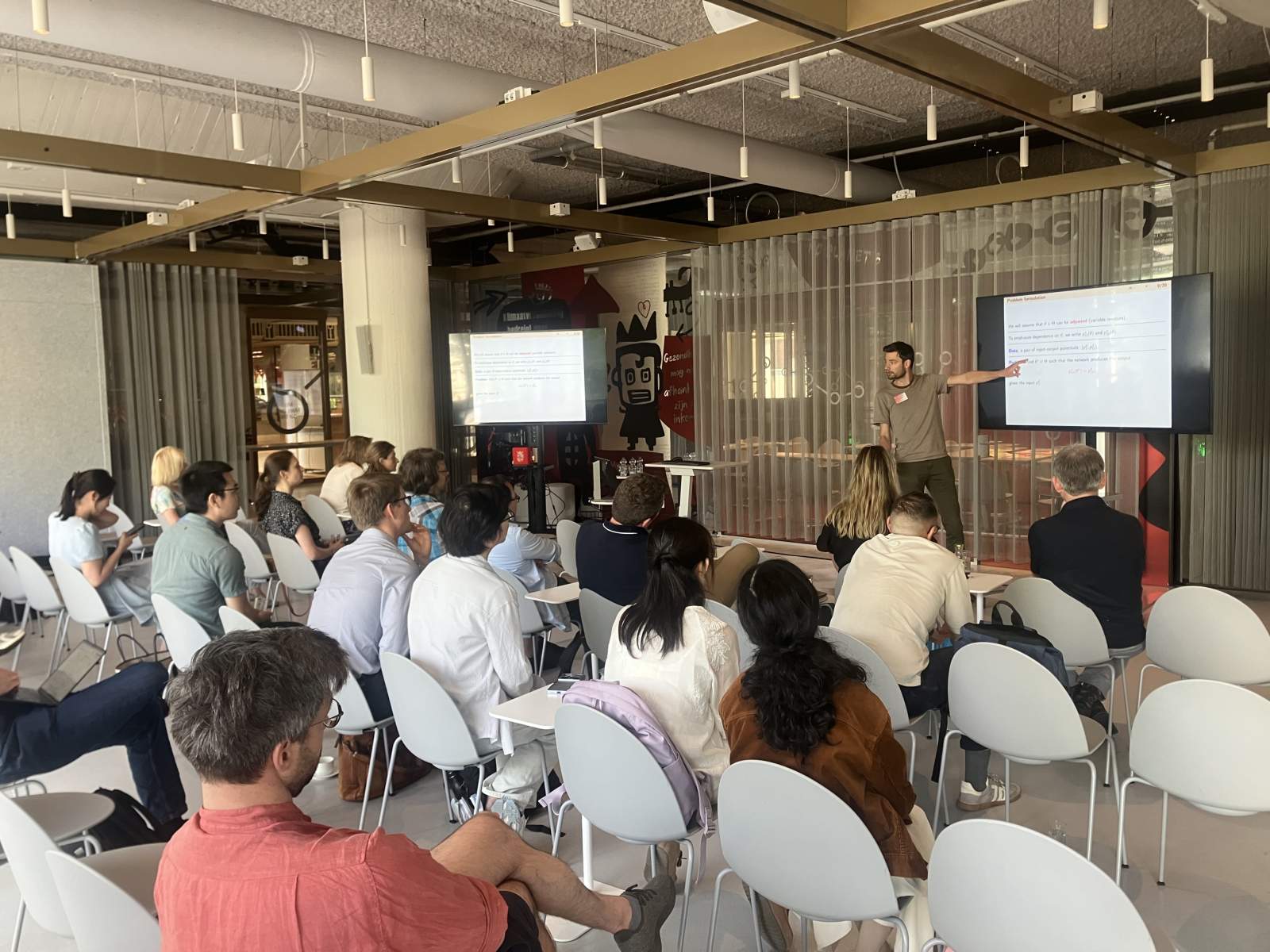
This was followed by presentations from Silke Glas (University of Twente and SRI on Model Reduction), who discussed structure-preserving model reduction techniques, and Henk van Waarde (University of Groningen), who introduced recent work on energy-based learning for nonlinear resistive circuits.
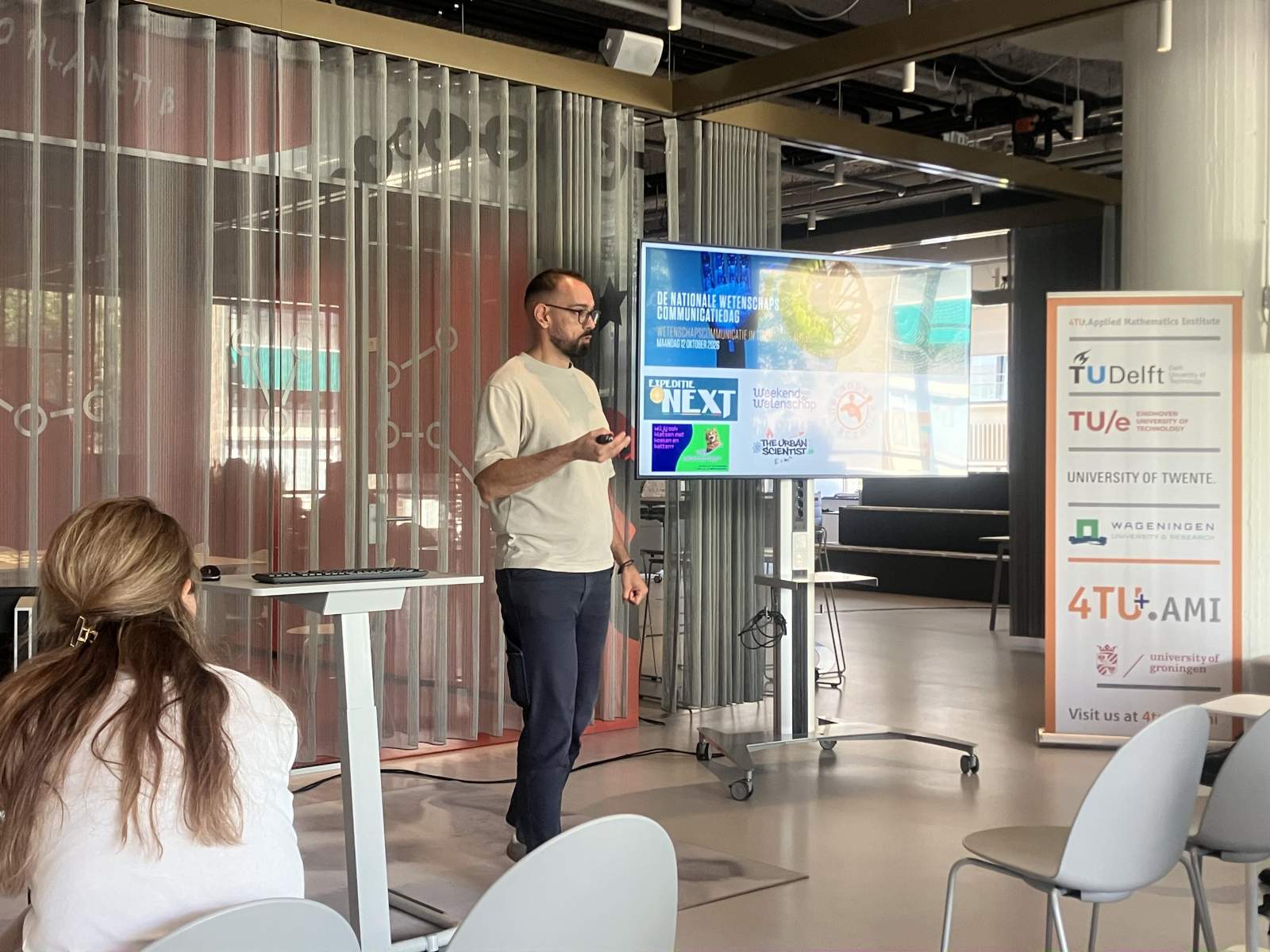
The programme concluded with an engaging talk by Nicos Starreveld on science communication, reminding participants of the importance of making mathematical research accessible to wider audiences.
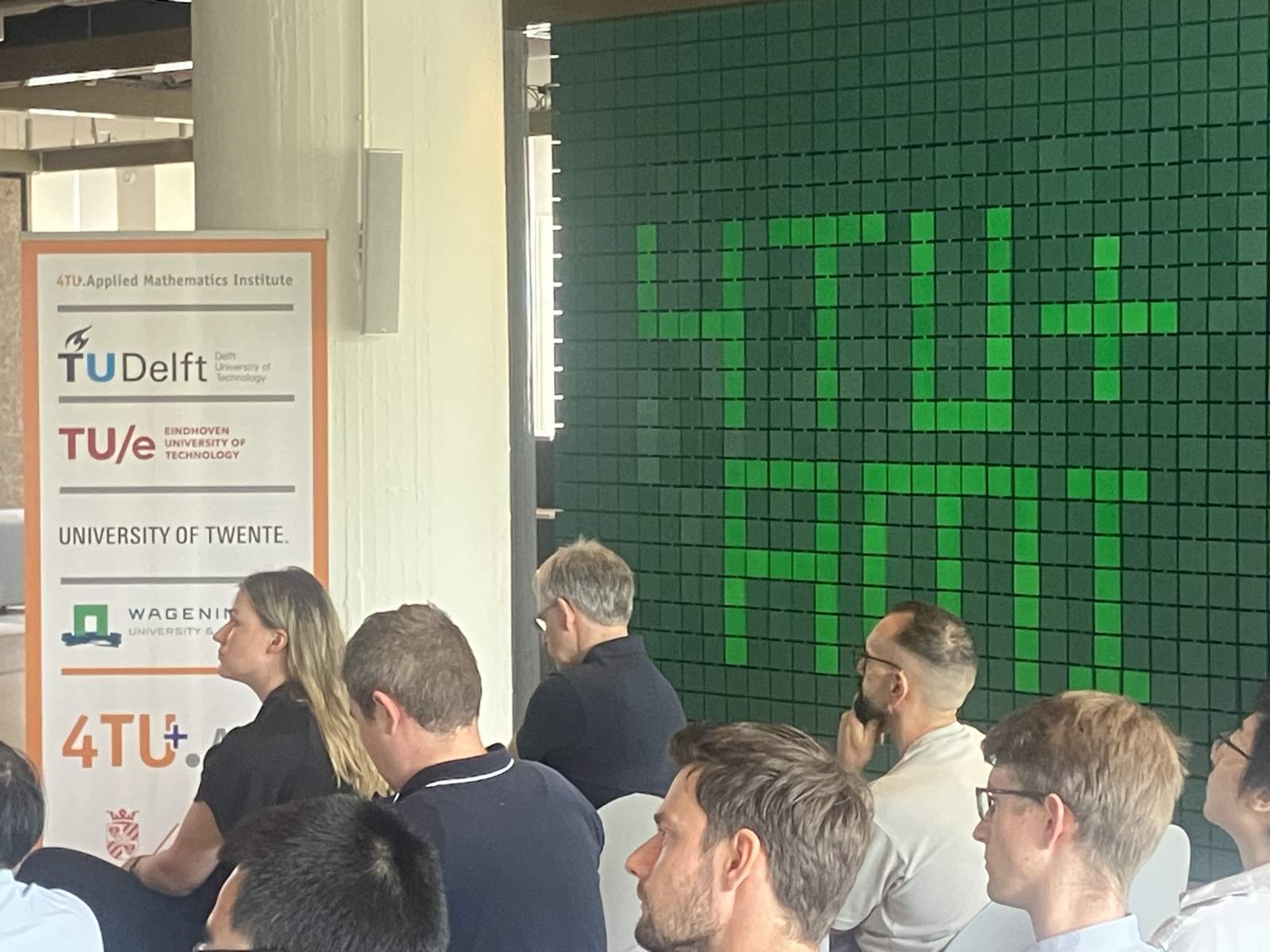
The day concluded with drinks in the city centre and an optional dinner, giving participants ample time to continue discussions in an informal setting. Once again, the annual Community Event demonstrated the value of bringing together researchers from across the 4TU+.AMI network and showcasing the diversity and impact of applied mathematics research in the Netherlands. We would like to cordially thank the University of Groningen for hosting the event, and in particular Maike Meier and Roel Verstappen who organized the event.