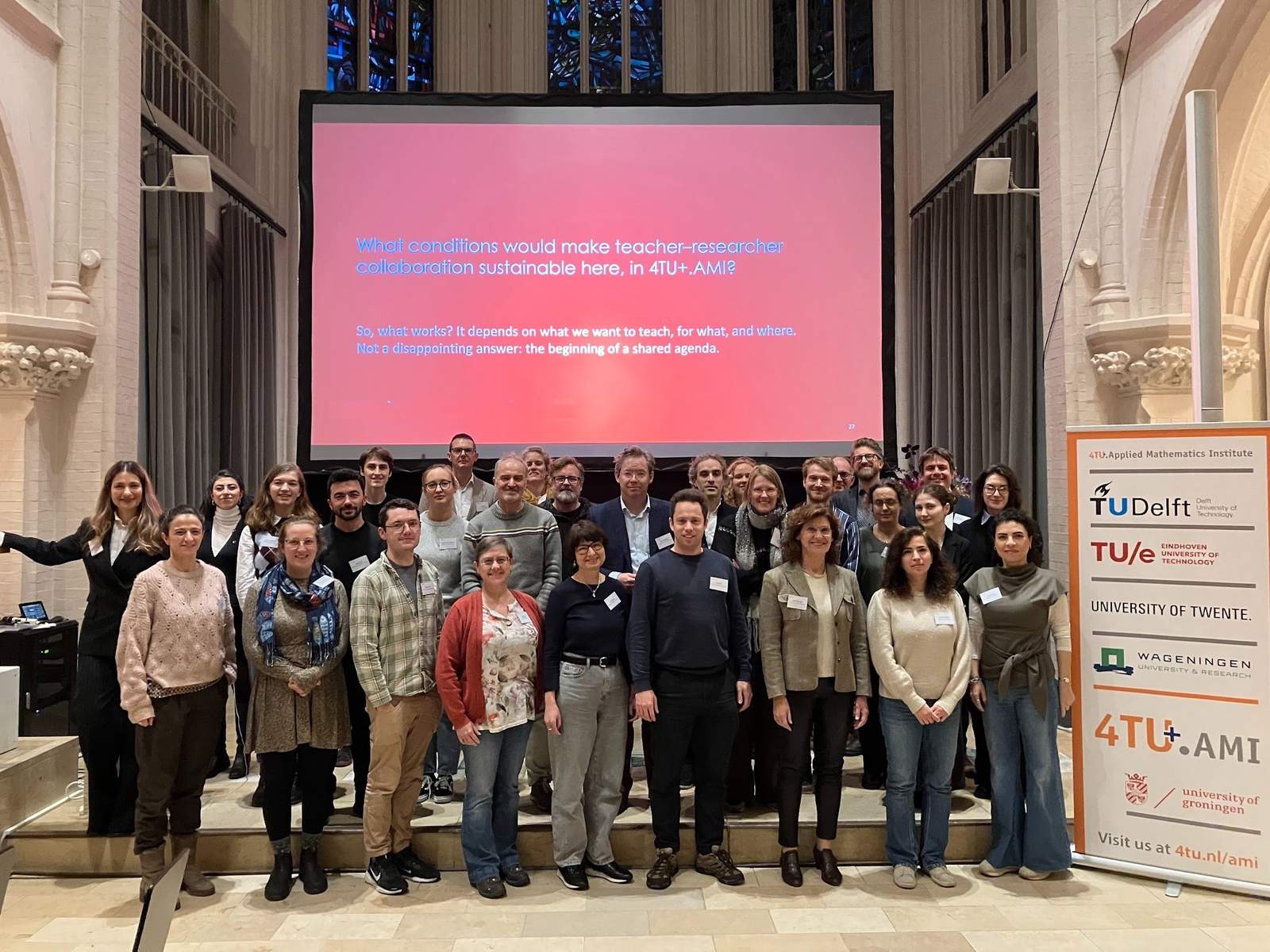



On 20 November 2026, around 50 mathematics educators joined the second edition of the 4TU+.AMI Education Day at JADS in ’s-Hertogenbosch, organised by the AMI SRI MEReP (Mathematics Education Research Project). Participants came from the five partner applied mathematics institutes and from Leiden University, Maastricht University and Utrecht University. The day offered a chance to exchange teaching experiences, explore new approaches and strengthen connections across the higher-education mathematics community.
The programme opened with an interactive workshop led by Maarten Müller on Building Thinking Classrooms (BTC), an approach developed through Professor Peter Liljedahl’s classroom research. Participants experienced a BTC lesson, in which students work together on mathematical problems, usually working on small whiteboards, while the teacher guides their thinking through questions.
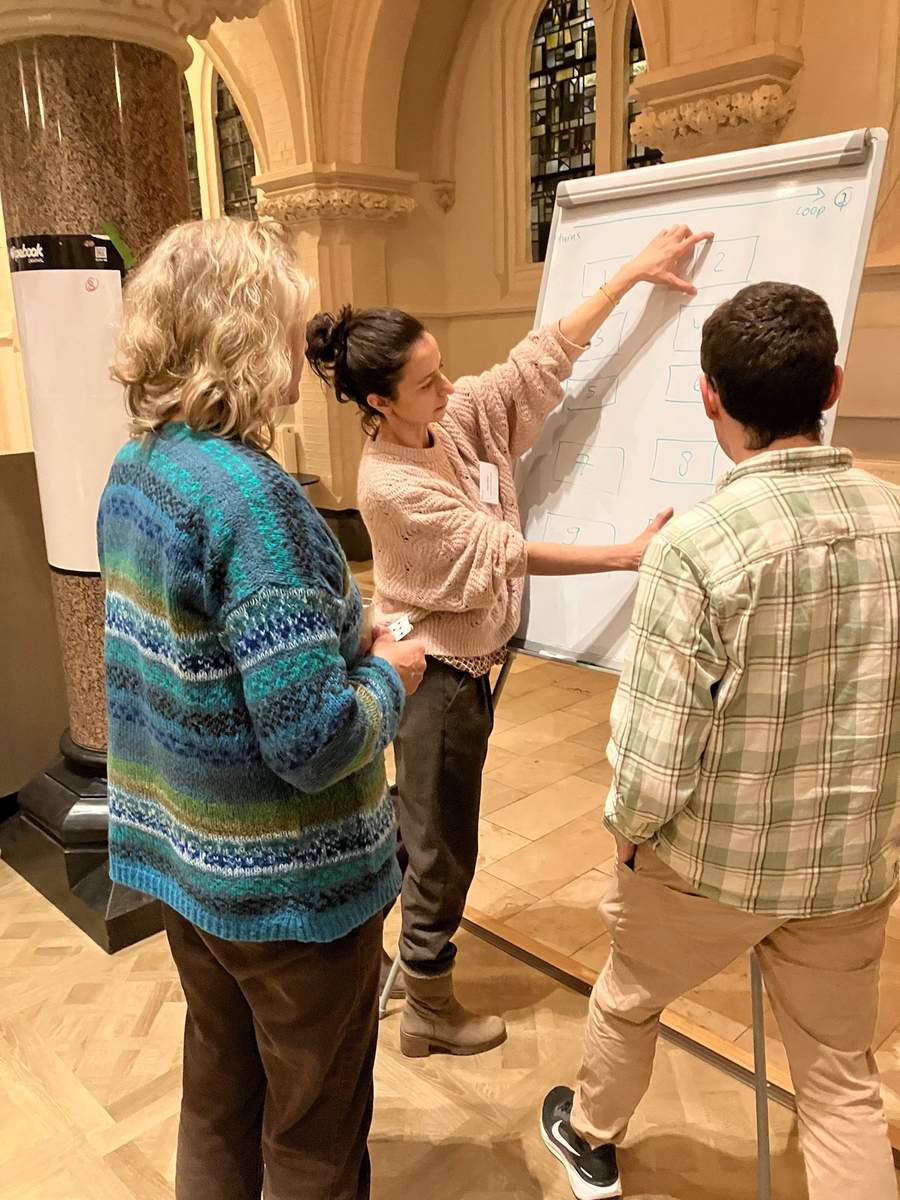
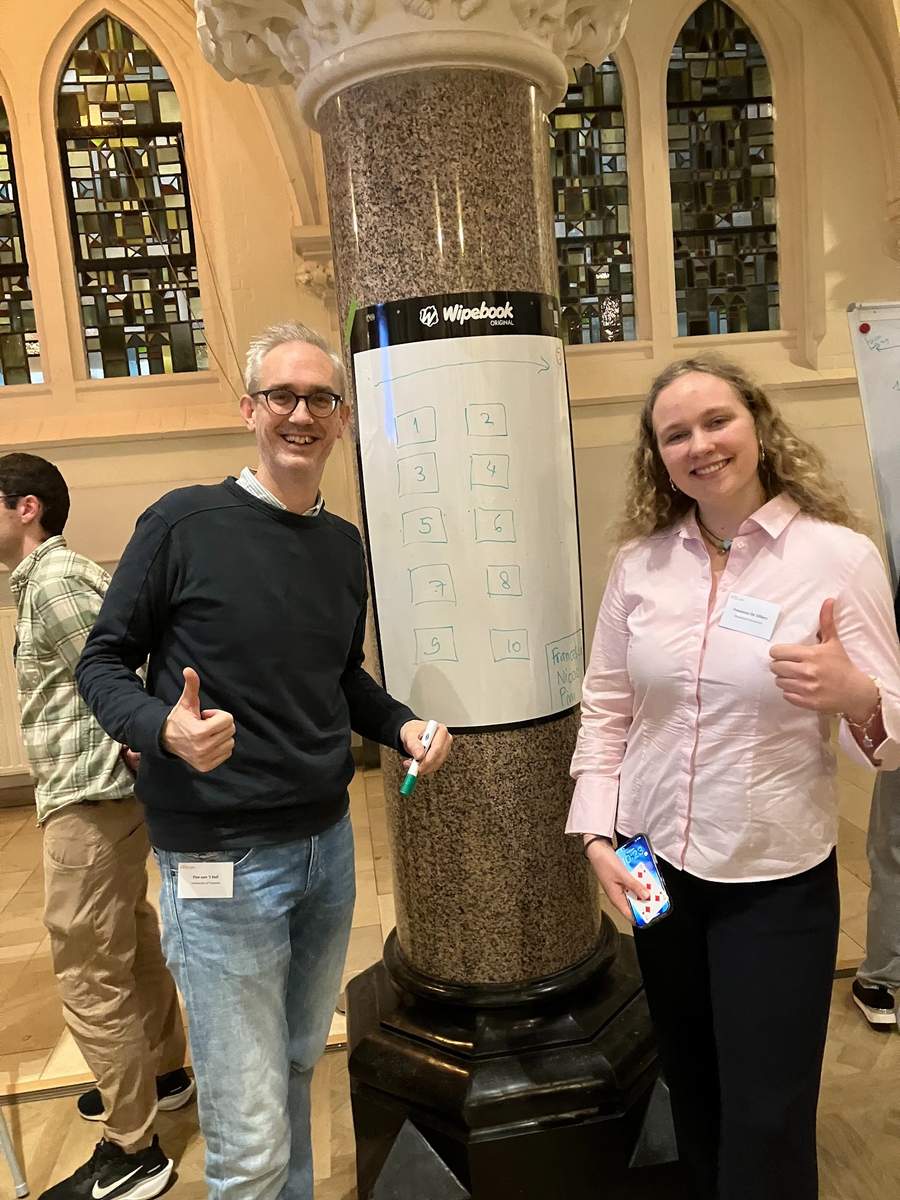
During the workshop many lively discussions took place about the advantages and challenges of BTC and about how the approach can be adapted to the different contexts and needs of universities and study programmes. Some university mathematics programmes are already using BTC (you can read for example this short communication by Bart van den Dries from TU Delft) to make learning more active and collaborative than in traditional lectures and exercise classes.
A lively poster session with 12 posters gave participants another opportunity to share work and ideas. The programme also included presentations on 4TU+.AMI’s Strategic Education Initiatives, including a presentation by Jim Portegies (TU/e) on Waterproof, Nicos Starreveld (AMI) on the video series The Mathematics behind AI, and Tracy Craig (UT) on Linear Algebra, the Tile Game, as well as updates on MEReP (check the poster and presentation by MEReP) by Fulya Kula (UT) and on 4TU.Schools by Hjalmar Mulders (TU/e).
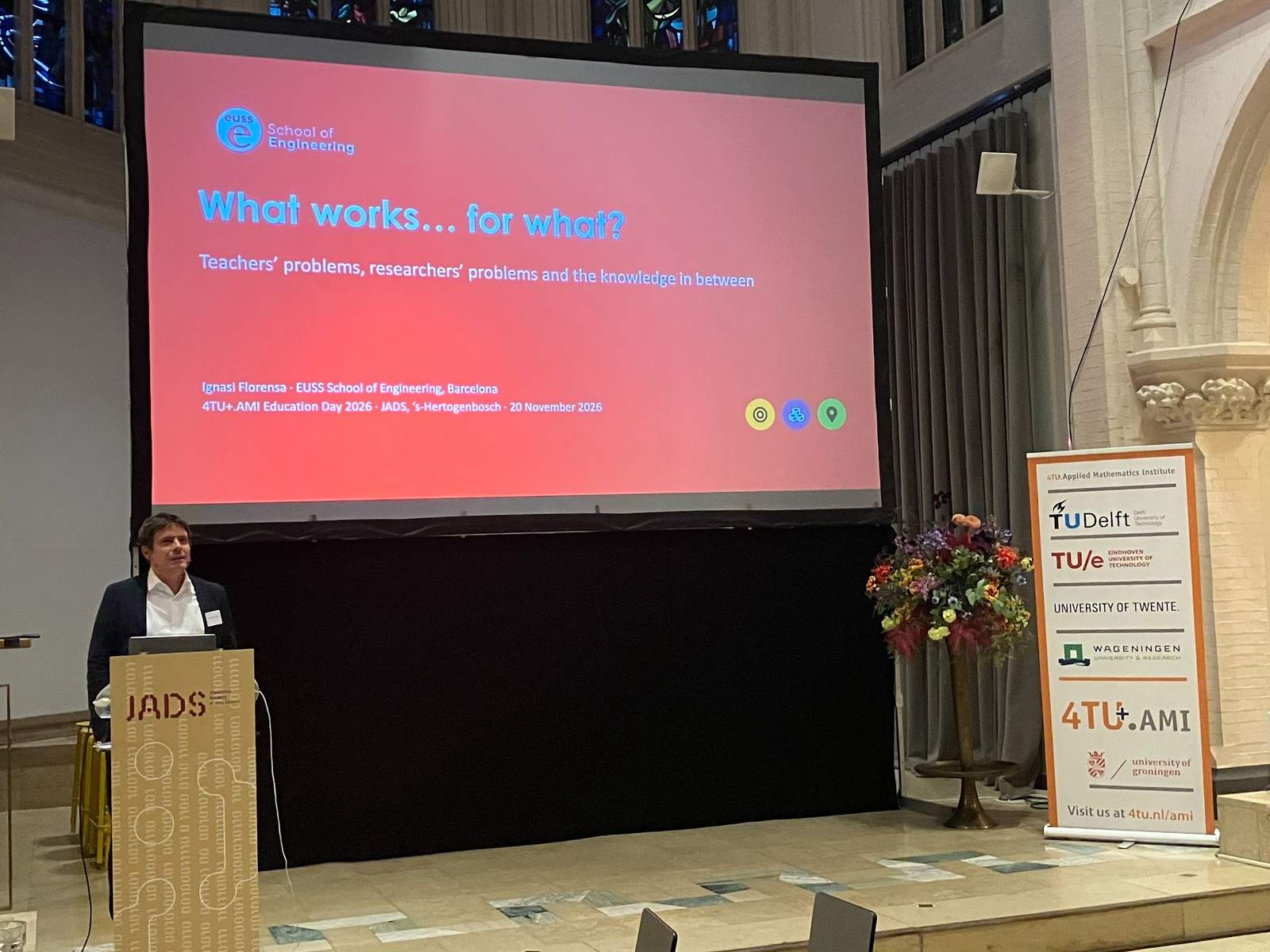
In the closing keynote, Dr. Ignasi Florensa Ferrando (Director of EUSS School of Engineering, Barcelona) explored how teaching practice and educational research can inform and strengthen one another. He discussed the different, but complementary, questions teachers and researchers address, and illustrated the connection with a study of statistics teaching in engineering courses in his institution, Escola Universitària Salesiana de Sarrià (EUSS), Barcelona. The talk invited participants to consider how teachers and mathematics education researchers might build a shared agenda for undergraduate education.
The Education Day aims to grow into a regular annual event for tertiary mathematics education. It provides a valuable opportunity for educators to meet, discuss shared challenges and learn from practices at other universities, helping build a stronger teaching community across the Netherlands.