


Opening
The conference was organised by 4TU.History of Technology. The participants were welcomed by Eric van der Geer-Rutten-Rijswijk (Secretary of Eindhoven University of Technology). In his opening speech he highlighted the 70th anniversary of Eindhoven University. He also stressed the importance of historical knowledge and awareness.
Keynote speakers
The conference featured two keynote speakers. On Wednesday 8 July Johan Schot (Professor of Global History and Sustainability Transitions - Utrecht University) – and one of the founding father of the Tensions of Europe network – gave his lecture The Promise of a Second Deep Transition. Read more on the lecture here. On Thursday 9 July Edward Jones-Imhotep (Professor and Director of Institute for the History and Philosophy of Science and Technology - University of Toronto) gave his keynote lecture. He is author of the prize-winning book The Unreliable Nation: Hostile Nature and Technological Failure in the Cold War. His keynote talk was titled The Broken Machine: Other Histories of Technology. You can find the abstract here.
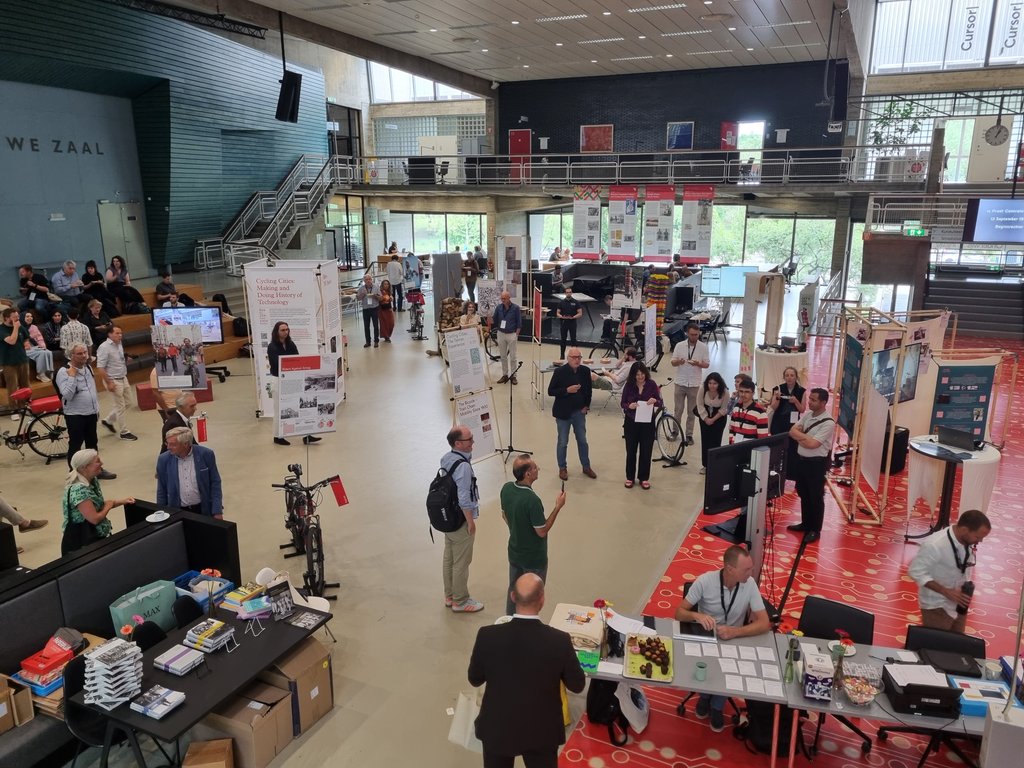
Making & Doing History of Technology track
Besides regular research sessions, the conference featured a dedicated Making & Doing History of Technology track across all three conference days. The track brought together a wide range of experimental and interactive approaches to the history of technology, including exhibitions, workshops, walking tours, discussion cafés, artistic collaborations, performances, and interactive sessions. Rather than only presenting historical research, the making and doing track explores how historical knowledge can be mobilized, visualized, co-created, and experimented with in relation to present-day issues and future imaginaries.
Summer school
The Tensions of Europe Early Career Scholars Network organized a summer school in connection to the XII Tensions of Europe Conference. The summer school took place in Dordrecht, the Netherlands, July 6-7, 2026. It aimed at introducing early career scholars to the Tensions of Europe community as well as to facilitate networking between scholars across borders, and support the consolidation and building of new academic skills.
Learn more on https://www.eindhovenhistorylab.nl/toe-2026/